Bartlett Epoxy Flooring installs epoxy-flooring in Wauconda with more than 20 years behind the grinder, and some of the floors we think hardest about are the ones inside walk-in coolers. Kegs stand directly on the concrete there, cold air sweats onto every surface, and the floor is expected to stay clean underneath all of it. That combination is what this page is about.
A bar or restaurant that stores full kegs and cases of cans on the floor is relying on a single condition in the model food code: the floor has to be clean and not exposed to floor moisture. A coating cannot promise that on its own, but a sealed, seamless surface that sheds water and dries fast makes the condition far easier to keep true on a busy night.
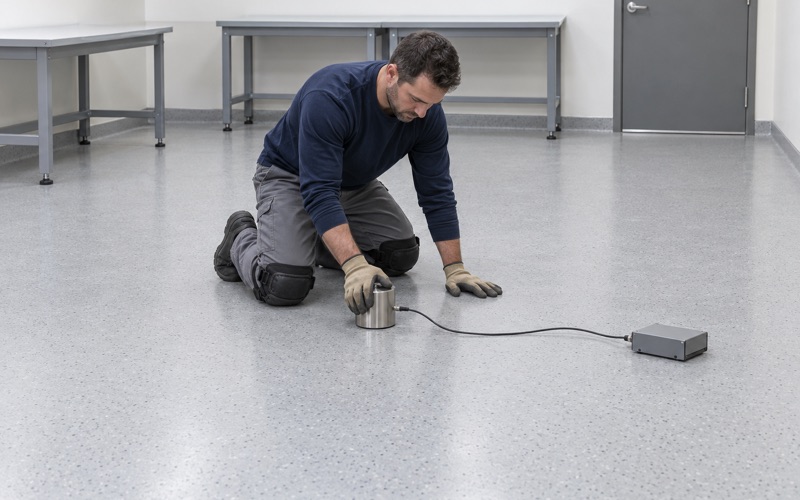
We open every slab mechanically and put a moisture test in the written scope before the price is final. In a cooler those habits matter more than usual, because the floor will be cold, wet and loaded from the day it reopens.
A Wauconda Taproom That Pours Other Breweries’ Kegs
Brewing Stopped, the Kegs Kept Coming
The Side Lot sits at 110 Slocum Lake Road in the village, and its own page says plainly that it stopped brewing beer there as of October 2022. What replaced its own beer is a rotating craft list that highlights Illinois breweries, with an occasional collaboration with local breweries on re-releases of the old Side Lot Brewery beers.
That change moves the beer’s origin, not its storage. A draft list made of other people’s beer still arrives as full, pressurized kegs, and somebody still has to put them somewhere cold between the delivery truck and the tap. For a taproom that no longer brews, the keg cooler is likely one of the busiest rooms behind the bar.
Kegs, Cased Cans and Bottles
A bar pouring a rotating Illinois list typically stores more than kegs. Cased cans and bottles come in on the same deliveries, and stacking them on the floor beside the kegs is the fastest way to clear a dolly. Each of those containers falls under the same short clause in the food code, which is why the floor under them matters as much as the shelving.
Kegs are heavy, cold and awkward, and the practical reason many operators keep them on the floor is that lifting each one onto a rack costs time and backs. The code allows floor storage for these containers, with conditions attached, and the condition we can do something about is the floor itself.
What We Have and Have Not Seen
We have not been inside The Side Lot’s cooler, and nothing on its public page describes the keg storage, the tap count or the floor. The business is not a customer of ours. We use it here because it is a clear, documented example of a Wauconda taproom whose draft list arrives in kegs from somewhere else.
Every point below is about how a keg cooler floor generally behaves, written for any Wauconda bar, restaurant or banquet room that stores beverages on the floor. If your cooler looks different from what we describe, the inspection we do before quoting is where those differences show up.
Looking for epoxy-flooring closer to Summit? See Summit Epoxy-Flooring.
Kegs on the Floor and What the Food Code Allows
The Six-Inch Rule and Its Exceptions
The FDA Food Code’s storage section, 3-305.11, starts with a general rule: food is kept in a clean, dry location, away from splash, dust and other contamination, and at least 6 inches above the floor. Packaged food may sit lower on case lot handling equipment, and a third paragraph names the containers that may sit on the floor outright.
Paragraph (C) lists pressurized beverage containers, cased food in waterproof containers such as bottles or cans, and milk containers in plastic crates. A full keg is a pressurized beverage container, and a case of canned beer is cased food in waterproof containers, so both can qualify for floor storage under the model code, on one condition.
Clean and Not Exposed to Floor Moisture
The condition is written into the same sentence: those containers may be stored on a floor that is clean and not exposed to floor moisture. The exception is not a blanket permission to set kegs anywhere. It holds only while the floor beneath them meets both halves of that phrase.
In a dry storeroom that is usually easy. In a walk-in cooler it is the floor’s whole job, because the room makes water on its own and the kegs stand exactly where that water ends up. A floor that holds a film of moisture under a row of kegs for hours is a floor working against the clause.
Who Reads the Code Locally
The Food Code is a federal model. Local inspection of a Wauconda food establishment falls to the Lake County Health Department, and we have not read how that department applies the keg storage clause. An operator who wants a ruling on a specific cooler should ask the inspector, not a flooring contractor.
What we can speak to is the physical floor. We can tell you whether a slab is cracked, porous or holding water, what it would take to seal it, and what a coating will and will not change about the conditions an inspector sees.
Condensation, Couplers and Mop Water in a Keg Cooler
Where the Water Comes From
Three sources do most of the work. Warm, humid air rushes in every time the cooler door opens and condenses on cold kegs, walls and the floor itself. A coupler that is not seated cleanly, or a line fitting that weeps, drips beer onto the concrete under the very kegs it serves.
The third is cleaning. Mop water and the rinse that follows a spill run to the lowest spot, and in a cooler full of kegs the lowest spot is often under a keg that nobody wants to move. Cold air then slows evaporation, so whatever lands on the floor tends to stay there longer than it would in a warm room.
Why Bare or Cracked Concrete Holds It
Bare concrete is porous. It wicks water into its surface, holds it in hairline cracks and at control joints, and gives spilled beer a place to sit and smell. A floor like that can look dry an hour after mopping and still be damp under the keg footprints, which is exactly the area the storage clause is concerned with.
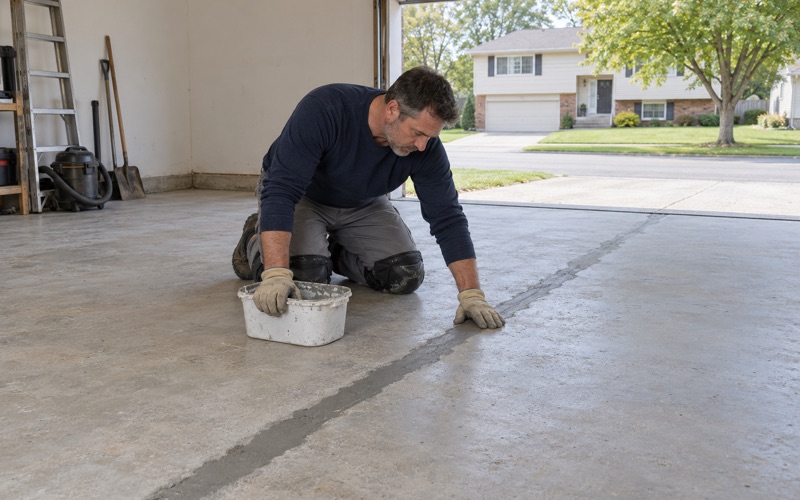
Older coatings can fail the same way once they start to peel. Water gets under a lifted edge, spreads beneath the film, and stays out of reach of the mop. Before we quote a cooler floor we map cracks, spalls and any coating already on the slab, and we say so when the concrete needs repair or replacement before anything goes over it.
A Floor That Sheds Water and Dries Fast
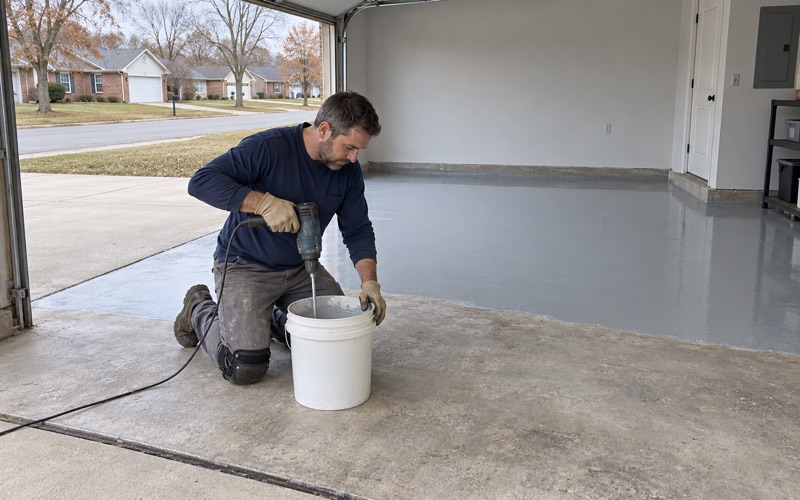
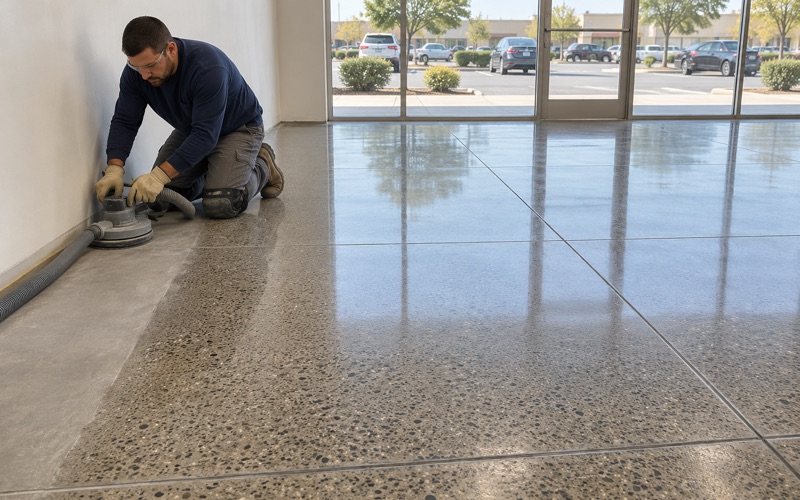
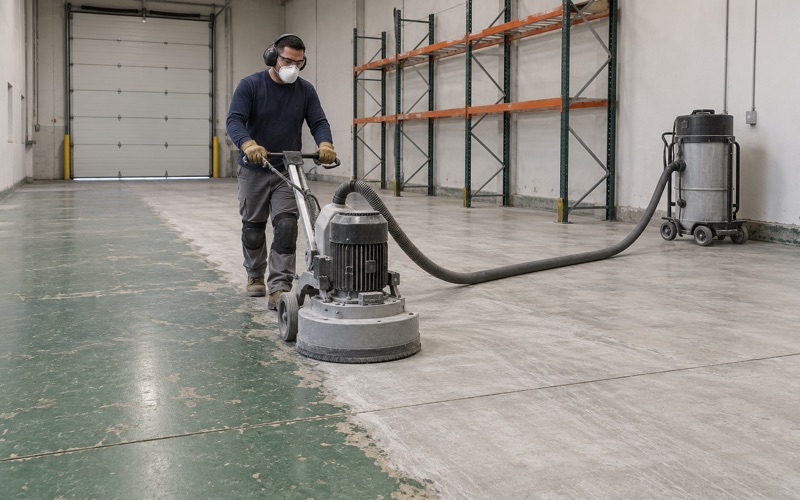
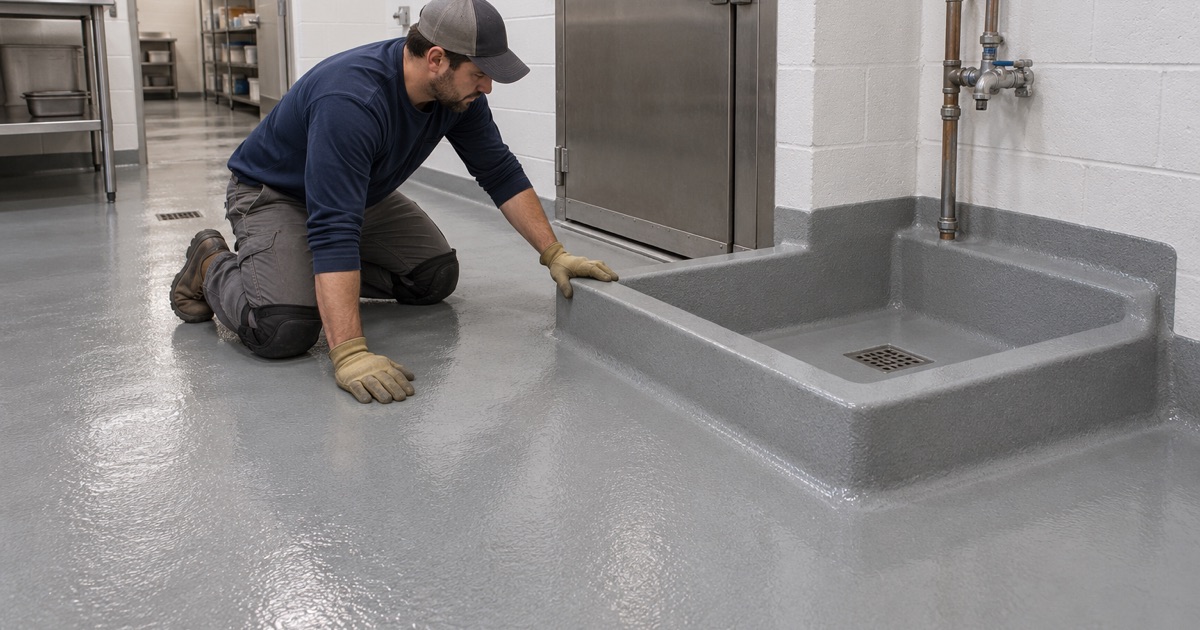
The goal is a sealed, seamless surface with no pores and no open joints, so water sits on top where a squeegee can reach it. We grind or shot blast the slab to a real surface profile, never acid etch it, then fill cracks and joints before a 100% solids epoxy goes down. A coved base where the floor meets the wall keeps the corner from collecting grime.
A cooler floor dries faster when nothing is soaking into it, which is the real benefit here. A film that sheds water lets staff squeegee a spill or a mopped section and see bare, dry coating under the kegs well before the next delivery, instead of a dark, damp patch that never quite clears.
Cold Cure and What a Coating Cannot Promise
Coolers complicate curing. Resin set down on a cold slab near its dew point can cure slowly or pick up amine blush, so we schedule by slab temperature and dew point spread, which often means shutting the refrigeration down and warming the room for the cure window. That is a closure the operator plans around, and we set the dates in writing.
A coating is not waterproofing, and it does not make floor storage compliant by itself. Condensation will still form and a coupler can still leak; the floor only makes that water easier to see and remove. Keeping the floor clean and dry under the kegs remains a daily housekeeping job for the staff.
The Beer Fridge and Keg Corner in a Home Garage
A Kegerator on a Garage Slab
The same physics turns up at a smaller scale in Wauconda garages. A kegerator or second refrigerator in a garage corner sweats in humid weather, a tapped keg drips at the faucet, and cases of cans get stacked straight on the concrete. Over a few summers that corner tends to stain, dust and darken before the rest of the floor does.
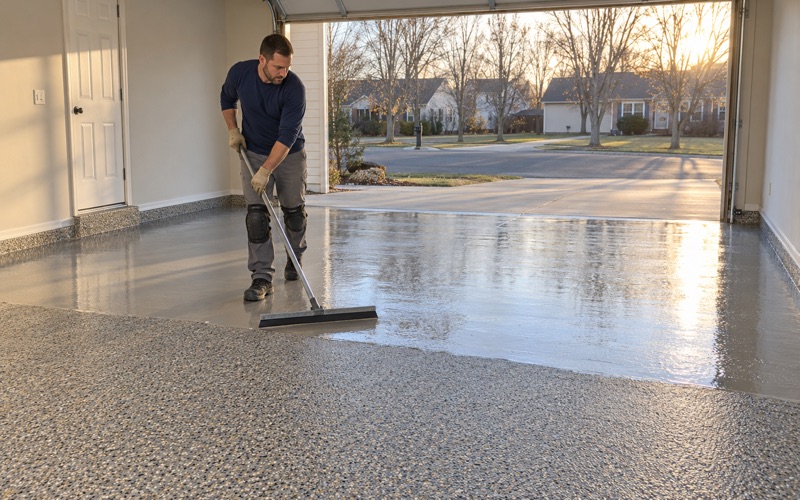
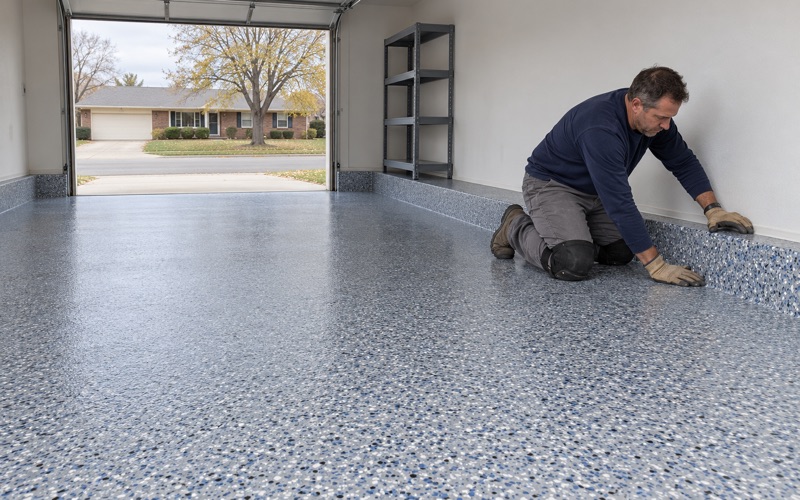
The Food Code does not govern a home garage, so this is about the floor, not a rule. A sealed coating with a vinyl flake broadcast and a polyaspartic topcoat gives that corner a surface a towel can clear, and a mat under the tap catches the drips we cannot design away.
Salt, Moisture and Timing
A Wauconda garage floor also has to take winter. The systems we choose for garages are picked to stand up to the brine and rock salt that ride in on tires, and they are chosen to resist hot tire pickup, so the floor under the beer fridge holds up to the car parked beside it.
Moisture testing comes first here as well, with an ASTM F2170 relative humidity probe or an ASTM F1869 calcium chloride test chosen for the slab. In deep winter an unheated garage is told to wait, because a slab that cold is unlikely to let the coating cure properly.
What the Written Proposal Covers
Whether the floor is a taproom cooler or a garage corner, the proposal names the product line, the number of coats and the finished thickness, so you can hold the result against the quote. It also spells out what the coating warranty leaves out, and moisture is the first exclusion we name.
For a business that cannot close its cooler for long, we phase the work around operating hours and use overnight or weekend windows where the cure allows. Grinding dust is captured at the machine with a vacuum, not rinsed toward a floor drain, and products are chosen inside the Illinois VOC limits for floor coatings.
- 20+ Years on Concrete
- Moisture Tested First
- Written Scope and Pricing