Bartlett Epoxy Flooring brings more than 20 years of experience to epoxy flooring in Schiller Park, and the floor we think hardest about here is one that rarely gets attention: the strip of concrete under a storage rack. Our job is to make that strip as easy to clean as the open aisle beside it, without pretending a coating changes what the health code asks of the room.
That strip matters most in food storage, where shelving holds stock off the slab and leaves a band of floor that has to be reached, seen and cleaned. We coat commercial storerooms, kitchen back rooms, garages and basements, and in every one the decision starts with the slab underneath, not with a color chart.
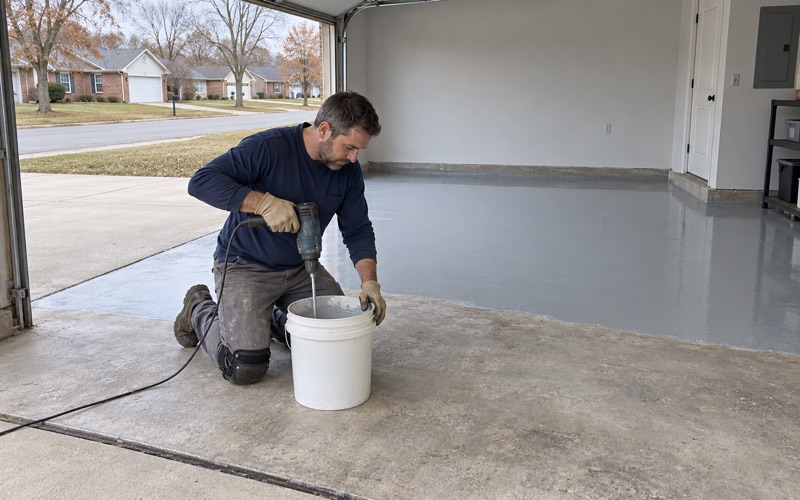
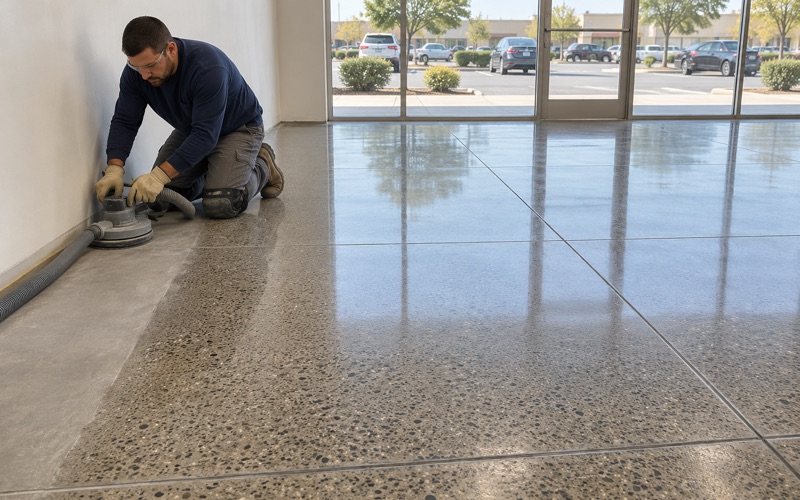
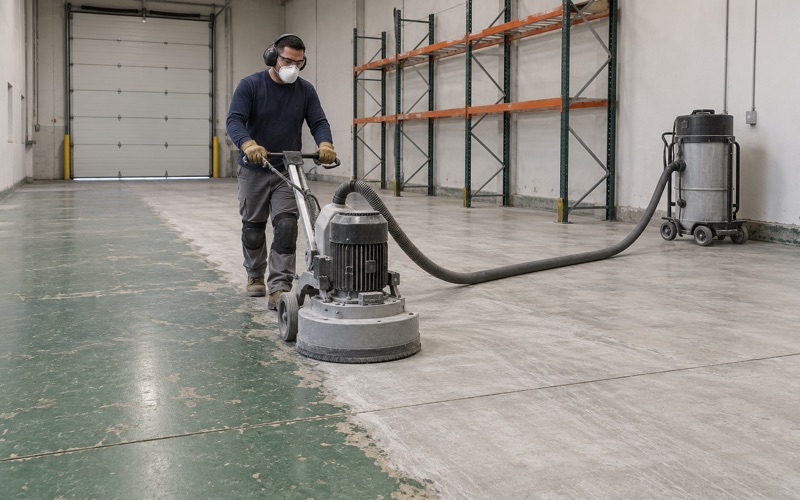
Before a price is final, we test the slab for moisture and map every crack and old coating; when work starts, the concrete is opened with a diamond grinder or shot blaster, never an acid etch. The written proposal names the product line, the coat count and the finished thickness, so whoever signs it can check the floor against the paper.
A Shared Licensed Kitchen on River Road
A Small Village With a Big Commercial Share
Schiller Park is a Leyden Township village that counted 11,709 people at the 2020 census, on 2.77 square miles beside O’Hare. Commercial property makes up 55 percent of its 2023 equalized assessed value, spread across more than 400 businesses that range from hospitality and travel to machine shops.
That mix is why a small village carries a sizable commercial-floor market alongside its garages. A shared kitchen fits the pattern: small operators renting space by the hour instead of building their own, which puts many hands on one floor.
What Hub Kitchen Rents Out
Hub Kitchen at 4318 River Road is listed as a shared commercial licensed kitchen for food-based businesses, open around the clock. Its marketplace listing names a rack oven, a proofer, a dough sheeter and a tilt skillet, and it serves caterers, bakers, food trucks, meal-prep cooks and packaged-goods makers on hourly rates and six-month or annual leases.
The line that caught our attention is storage: dry and cold storage priced based on need, plus freezer space. We have never worked there and have not seen those rooms, but the listing describes a common arrangement, where several small food businesses keep stock side by side in one shared kitchen and none of them owns the floor.
Who Signs Off on a Food Floor Here
A kitchen or food storeroom inside the village answers to the Cook County Department of Public Health, which covers suburban Cook County outside Chicago, Oak Park, Stickney Township, Evanston and Skokie. Schiller Park does not run its own health department, so the county, not the village, is the health authority for that room. Owners should confirm storage details with the county before a layout is final.
On our side, the village requires contractors to be licensed with Schiller Park before construction starts, registered through the Community Core app with scope, cost, insurance, bond and workers’ compensation as applicable. That license year runs May 1 to April 30, so we confirm the registration and any permit question with the Community Development Department before a job goes on the calendar.
Looking for epoxy-flooring closer to Prospect Heights? See Prospect Heights Epoxy-Flooring.
Six Inches Off the Floor and the Case-Lot Exception
What Section 3-305.11 Says
The FDA Food Code 2022, in section 3-305.11, protects stored food by keeping it in a clean, dry location, away from splash and dust, and at least 6 inches above the floor. The code states it as 15 centimeters or 6 inches, and it applies to an open bin of flour as much as a tub of prepped sauce.
As we read it, the point is not the height for its own sake. Six inches of clear space lets someone see the floor under the shelf, get a mop or a scrubber into it and notice a spill before it sits for a week. That makes the floor under the rack part of the cleaning plan, not an afterthought.
Dollies, Skids and Packaged Goods
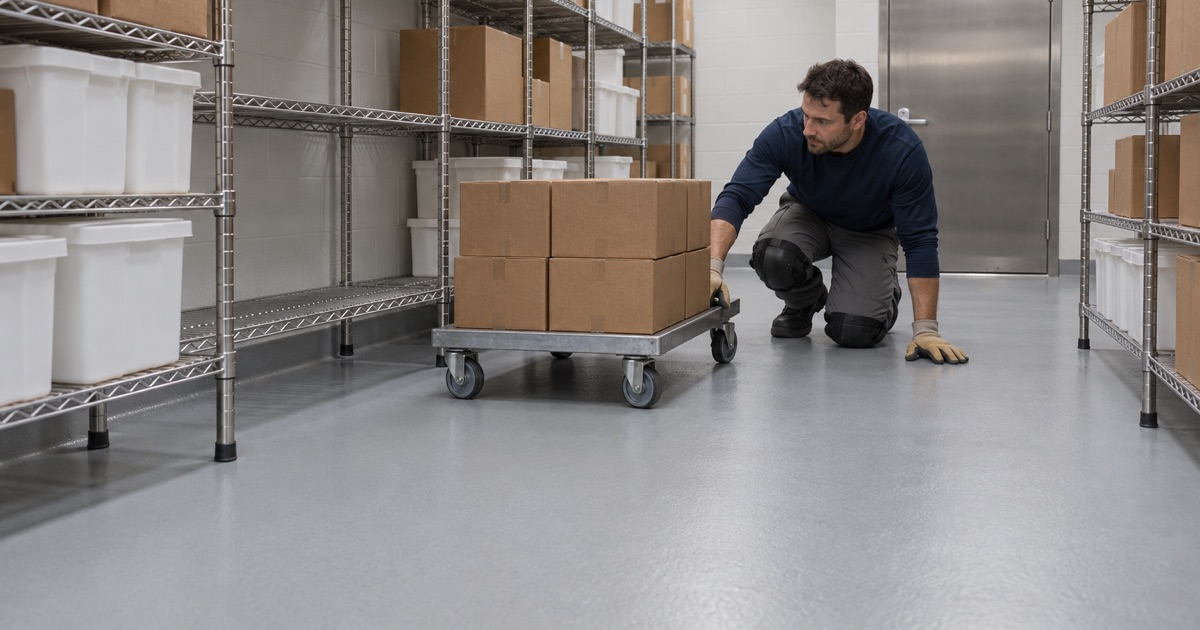
Paragraph (B) of the same section carves out one exception. Food in packages and working containers may sit less than 6 inches up when it rests on case lot handling equipment, the dollies, pallets and skids that move cased goods in and out. Paragraph (C) adds a few more for things like milk in plastic crates, on a floor that is clean and not exposed to floor moisture.
That exception is where cleaning gets harder in a storeroom. A dolly rolled in and parked against the wall, or a skid set down in place, sits low enough that the floor beneath it is harder to see. We like a finish that shows dirt rather than hiding it, and a continuous surface with no open joint for crumbs to settle into under the skid.
What a Coating Does Not Change
A sealed epoxy floor does not change where food may sit. The 6-inch rule and its exceptions apply on a coated floor exactly as they do on bare concrete, and the shelving still has to be there. What the coating changes is how completely the space under that shelving comes clean.
It is also not pest control. A smooth floor with no cracks leaves fewer places for spilled flour or sugar to hide, which helps a cleaning crew and an exterminator do their jobs, but it does not keep anything out of a building. We put that in writing rather than let a sales pitch imply otherwise.
One Storeroom, Many Tenants: The Floor Under the Racks
A Floor That Runs Under Every Rack to the Wall
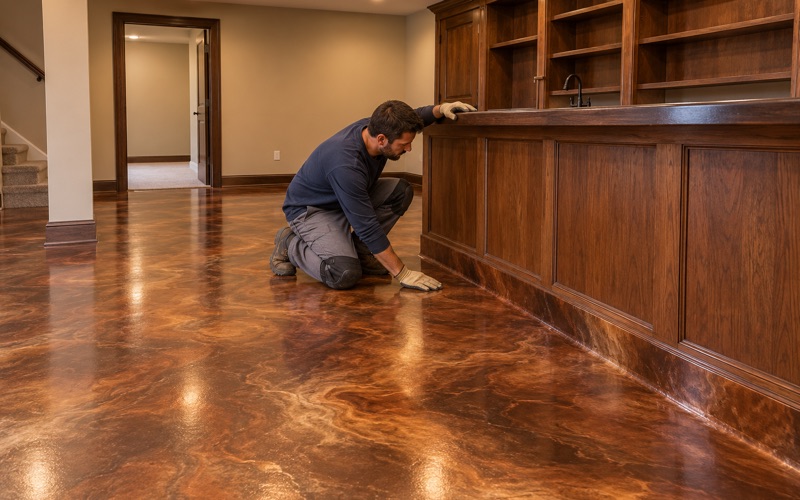
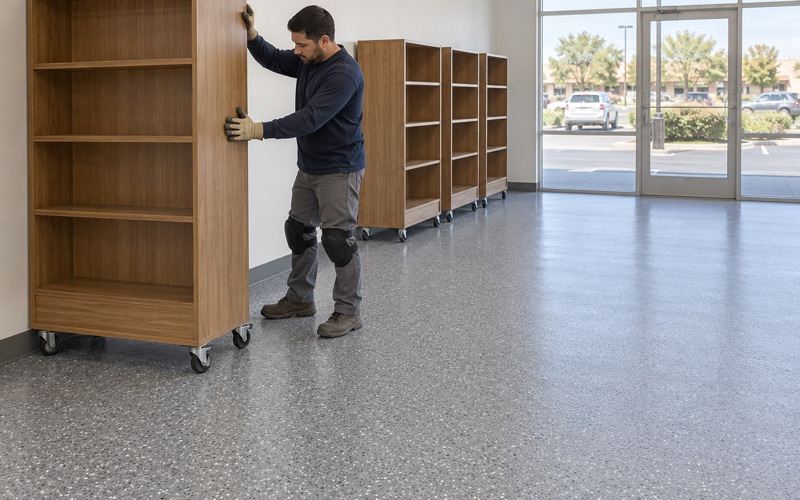
In a room several businesses share, nobody owns the corner behind the third shelving unit, and that is where a mop stops. We coat the whole storeroom as one continuous surface, under the racks and into the corners, rather than coating the aisles and leaving bare concrete beneath the shelves for whoever moves them next.
Where the floor meets the wall, the Food Code’s section 6-201.13 calls for a coved juncture in many food areas, so the wipe-down does not end in a sharp right angle full of debris. A resin cove base turned up the wall continues the floor without a seam, which matters most in a room where tenants change but the corners stay.
Flour, Sugar and the Split Bag
A baker’s storeroom eventually sees a split flour bag. On a cracked or dusting slab, that flour works into joints and pores, mixes with concrete dust and turns into paste the first time the floor is mopped. On a sealed floor with joints filled flush, the same spill sits on top where a vacuum or flat mop lifts it.
In a shared space, that spill is also one tenant’s problem landing in another’s aisle. A floor where spills stay visible is more likely to get cleaned by whoever finds them, before they draw pests toward the next shelf. Food Code section 6-201.11 permits antislip finishes for safety, so a fine broadcast texture can still be chosen for a room that gets wet-mopped.
Cold and Freezer Rooms
Rented cold and freezer storage adds a timing problem. A coating cures according to the slab’s temperature and the dew point spread at its surface, not the calendar, and a walk-in floor that has been held cold for years does not warm up overnight. We plan those rooms around a shutdown long enough to bring the slab into the product’s range.
In a shared kitchen that usually means phasing: one room at a time while tenants shift stock to the others, with overnight and weekend windows for the prep floor. Amine blush, a greasy film some epoxies form in cold, humid air, is checked and removed before the next coat so layers bond instead of peeling apart later.
Matching the System to the Room
A dry storeroom does well with a 100% solids epoxy over a ground slab and a fine quartz aggregate broadcast, sealed so the texture stays shallow enough to mop clean. A cooler or a room washed down daily is where we weigh urethane cement instead, since it is a common choice for wet, cold and hot kitchen floors.
Either way, each room gets its own line in the proposal rather than one blended price. When a storeroom and a prep floor get different systems, the transition between them is detailed flush, so a mop or cart crosses the line without catching an edge.
Pantry and Garage Storage Shelving at Home
Existing Slabs, Recoat and Repair
The same logic follows food and supplies home. Schiller Park has 4,514 housing units, none built in 2010 or later, and 62.5 percent of them date from the 1950s and 1960s. Residential work here is recoat and repair on existing slabs, which often begins with taking an old paint or coating off the concrete.
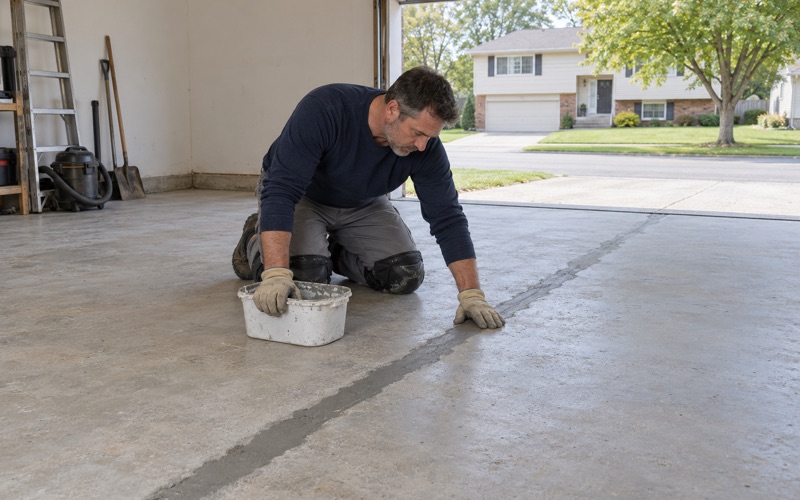
Old coatings come off mechanically, with the grinder’s dust captured at the machine by a vacuum rather than washed toward a floor drain or sump. When a slab needs repair or replacement before it should be coated, the written scope says so instead of hiding the problem under a fresh color.
Garage Shelving and Winter Salt
A garage is where many households keep bulk paper goods, canned food and a second freezer beside steel shelving. Those shelves sit on the slab that also catches meltwater from tires carrying brine and rock salt all winter, so the coating has to handle salt and standing water at the shelf feet, not just under the car.
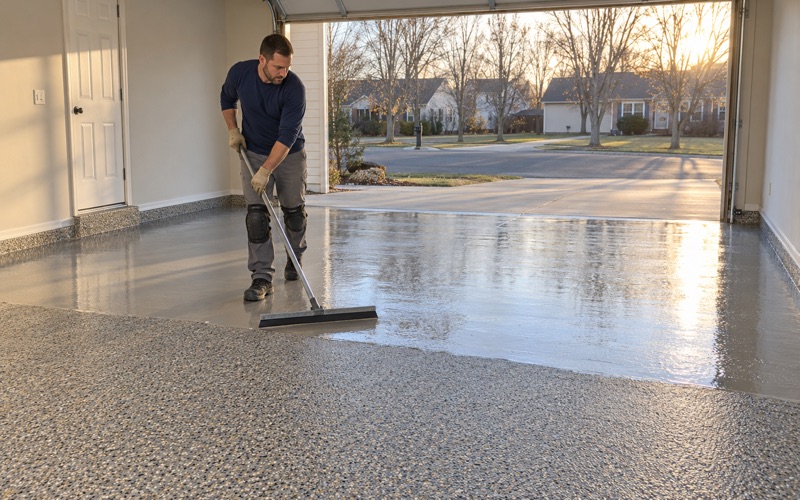
We pick garage systems for that exposure: an epoxy base with a vinyl flake broadcast and a polyaspartic topcoat is a common choice, run continuously under the shelving so salt residue rinses out from the back wall. Hot tire pickup is the failure we design against, and the topcoat is chosen so warm tires parked on it do not lift it.
Basement Pantry Shelves
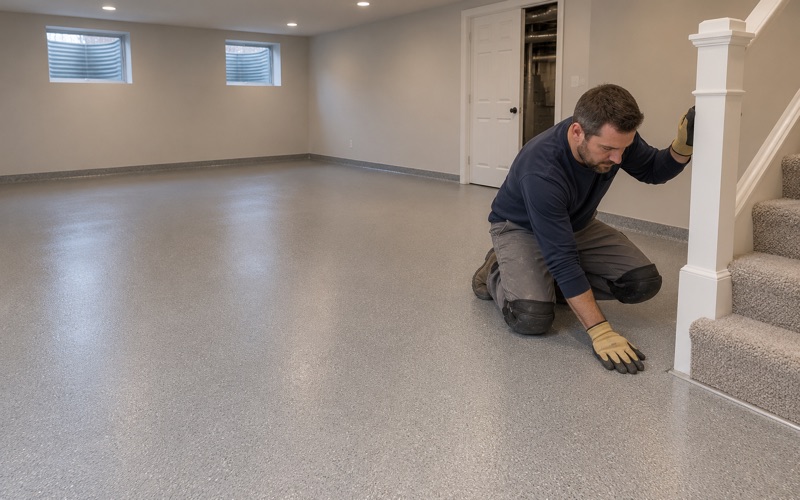
Some older homes keep a pantry run of shelves in the basement, and the slab under it is the one most likely to carry moisture. A coating does not stop seepage, a sewer backup or a sump that cannot keep up, so we read the floor for signs of past water before recommending anything.
Moisture vapor transmission and hydrostatic pressure are the first exclusions we name in any coating warranty, and we name them before the job is sold. Home jobs over the Illinois threshold also get a written contract and the Home Repair: Know Your Consumer Rights pamphlet before any grinding starts. A floor coating is never sold as radon reduction either, since in Illinois that is licensed mitigation work.
- 20+ Years on Concrete
- Moisture Tested First
- Written Scope and Pricing