Bartlett Epoxy Flooring brings more than 20 years of experience to epoxy flooring in River Forest, and the floors we think hardest about here are the ones that take winter head-on. A coated surface that meets wet boots every morning lasts as long as the tools used to clean it allow. This page covers that routine and the system that sits underneath it.
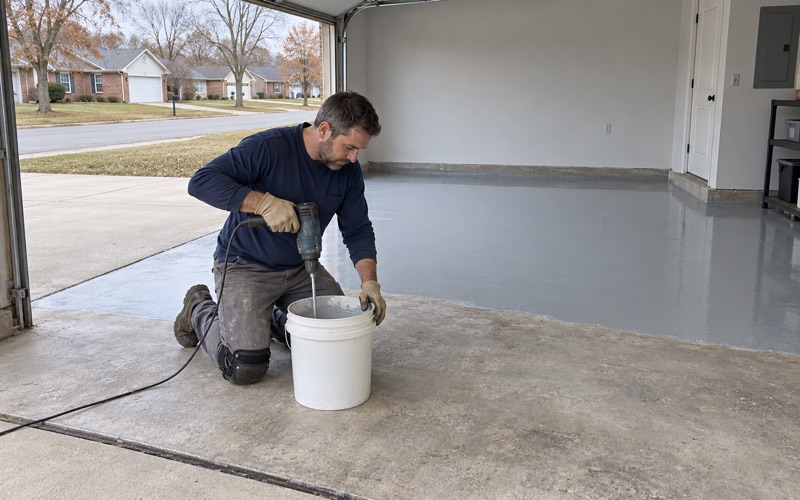
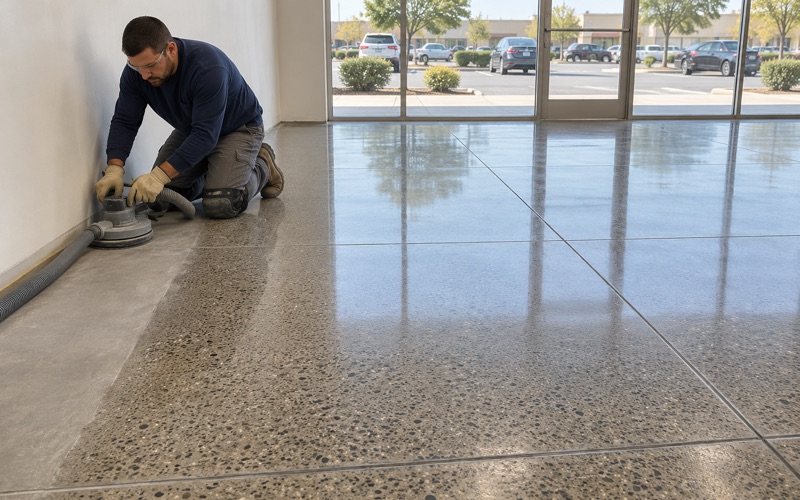
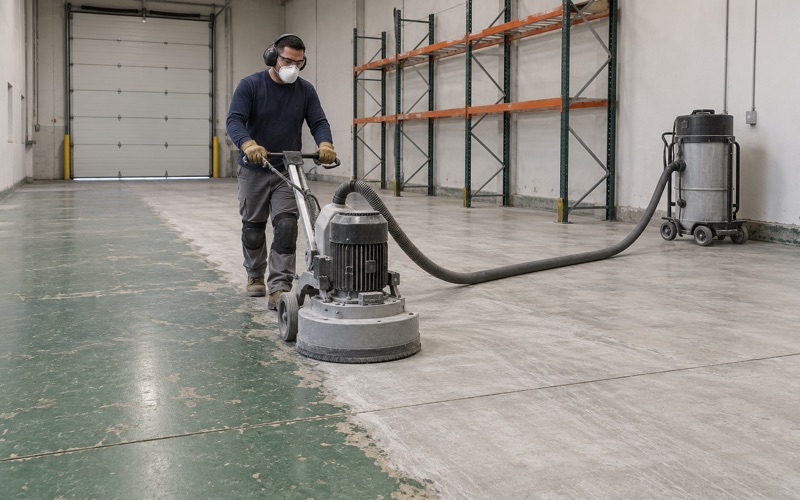
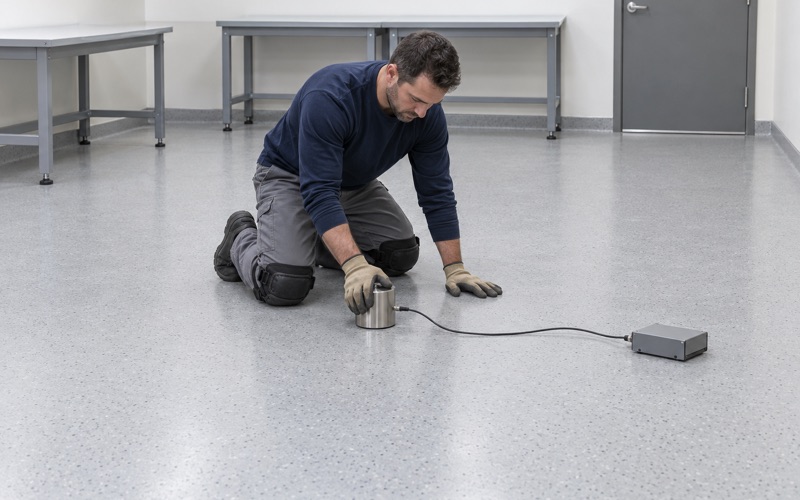
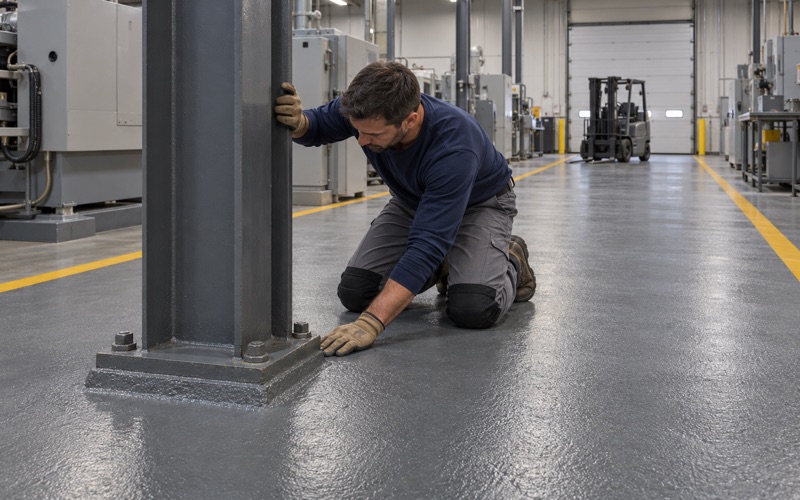
Every job starts the same way. We open the slab with a diamond grinder or a shot blaster, never an acid etch, so the coating has a profile to bite into, and we run a moisture test before the price is final. Cracks, spalls and old coatings are mapped first, and if a slab needs repair or replacement before it should be coated, we tell you that instead of selling a floor.
What follows borrows a rule from a local playing surface, because it is the clearest statement we know of how to treat a coated floor in snow. The short version is plastic, rubber and patience. A steel edge has no place on the finish.
Platform Tennis and the Paddle Hut at Keystone Park
The River Forest Park District sells annual passes for its four platform tennis courts in Keystone Park, on Keystone Avenue between Lake and Central. Platform tennis is a cold-weather game played on a raised metal deck, and the district’s own guidelines for the courts read like a maintenance manual for a surface that has to survive snow.
A Warming Space Open Through the Cold Months
Passholders get access to the Paddle Hut, with a fob key, from the Wednesday after Labor Day to mid-May. The guidelines describe it as a social and warming space for players before and after court use, open from 7:00 a.m. to 11:00 p.m., with later closing on Tuesday and Wednesday nights.
That season is exactly when a floor near a door takes its worst punishment. Players come in off a snowy court, stand around in wet shoes and head back out. We have not seen the hut’s floor and say nothing about its finish; the point is the pattern of use, which a mudroom owner will recognize.
Plastic Shovels Provided, Metal Shovels Prohibited
The snow-removal rule is blunt. Plastic shovels are provided and kept in the Paddle Hut, and the use of metal shovels on the courts is prohibited because they will damage the metal deck. The district also bans any type of ice melt product on the decking.
Notice the logic. The owner of the surface protects it by choosing the tool, not by hoping the surface is tough enough to shrug off the wrong one. A park district that maintains its own courts decided the cheap plastic blade was worth stocking because, in its own words, metal will damage the deck.
Snow Off First, Then the Court Dryers
Each court has a switch for dryers designed to dry the playing surface, not to heat the court area. The guidelines say to turn them on only after all snow has been shoveled, because running them over snow leaves the court in an icy state. A court typically takes about 45 minutes to dry.
Shovel first, dry second is the same order we give for an indoor coated floor. Remove the bulk of the water mechanically, then deal with what is left. Skipping the first step just spreads the problem thinner and leaves it on the finish longer.
Looking for epoxy-flooring closer to Brookfield? See Brookfield Epoxy-Flooring.
Why a Steel Edge Is the Wrong Tool on a Coated Floor
We install hard floors, and we still tell owners plainly that no coating shrugs off a steel blade. Epoxy and polyaspartic finishes resist a great deal, but a steel edge dragged under body weight concentrates force on a line a fraction of an inch wide.
What a Shovel Blade Does to a Topcoat
The first casualty is the topcoat. A metal blade pushed across a floor catches on any raised flake or aggregate and leaves bright scratches through the gloss, and repeated passes in the same lane wear that clear layer thin. Once the topcoat is breached, the color coat underneath takes the traffic it was never meant to see.
Edges are the second risk. A blade that hits a control joint, a threshold or the lip of a patched spall can lift a chip of coating, and a chip at an edge is where water starts working under the film. Small repairs are possible, but they never quite disappear into a finished floor.
Ice Choppers and Scrapers
An ice chopper is worse than a shovel because it is built to strike rather than slide. Chipping a frozen ridge off a coated garage floor puts impact load straight into the film, and on an older slab it can crack loose a section of the bond along with the ice.
Let ice that forms on a heated floor soften and come up with a rubber squeegee or a plastic blade. In an unheated space, push away what moves and leave the rest until it loosens. Patience costs a few minutes; a gouge costs a repair visit.
Building the Floor to Take Winter Use
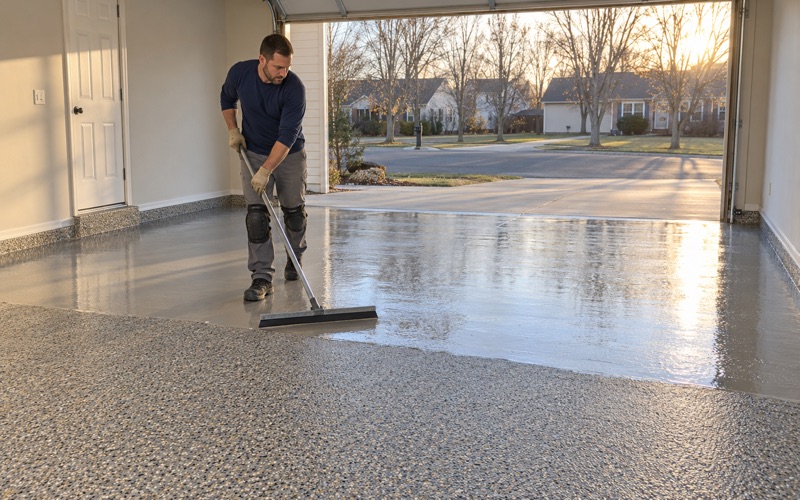
Tool discipline matters most, but the system matters too. For floors that take winter traffic we usually build on 100% solids epoxy over a diamond-ground profile in the ICRI CSP range the primer calls for, then finish with a polyaspartic or polyurea topcoat that holds its gloss better under abrasion.
Where boots land hardest, a quartz aggregate broadcast gives a tougher wearing layer than decorative vinyl flake alone. Your proposal names the product line, the number of coats and the finished thickness, so you can check the floor you get against the floor you were quoted.
Push It Off, Then Dry It: The Winter Routine
The park district’s order of operations translates almost word for word to a garage, a back hall or a basement entry. Here is the routine we leave with owners after a coating cures, written for the months when the floor is wet more often than it is dry.
Plastic Blades and Rubber Squeegees
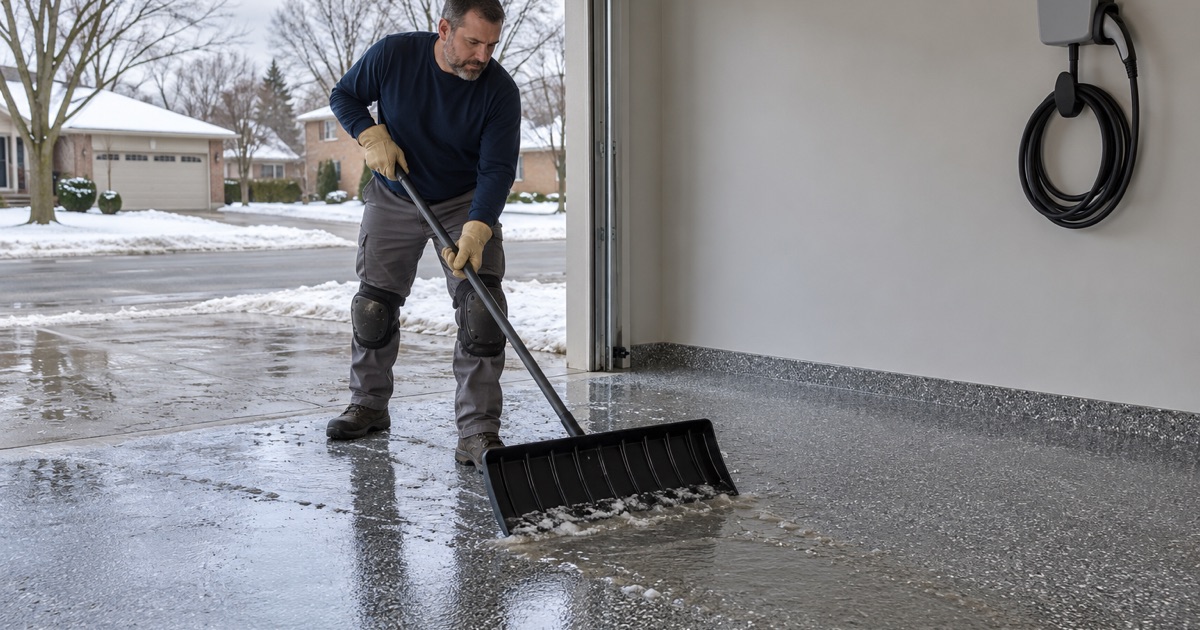
Keep a plastic-bladed shovel and a wide rubber squeegee by the door, the way the park district keeps its plastic shovels in the hut. Snow that falls off a car or a pair of boots gets pushed toward the door or the drain while it is still loose, before it melts into a puddle or refreezes into a ridge.
Squeegee blades wear, and a torn rubber edge can expose the metal frame behind it. Check the blade each season and replace it when the rubber is nicked; a squeegee with its frame showing is a metal tool in disguise.
Wet-Vacuum the Slush, Don’t Scrape It
Slush is the stage people are tempted to attack with whatever is nearest. Push it into one corner with the squeegee and lift it with a wet-dry vacuum instead. That takes the water and whatever it carried off the floor in one pass, without dragging anything sharp across the finish.
Then let the floor dry before the next round of traffic, the same way the courts get their dryers only after the shoveling is done. A damp mop with a neutral cleaner finishes the job once the standing water is gone. We name the cleaners that suit your topcoat in the care sheet.
What Stays Off the Floor
Steel shovels, ice choppers, putty knives and the edge of a garden spade all stay off a coated surface. So do snowblowers with a metal scraper bar, which some owners run straight into an attached garage to clear the last few feet.
Deicers are a separate question. Whether a given deicer is safe on a coated floor depends on the product and the topcoat, so we answer that on the data sheet for your system rather than with a blanket rule.
Warming Huts, Mudrooms and Garages That Take Snowy Boots
River Forest’s building stock is old: roughly 42 percent of housing units predate 1940 and nearly 69 percent predate 1960. Prewar basement slabs and older garage slabs are the norm here, and the rooms that take snowy boots, from a back entry to an attached garage, usually sit on concrete that has seen decades of use.
Mudrooms and Back Entries
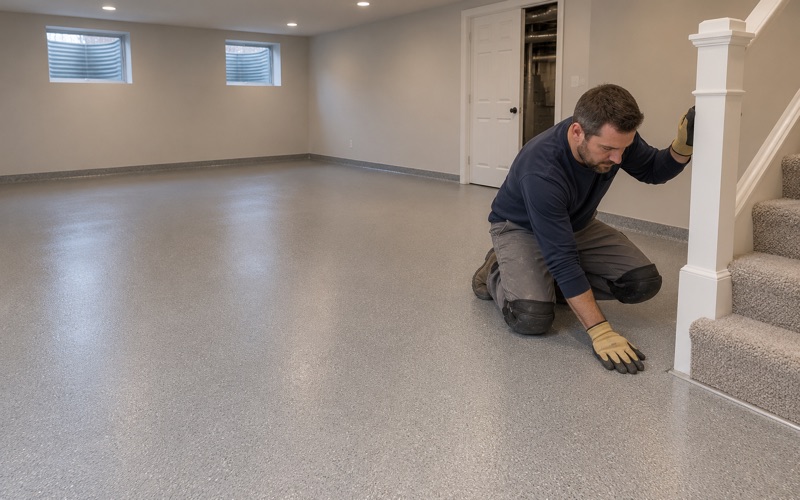
A mudroom floor sees the same cycle as the Paddle Hut on a winter morning: wet boots in, a pause, wet boots out. On a basement-level entry we read the slab for past water first, because a coating does not stop seepage, a backup or a sump that cannot keep up.
Then we test, using a calcium chloride test to ASTM F1869 or in-situ relative humidity probes to ASTM F2170, and if the readings call for it we specify a moisture-mitigation primer. Moisture is also the first exclusion we name when we explain what a coating warranty leaves out.
Warming Rooms and Shared Entries
Shared warming spaces, from a club’s entry to a church vestibule, take the heaviest version of this traffic: many people, wet shoes, short stays. For a floor like that we keep the topcoat sheen low enough that scratches from a stray tool read as wear rather than damage, and we plan a recoat interval before the first season starts.
Where those rooms cannot close, we phase the work into overnight and weekend windows so the space stays in use through its busy season. The cleaning routine is the same one the park district writes into its pass: plastic tools, push the snow off, then dry.
Attached Garages in Winter
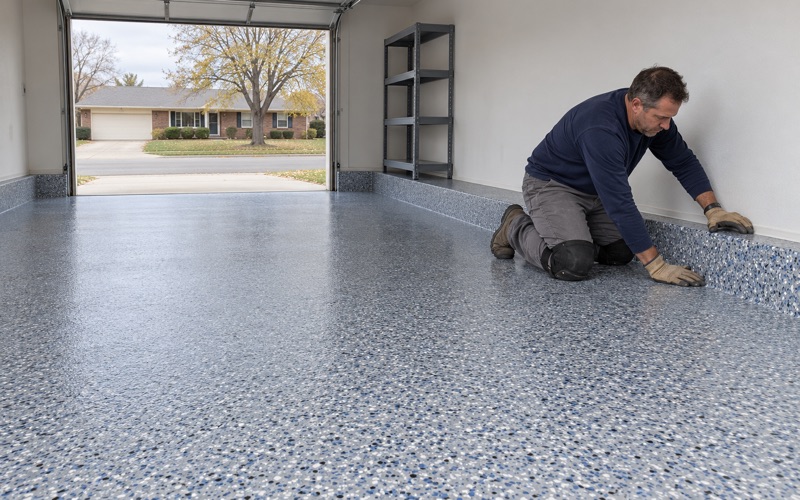
An attached garage is often the busiest winter room in a house, and the one most likely to meet a metal shovel. We place the hardest-wearing texture in the lanes where cars park and people step out, and we talk through the plastic-tools rule before we hand the floor back.
Timing matters as much as the system. Cure schedules follow slab temperature and the dew point spread at the surface, not the calendar, so an unheated garage in deep winter is told to wait for warmer weather rather than coated into a cold slab that will not cure properly.
Paperwork Before the Grinder Starts
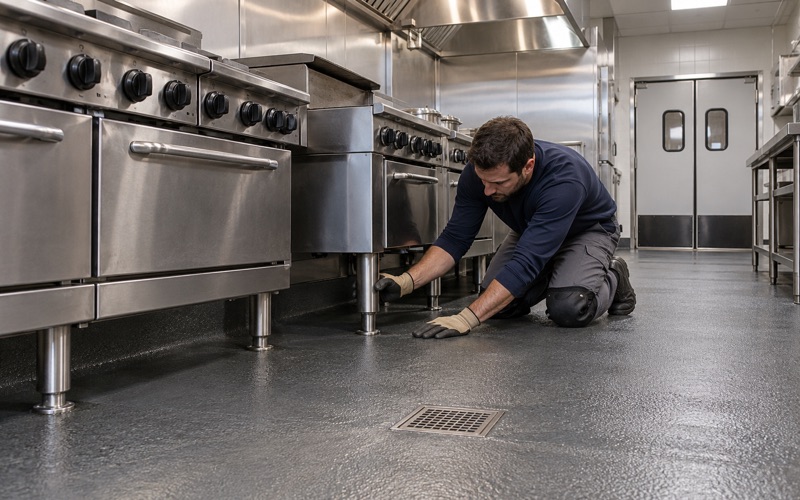
Home jobs over the state threshold get a written contract and the Illinois Home Repair: Know Your Consumer Rights pamphlet before any grinding begins. We capture grinding dust at the machine with a vacuum instead of rinsing it toward a drain, which matters in a back entry where the nearest opening is a floor drain.
Permit questions go to the Village of River Forest, whose building codes sit in Title 4, Chapter 1 of the Municipal Code, before we put a date on the calendar. When the floor is done, the plastic-blade rule goes home with it, written into the care sheet.
- 20+ Years on Concrete
- Moisture Tested First
- Written Scope and Pricing