Bartlett Epoxy Flooring installs metallic epoxy floor systems in Bartlett, IL, serving surrounding cities including Winfield, Warrenville, Wood Dale, Bensenville and Campton Hills. A metallic floor uses pearlescent pigments suspended in clear epoxy, worked by hand while wet so the finished surface looks like marble, liquid metal or moving water. No two are alike, and that is the point of choosing one.
It is also the least forgiving floor we install. The pattern forms in the minutes before the resin starts to set, the slab underneath has to be flat and clean, and any dust, outgassing or temperature swing shows up in the finished surface. After more than 20 years on concrete, we treat a metallic floor as craft work built on ordinary, careful preparation.
This page covers where metallic epoxy works, how it is installed, the design choices involved, and how to keep the floor looking the way it did on the first day.
Where a Metallic Epoxy Floor Works
Basements and Living Spaces
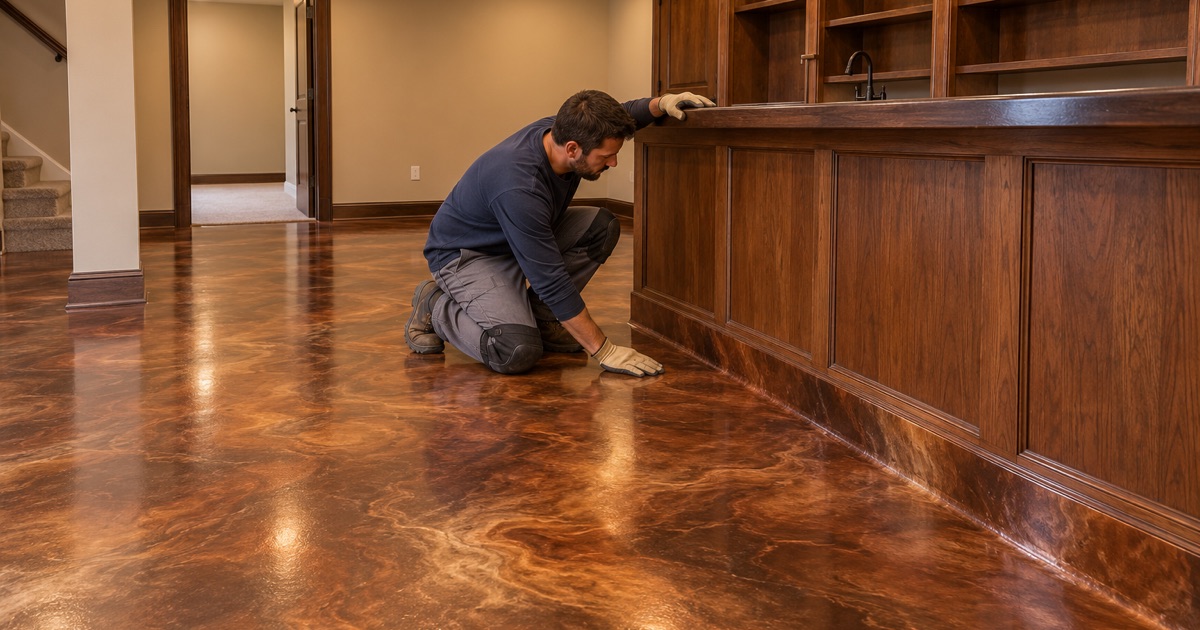
A finished basement is the most common home for a metallic floor. It turns a plain slab into a feature floor without adding height or seams, and it handles spills, pets and furniture better than carpet does. Because a basement stays climate controlled, the resin cures evenly and the pattern stays consistent from wall to wall.
The slab still has to pass a moisture test first. A metallic system is a thick clear film, and vapor pushing up from below shows as cloudy patches or bubbles that cannot be polished out afterward.
Showrooms, Retail Stores and Offices
Showrooms, salons, retail stores and offices use metallic floors as part of their look, choosing colors that echo signage or fixtures. The finish reflects light well and gives a high-end appearance with no grout lines to collect dirt. It is seamless across large rooms, which suits open plans.
Commercial jobs are phased around opening hours, and many go in over a weekend so the store reopens on a cured floor. Busy entries get a tougher topcoat to slow the scratching that every glossy floor eventually shows.
Garages, and Where Metallic Struggles
Metallic floors can go in garages and look striking under good lighting. They are also less forgiving there: tires, grit and road salt scratch a glossy clear coat, and sunlight through an open door ambers an epoxy surface over time. A polyaspartic or urethane topcoat helps with both problems.
For a garage in heavy daily use, we show a flake floor alongside a metallic sample. Some owners choose metallic for a show garage and flake for the bay where the daily driver parks.
How a Metallic Floor Is Installed
Grinding and Flattening the Slab
Every metallic floor starts with diamond grinding to open the surface and take down high spots. Clear resin magnifies whatever sits under it, so cracks, patches and trowel marks that would vanish under flake can telegraph through a metallic coat. Cracks are filled and ground flush, and low spots are leveled before any coating.
Grinding dust is captured at the machine, and the floor is vacuumed several times before the primer goes down. A single hair or lint fiber caught in a metallic coat stays there for the life of the floor.
Primer and Color Base
A primer seals the concrete so air trapped in the slab does not rise as bubbles into the decorative coat. A pigmented base coat follows, often in a dark or neutral tone, and it sets the depth of the finished floor. Choosing that base color matters as much as choosing the metallic pigment itself.
On slabs that test borderline for moisture, a moisture-mitigation primer replaces the standard one. It adds cost, but far less than grinding off a clouded metallic floor and starting again.
Pouring and Working the Metallic Coat
The metallic coat is a 100% solids epoxy carrying pearlescent pigment, poured in ribbons and spread to a set thickness. While it is wet, the crew works it with rollers, brushes, a light solvent mist or air to create veining, swirls or a calmer cloud. That window is short, so the crew size and the plan for the room are settled before mixing starts.
Room temperature and humidity are measured before and during the pour, along with the dew point spread at the slab surface. Condensation or a cold draft at the wrong moment leaves amine blush or haze in the surface.
Cure Time Before Furniture Returns
A metallic coat is thick, and thick epoxy needs time to cure through before the topcoat goes on and again before the room is used. Rushing furniture back onto a soft surface leaves permanent dents and rings in a floor whose whole appeal is its clarity. You get written times for each stage, based on the products and the room temperature during the job.
In a basement or showroom that stays heated, those times are predictable. In a garage or a space with poor heat in winter, we schedule for warmer conditions rather than stretch a cure across cold nights.
Designing the Look
Pigments and Color Combinations
Metallic pigments come in silvers, golds, coppers, blues, grays and many more, and two or three can be layered in one floor. Light pigments over a dark base give the most depth, while tone-on-tone combinations read calmer. We pour sample boards so you can judge the colors under your own lighting.
Samples are a guide rather than a copy. Each pour moves differently, and the final pattern always belongs to that room alone.
Pattern Styles: Marble, Lava and Cloud
A marble look uses fine veins over a soft background, a lava or river look uses bold movement and contrast, and a cloud or smoke look keeps the pattern gentle. The style comes from how the resin is worked, not only from the colors chosen. We agree on it in advance and work a test area when needed.
Busy patterns hide dust and minor scratches better than calm ones. That is worth weighing for a room that sees a lot of foot traffic.
Topcoat and Sheen
A clear topcoat protects the decorative layer. Urethane or polyaspartic topcoats resist scratching and yellowing far better than epoxy alone, and they can be finished in satin or gloss. A fine grit can be added for slip resistance near doors and in damp areas.
The topcoat is the layer you maintain and eventually refresh. Keeping it in good condition is what protects the pattern underneath.
Living With a Metallic Floor
Cleaning and Scratch Care
Dust mop often and clean with a pH-neutral cleaner and a microfiber pad. Grit is the main enemy of a glossy floor, so entry mats and felt pads under furniture make a real difference. Harsh solvents and abrasive scrub pads should stay off the floor.
Fine scratches in the topcoat can be buffed, or the topcoat can be recoated, without touching the metallic layer below. Planning a recoat before the topcoat wears through is far cheaper than repairing the decorative coat once it has been scuffed open.
Slip Resistance Where It Is Needed
A smooth, glossy metallic floor can be slippery when wet. We handle that with a textured topcoat in the places that need it rather than promising a safe floor in general terms. For commercial entries and restrooms, we discuss the texture the space calls for.
More texture softens the glossy look slightly, so it is usually confined to the zones where water or traffic make it worthwhile.
What It Costs and Why
Metallic floors cost more than flake or solid color systems because they take more material, more labor and more experienced hands. Room size, slab condition, the number of colors and the topcoat all move the price. We quote after a walkthrough, with the product line, the coats and the finished thickness listed.
Before you sign, we also explain what the warranty leaves out, starting with moisture rising through the slab.
- 20+ Years on Concrete
- Moisture Tested First
- Written Scope and Pricing