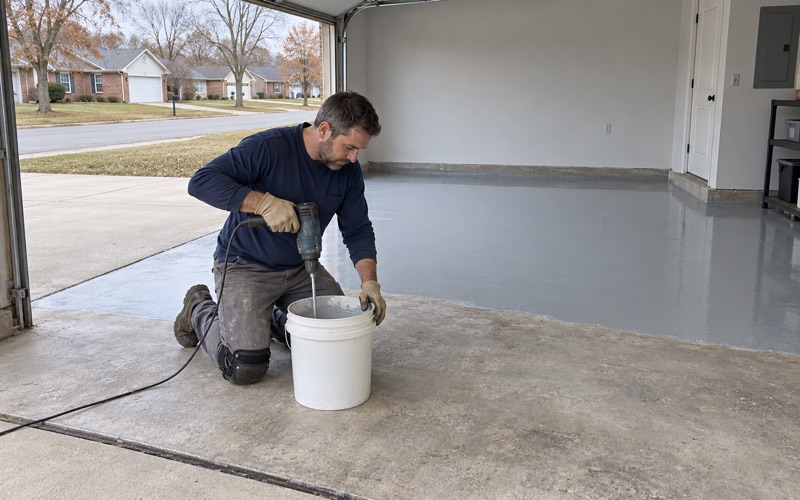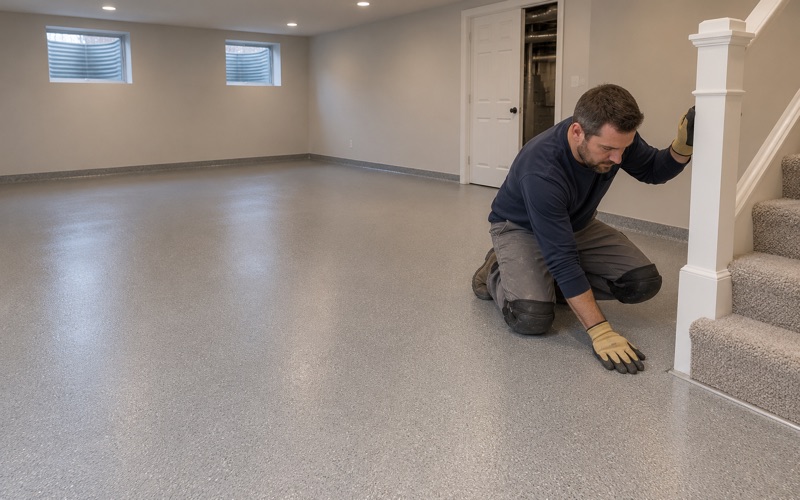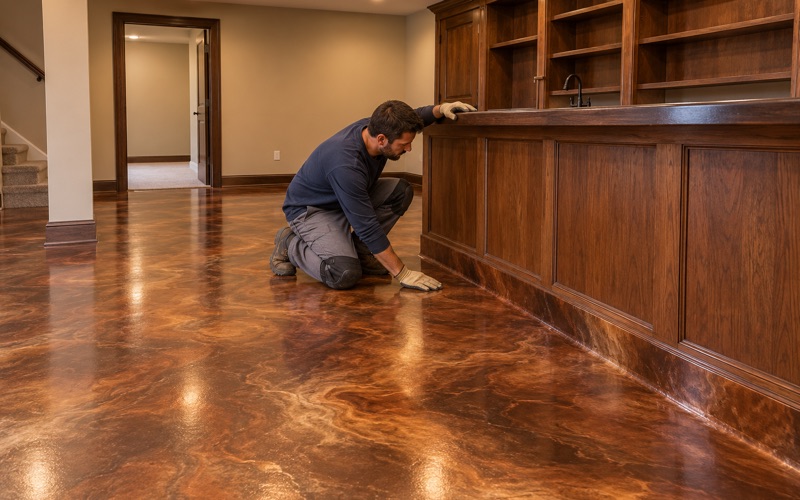
Bartlett Epoxy Flooring brings more than 20 years of slab work to epoxy-flooring in Lemont, and the part of the job we guard most closely happens before any resin is opened. Garage and basement slabs often arrive with a chemical history: someone scrubbed mildew with bleach, someone etched the concrete with acid, or both. Our work starts by finding out which.
Those two chemicals should never be on the same floor at the same time, and a coating gives no protection if they are. That is why our prep is mechanical, and why the rest of this page is about sequence more than shine.
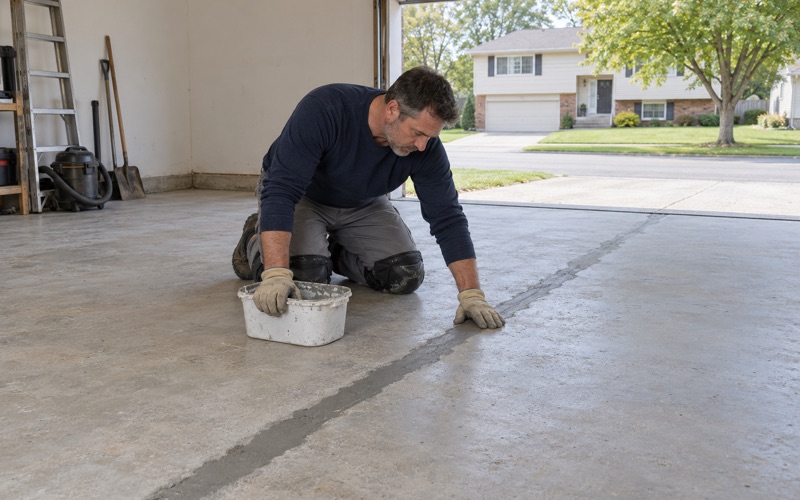
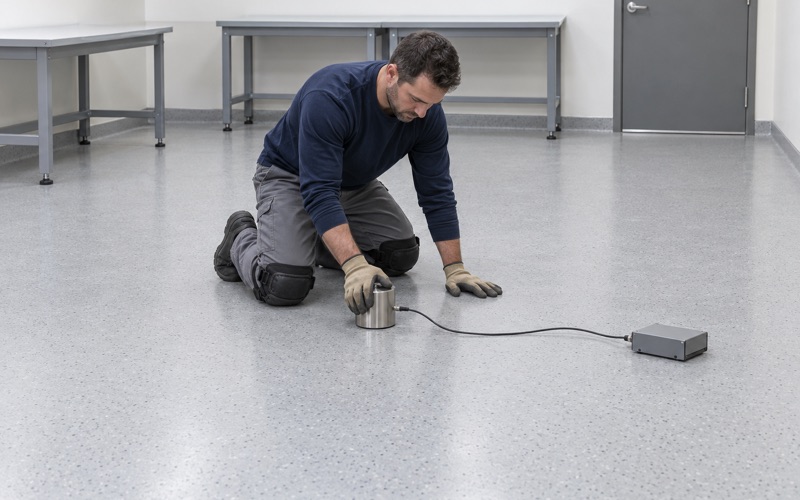
Before a price is final, the written scope includes a moisture test and a map of cracks, spalls and any old coating. The proposal then names the product line, the coat count and the finished thickness, so you can check the floor against the quote.
A Bleach Maker on Lemont’s Main Street
Most epoxy pages talk about color and flake. This one starts with a chemical plant, because the safety sheet of a Lemont bleach maker states the rule that governs the first day of a garage or basement job better than we could.
K.A. Steel Chemicals at Two Main Street Addresses
Lemont sits on a hillside above the Des Plaines River, and the area is home to heavy industrial sites as well as neighborhoods. One of them is a chlorine-chemistry business. EPA’s ECHO database lists K.A. Steel Chemicals as active at two Main Street addresses, and the site at 1001 Main Street sits inside the village. A company profile describes KA Steel as a manufacturer and distributor of caustic soda, sodium hypochlorite and hydrochloric acid.
Olin agreed to acquire the Lemont-based company in 2012, and EPA’s facility report lists it as doing business as Olin Chlor Alkali Products & Vinyls. We have no relationship with either company and have not seen their floors. We name the business because its own paperwork explains a hazard that turns up on ordinary home floor jobs.
What the Hypochlorite Sheet Says About Acid
KA Steel’s own material safety data sheet for sodium hypochlorite solution, recertified in 2012, is blunt. Under fire hazards it says heat and/or acid contamination may generate toxic chlorine gas. It says the solution may react violently with acids, and it gives the odor as that of household bleach.
Its spill section matters most for a floor. It warns, with an exclamation point, not to attempt to pH neutralize a spill because that may release toxic chlorine gas. On a garage floor, that means a bleach puddle is never treated with an acid, and nothing is poured on in the hope of canceling it out.
Why a Closed Garage Raises the Stakes
In a closed garage or a basement, that gas is the hazard, not the coating. A homeowner who washes mildew with bleach on Saturday and pours a do-it-yourself acid etch on Sunday has put the two reactants on the same porous slab, where residue can linger in the pores and joints. Ventilation helps, but the real fix is sequencing.
That is why we treat the two as one decision rather than two chores. Before any grinder runs, we ask what has been used on the floor in recent weeks, and we look for the sandpaper texture an acid etch leaves when nobody remembers. The answer decides whether the first visit is a grinder or a rinse.
Looking for epoxy-flooring closer to Justice? See Epoxy-Flooring Services in Justice.
Muriatic Acid Etching and Why We Grind Instead
Acid etching is the step most likely to bring an acid onto a home floor, so it is the step we leave out. Here is what it does, what it leaves behind and what replaces it.
What Acid Etching Was Meant to Do
Muriatic acid is hydrochloric acid, and a coating maker’s technical note states plainly that it is strong enough to etch concrete. For years it was the do-it-yourself way to open a garage slab before a coating kit, and it is still sold for that job. The idea is sound: a coating needs a roughened surface to grip.
The same note directs the user to neutralize and then repeatedly flush with clean water. It also warns against adding a neutralizer to undiluted muriatic acid, because a dangerous chemical reaction could occur. An etch is not finished when the fizzing stops; it is finished when the slab has been neutralized and rinsed clean.
What an Etch Leaves Behind
Acid adds water, salts and residue to a slab right before a coating that needs a dry, clean surface. If the rinse misses a corner, the leftover acid sits under the first coat. If the etch was uneven, so is the bond, and the same note names grinding as the mechanical alternative for removing sealers.
In a basement there is a further cost. Flooding a slab with acid and rinse water puts moisture into concrete we are about to test for moisture, which muddies the reading that decides the primer. We would rather read the slab as it is, with a calcium chloride test under ASTM F1869 or relative humidity probes under ASTM F2170.
Diamond Grinding as Our Default
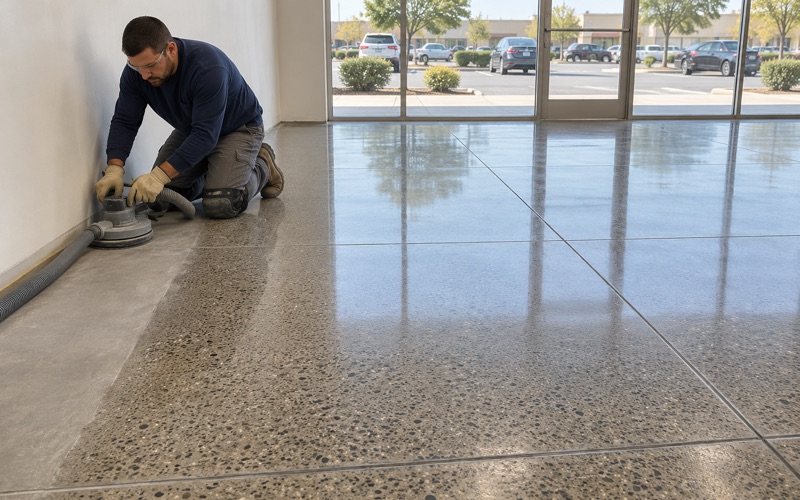
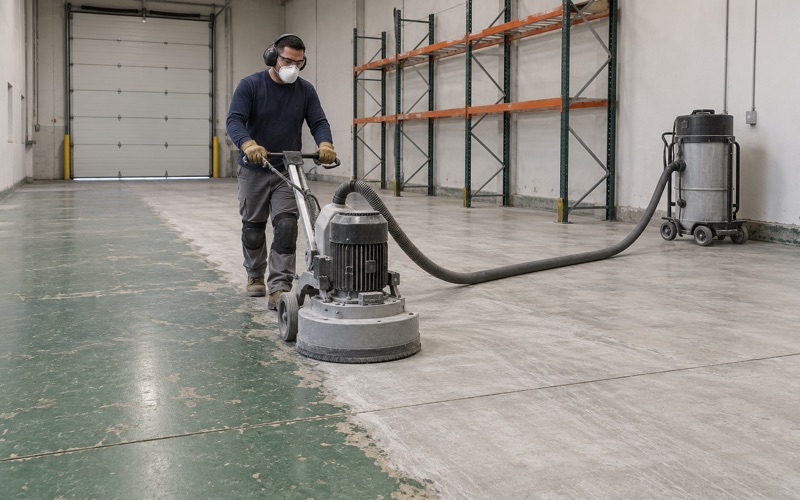
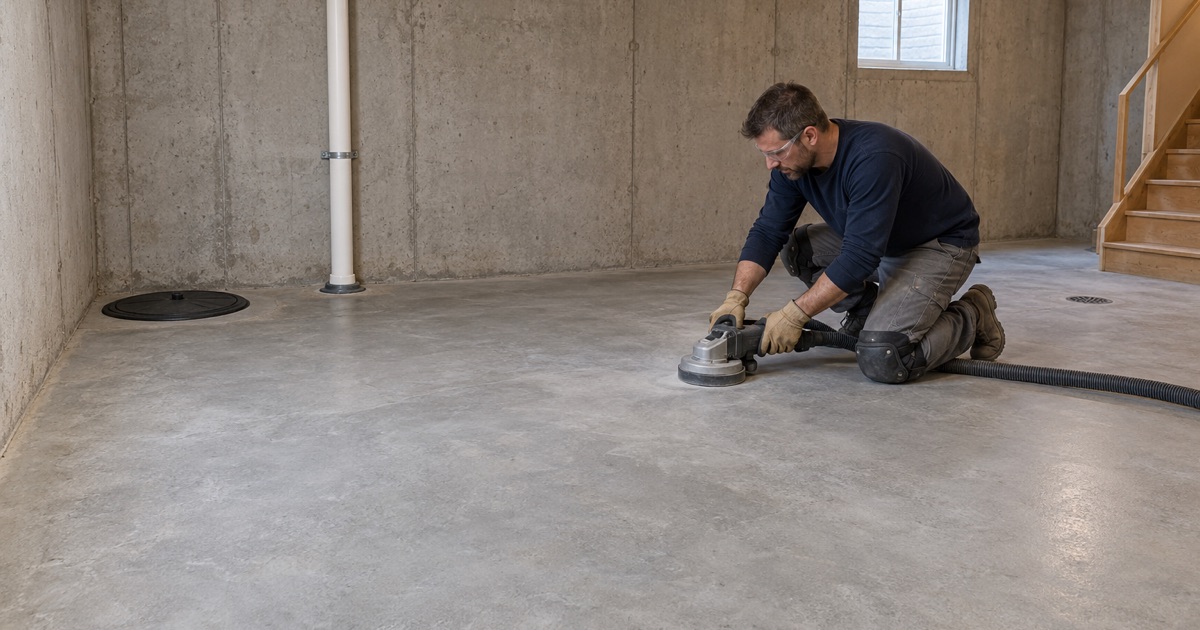
Each slab we coat is opened with a diamond grinder or a shot blaster. Grinding cuts a measurable profile, read against the ICRI CSP scale, and it takes laitance, old sealer and thin coatings off in the same pass. No chemical is added to the floor, so there is nothing to neutralize and nothing to flush.
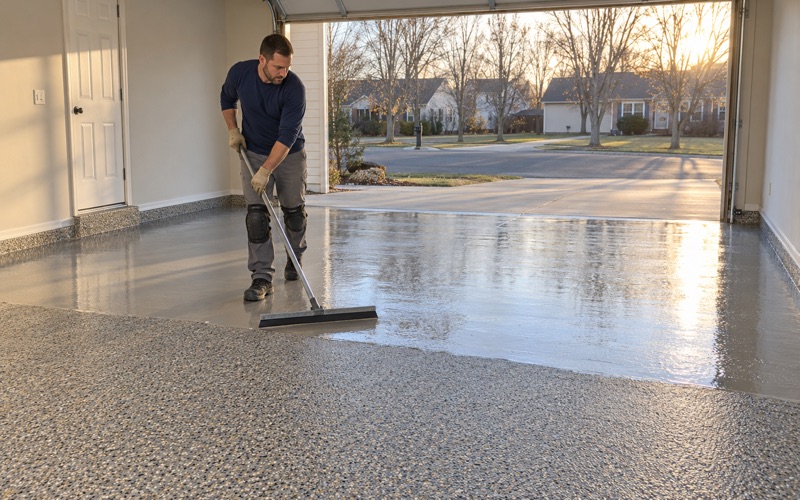
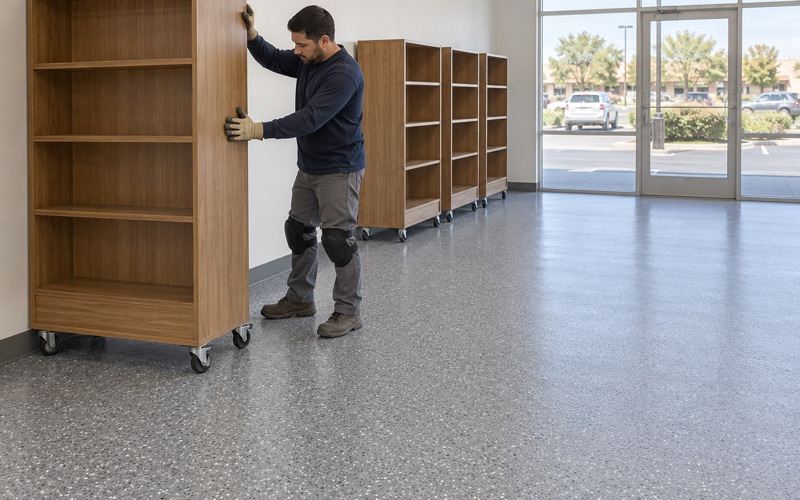
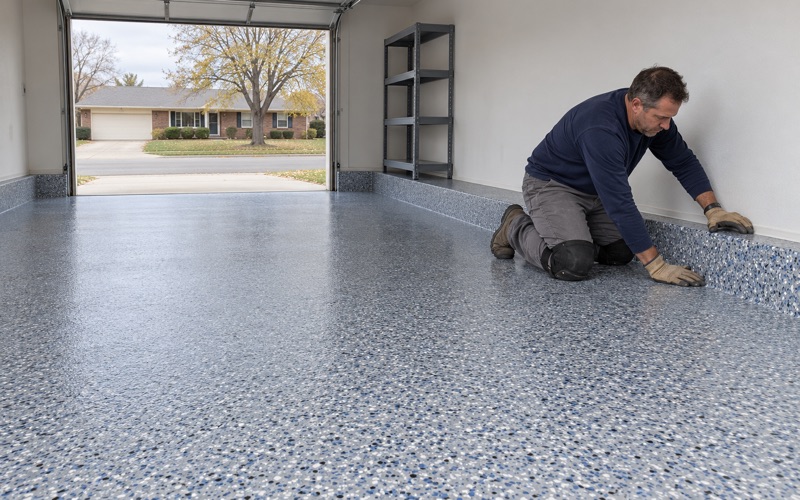
Grinding also shows the cracks, spalls and soft patches a slab really has, and we say so when one needs repair before it should be coated. A profile we cut ourselves, at a depth we chose, is also one we can measure and stand behind. On a garage that will take a vinyl flake broadcast and a polyaspartic topcoat, that profile is what the base coat bites into.
One Floor, One Chemistry: Mildewed Garages and Basements
Damp garages and basements grow mildew, and mildew invites bleach. The sequence below keeps that bleach from ever sharing a slab with acid, and keeps the cleanup from compromising the coating that follows.
Reading the Slab Before Anything Is Washed
Mildew on a slab is a moisture message before it is a cleaning job. Basements in particular are read for past water first, because a coating does not stop seepage, a backup or a sump that cannot keep up. A plastic sheet test under ASTM D4263 gives a quick first look, and the numeric tests follow.
Lemont’s housing stock shapes what we usually find. Census figures show most homes were built since 1990, so the typical garage or basement here is a slab from the 1990s through the 2010s rather than a century-old floor. Newer does not mean dry, and a damp corner with mildew needs the same reading as an older slab.
Mildew Wash, Drying Time, Then the Grinder
If a mildew wash is needed, it happens on its own day, with no acid anywhere on the job. The wash is rinsed thoroughly, the space is ventilated, and the slab is left to dry before any further prep. Because we grind rather than etch, there is no second chemical waiting in the sequence for the bleach to meet.
The order matters as much as the products. Grinding after the wash removes the top layer along with any residue, and the moisture test is taken after the slab has dried, not the morning after a rinse. Cure schedules then follow slab temperature and the dew point spread at the surface, not the calendar.
When a Previous Owner Already Etched the Floor
Sometimes we arrive at a garage that a previous owner etched with muriatic acid, and nobody knows whether it was neutralized. In that case nothing else touches the floor until the slab has been neutralized and flushed with clean water, and no bleach goes onto it to deal with mildew in the meantime.
Only after that do we grind. If mildew is still present once the acid history is settled and the slab is dry, it is handled as its own step on its own day. One floor carries one chemistry at a time, and a sealed or coated surface is never a reason to combine cleaners on it.
Nothing Toward the Drain
The last rule is the simplest to follow and the easiest to forget at the end of a long prep day. Whatever happens on the slab stays on the slab until it is picked up.
Why Floor Drains Are Where Chemicals Meet
KA Steel’s sheet tells a spill to be kept from flowing into drains and other areas where mixing with other chemicals may occur. That line reads as if it were written for a garage or basement floor drain, which collects whatever runs downhill: car-wash water, wiped spills, cleaners and whatever went into the trap last month.
A drain is the one spot on a home floor where a bleach rinse from one week and an acid rinse from another can meet without anyone watching, in a trap below a closed room. Keeping both out of the drain removes that meeting point. It is also why our own prep adds no acid to the job at all.
Covering the Drain and Capturing the Dust
Grinding dust is captured at the machine with a vacuum, not rinsed toward a floor drain, a sump or a storm inlet. On a job with a known acid or bleach history, that keeps residue lifted with the dust out of the drain line too.
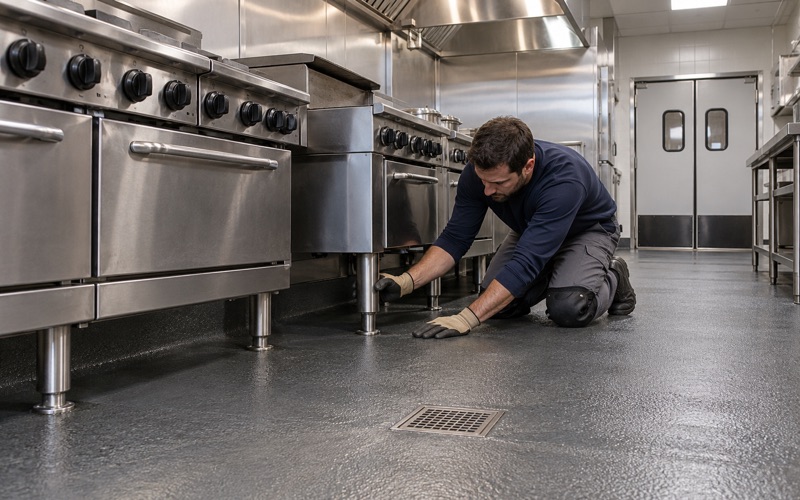
Where a drain sits inside the work area, we cover it before the first pass so nothing from our prep reaches it. The same rule applies to a mildew rinse on its own day: the rinse water is mopped and lifted rather than pushed downhill toward the trap.
Who Oversees Floor Work in Lemont
The Village of Lemont Building Department administers the village building code, which adopts the 2021 International Codes. We could not read the village’s contractor registration terms online, so we ask the Building Department before scheduling, especially when a slab is being replaced rather than coated. Illinois itself licenses no general, flooring or coatings contractor.
Lemont spans Cook, DuPage and Will counties, and the village is part of the Lemont Fire Protection District. A Lemont mailing address also covers sites outside the village, so we confirm where a property actually sits before assuming whose rules apply. Home jobs over the state threshold get a written contract and the Illinois consumer-rights pamphlet before grinding starts.
- 20+ Years on Concrete
- Moisture Tested First
- Written Scope and Pricing