Bartlett Epoxy Flooring brings more than 20 years of slab work to epoxy flooring in La Grange Park, and the floors we plan most carefully here are the ones people use as rooms. A lobby, a waiting area or a party space wears differently from a garage, because furniture moves across it all day. That movement, more than foot traffic, decides how long a topcoat keeps its look.
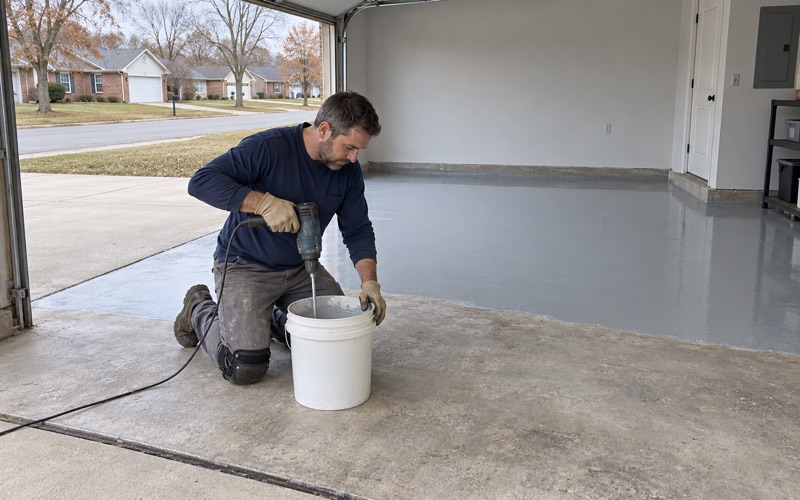
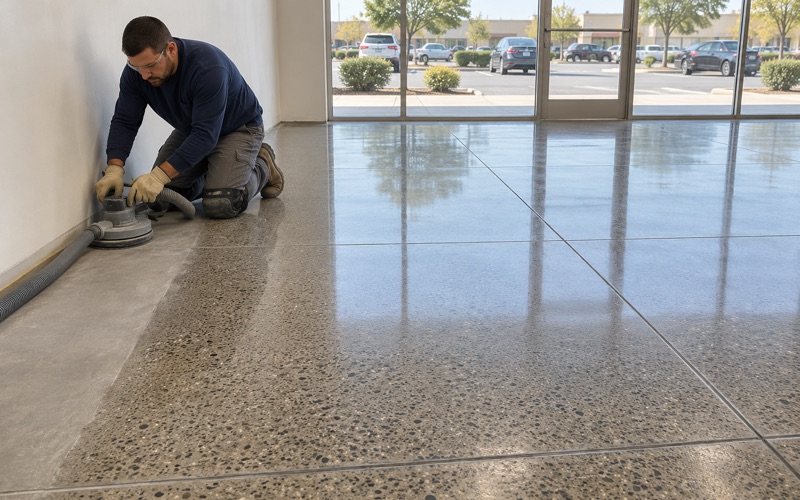
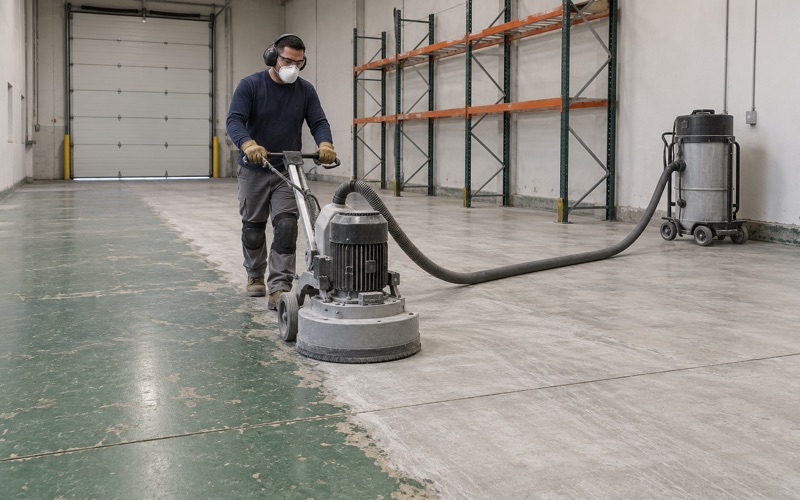
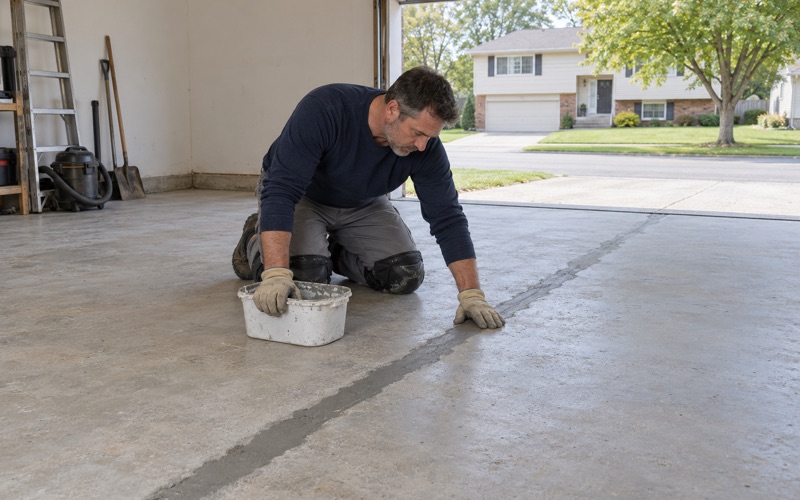
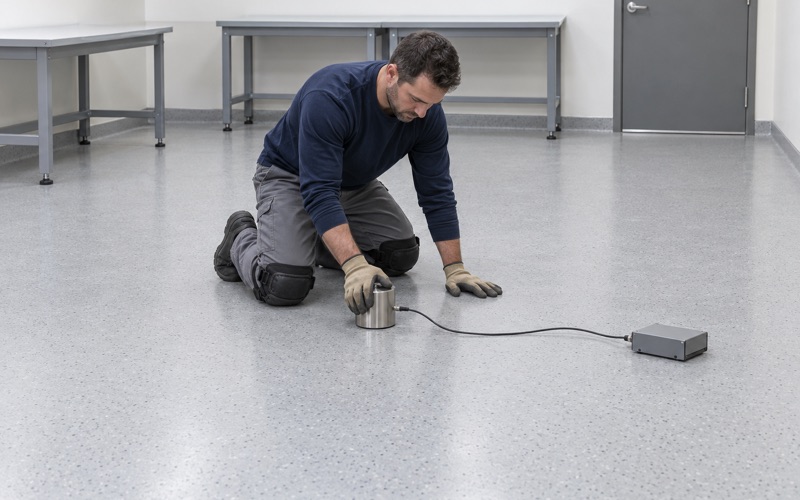
Every job starts the same way. We open the slab with a diamond grinder or a shot blaster rather than an acid etch, map cracks, spalls and old coatings before we price anything, and run a moisture test as part of the written scope. The proposal then names the product line, the coat count and the finished thickness, so the floor can be measured against the paper.
What we add on a floor that hosts gatherings is a plan for the furniture. Chairs and tables get dragged, pulled out and stacked, and their feet do the damage. This page walks through how we handle that, using a kind of local business that shows the problem clearly.
A Kids’ Gym That Doubles as a Party Venue
Members and Party Guests at 417 N La Grange Rd
The Little Gym of La Grange Park sits at 417 N La Grange Rd, inside the village and in Proviso Township. It runs gymnastics and dance for children from four months to 12 years, from parent-and-child classes for the youngest to grade school gymnastics and dance for older kids. The gym says it is open to registered members and party guests only.
That last line is the part that matters for a floor. A gym that hosts birthday parties is, on those days, an event space as well as a class space. We have not been inside this one, it is not our customer, and we know nothing about its rooms or finishes. It simply makes a clear example of a pattern we see in many buildings.
Mats on One Floor, Furniture on Another
In a children’s gym, the gymnastics and dance areas are mats and specialty surfaces, and we would never put resin in their place. Our work is the floor around them: an entry, a lobby, a viewing area where parents sit, or a room set aside for cake and presents. Those are the surfaces where a coating can make sense.
They are also the surfaces that change use on a schedule. During the week they take street shoes, winter boots and waiting parents. On a party weekend the same floor gets folding tables set up, chairs pulled into rows, and everything broken down and stacked again before the next group of party guests arrives.
Party Rooms Beyond the Gym
The same weekly cycle shows up in church halls, community rooms, banquet spaces, and the multipurpose rooms of apartment buildings. La Grange Park has a sizable share of larger buildings, with 535 units in buildings of 50 or more, and a building of that size often has a community room that sees the same setup and teardown.
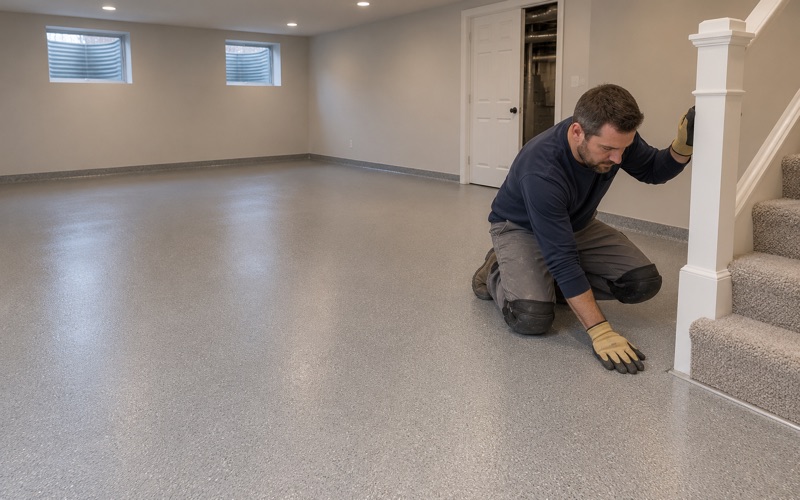
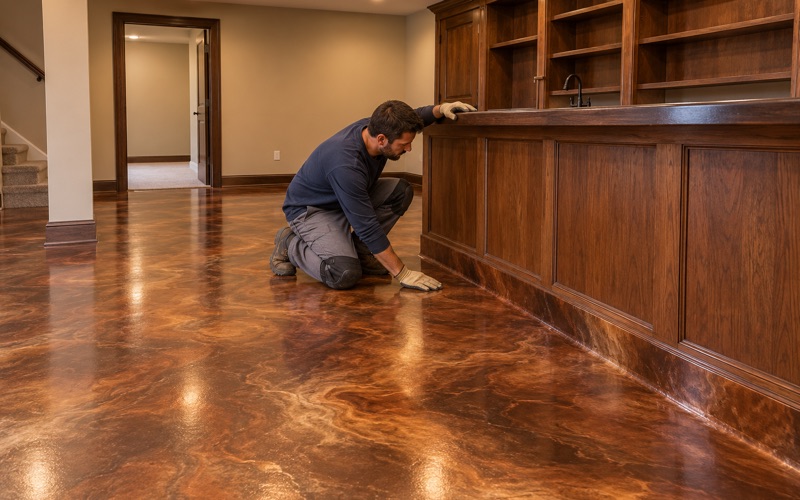
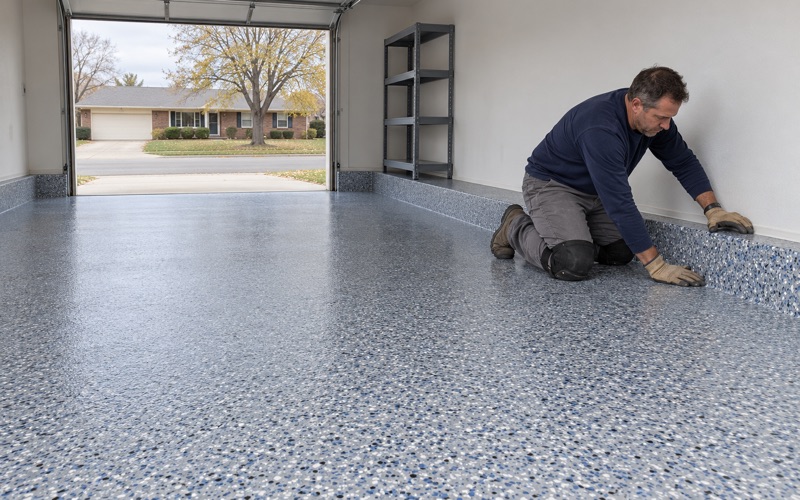
At home it is a finished basement used for birthdays, or a garage cleared out for a graduation party. We plan a basement or garage party floor the same way we plan a commercial one, just at a smaller scale. The floor question does not change with the setting: what touches the coating when furniture moves, and how often.
Looking for epoxy-flooring closer to Norridge? See Norridge Epoxy-Flooring.
Chair and Table Feet: The Wear Nobody Schedules
What a Bare Foot Does to a Topcoat
Furniture makers put glides on chair feet for a reason. A furniture supplier’s guide describes chairs pulled in and out daily without them as scraping along the floor and causing wear to the surface, and to the chairs themselves. Glides also wear down or fall off, which is the part that is easy to miss.
The same guide notes that chairs without glides can also be noisy, which in a room full of party guests is its own complaint. A scraping sound is often the first sign that a glide is missing, well before the marks show.
Once a glide is gone, the chair stands on a bare steel or plastic foot. Every pull across a coated floor then drags that hard edge through the topcoat. One chair does little, but a full room of them set out and cleared every weekend repeats those scrapes week after week, concentrated in the same aisles.
Folding Tables and the Setup Routine
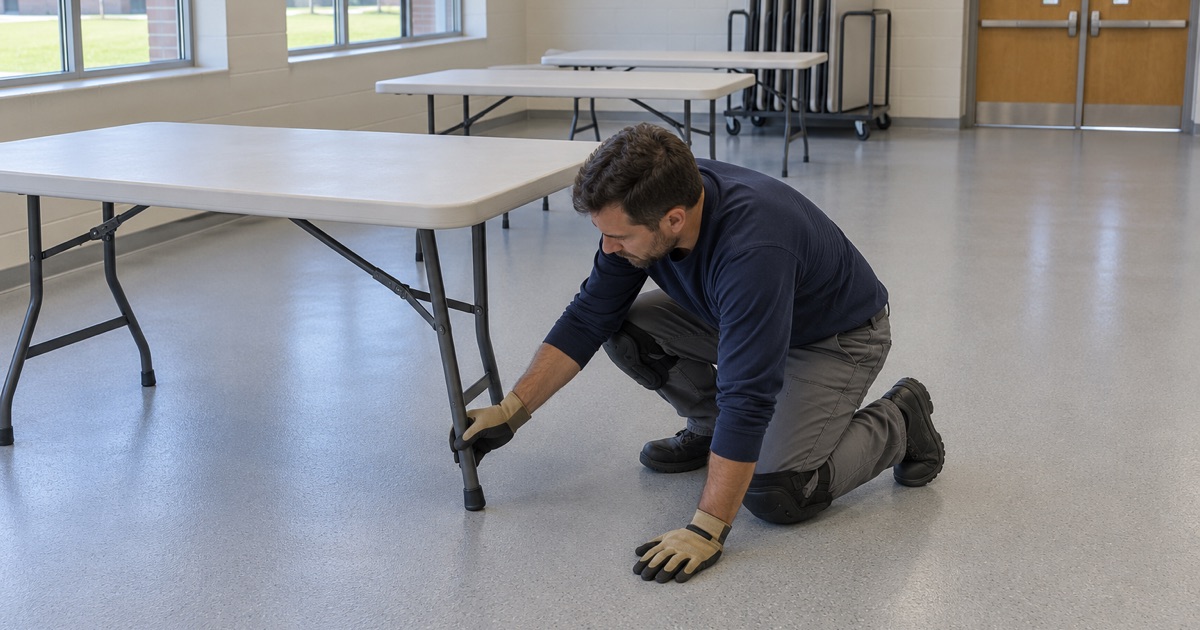
Folding tables add their own wear. Their legs often end in caps that crack or go missing, and a loaded table is easier to shove into place than to carry. When someone pivots a table on one end to square it up, the legs at that end grind a short arc into the finish.
Stacking makes it worse. Chairs are often stacked against one wall and slid into the stack from across the room, so the strip of floor in front of the storage spot takes the heaviest scuffing of all. We look for that strip on a walkthrough, because it tells us where the wear will show first.
Why the Coating Gets Blamed
When a party floor goes dull in lanes, the coating usually takes the blame. Often the floor is doing what most finishes do under bare steel feet. That is why we ask about furniture before we pick a system, and why the scope we write names the topcoat and its finished thickness instead of a vague promise.
No topcoat is immune to dragged furniture, and we will not tell a customer otherwise. What we can do is choose a surface that hides fine scuffs, holds up better under abrasion, and can often be refreshed with a new topcoat later instead of a full regrind.
Glides, Caps and a Topcoat Chosen for Scuffing
The Glide Check Belongs in the Floor Plan
On a floor that hosts parties, we put chair glides into the plan itself. Before we hand over a finished floor, we suggest the owner turn over the chairs and tables and look at each foot: every one capped, worn caps replaced, missing ones added. It takes an afternoon and can do as much for the coating as the product choice.
We also suggest repeating the check on a schedule, since glides wear and come off with use. A quarterly look, or one after any big event, catches the bare foot before it has scraped a season’s worth of lanes into the floor.
Nylon or Felt Glides
Glide material matters. Nylon and plastic glides are the hardest-wearing option and suit chairs that move constantly. Felt is quieter and slides more smoothly on a hard floor, but it wears faster, so felt glides need checking more often, especially near an entry.
Wider glides spread a chair’s weight over more of the floor, which helps on softer surfaces. On a party floor we would rather see a sturdy glide that stays on than a soft one that disappears by spring, and we say so in the handover notes.
A Scuff-Resistant Topcoat Over a Bonded Base
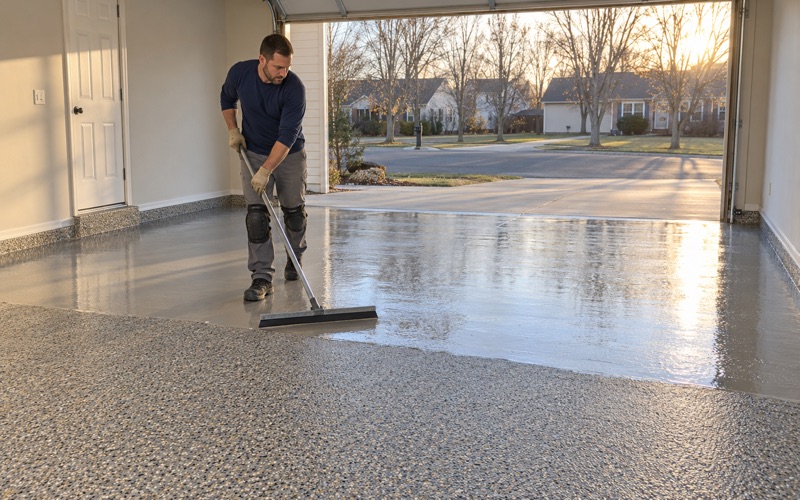
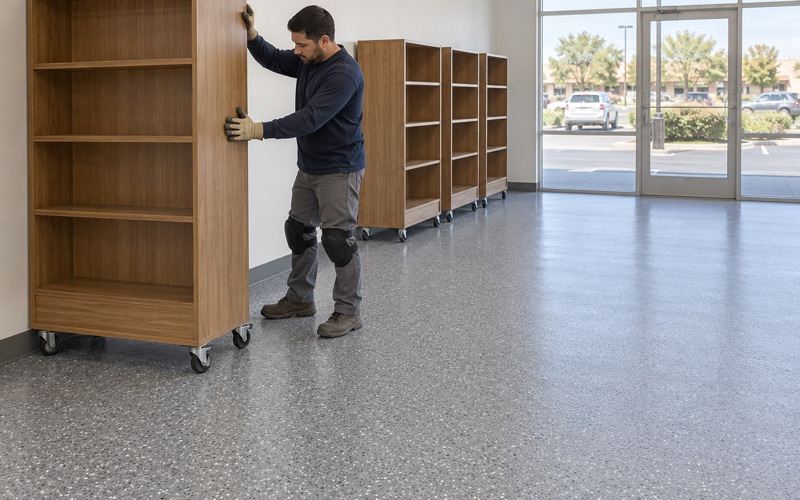
For the coating itself, we usually build a 100% solids epoxy base and finish it with a polyaspartic or polyurea topcoat, chosen for abrasion resistance rather than gloss. A vinyl flake broadcast breaks up the surface visually, so fine scuff marks read as texture instead of scratches on a solid color.
A satin or matte sheen hides wear better than high gloss, which shows every lane under a bright lobby light. Where wet boots come through the door, we specify slip resistance through the broadcast and topcoat we name in the proposal, not as a slogan. Winter brine and rock salt ride in on those boots as well, another reason the topcoat is chosen for hard wear.
A topcoat only resists scuffing while the system under it stays bonded. The moisture reading we take before pricing matters here, because vapor pushing up through a slab can lift a coating however tough its surface is. Moisture is also the first exclusion we name when we walk a customer through the warranty.
Lift, Don’t Slide: Stacking Zones and Home Party Floors
Carry It to the Stack
The simplest rule we leave with a party floor is lift, don’t slide. Chairs get carried to the stack, tables get carried by two people rather than pushed by one, and nobody squares a table by pivoting it on its legs. A short sign near the storage spot helps staff and volunteers remember.
Where furniture is stored, we can protect the strip in front of the stack. That might mean a heavier topcoat build in that zone, a durable mat where chairs are set down, or simply a marked spot that keeps stacking in one place instead of spreading wear across the room.
Home Party Floors in Basements and Garages
At home, the same habits apply on a smaller scale. If a coated basement or garage hosts birthdays with rented folding tables, check the caps when the rental arrives and put felt or nylon glides on your own chairs. A rented table with a missing cap can mark a new floor in one evening.
Before coating a basement we read it for past water, because a coating does not stop seepage or a backup. The village also runs a Sewer Backup Prevention Program that reimburses part of the cost of backflow valves and overhead sewers, including trenching and concrete floor replacement. If that plumbing work is coming, we would schedule the coating after it, not before.
Timing the Job Around a Party Calendar
A coated floor needs time before chairs and tables go back on it. We set cure schedules by slab temperature and dew point rather than by the calendar, so a room that books events every weekend needs its job planned between bookings with the full cure built in. For a space that cannot close for long, we phase the work into overnight or closed-day windows.
For home jobs over the state threshold, we provide a written contract and the Illinois Home Repair: Know Your Consumer Rights pamphlet before any grinding starts. Products are chosen inside the Illinois VOC limits for floor coatings, which bind whoever applies them. Grinding dust is caught at the machine by vacuum, never rinsed toward a drain.
- 20+ Years on Concrete
- Moisture Tested First
- Written Scope and Pricing