Bartlett Epoxy Flooring has handled epoxy-flooring in La Grange and the surrounding western suburbs for more than 20 years, and our work starts with one question: what is the floor already made of? Before we price a coating, a repair or a new resin floor, we read the existing surface, map its cracks and old finishes, and test the slab for moisture as part of the written scope.
That question matters most on terrazzo, the chip-and-binder floor common in lobbies, corridors and public buildings. Terrazzo looks like one material, but its binder can be a cement or an epoxy resin, and the binder decides how a crack gets patched, which sealer belongs on it and which cleaner is safe. Guessing wrong leaves a patch that reads differently and wears differently from the floor around it.
This page walks through that decision using a public bid in the village as the example, then turns to poured resin floors in homes and commercial spaces here. Our proposals name the product line, the number of coats and the finished thickness, so whatever floor you end up with can be checked against what we quoted.
Terrazzo Work Listed for the LaGrange Road Station Depot
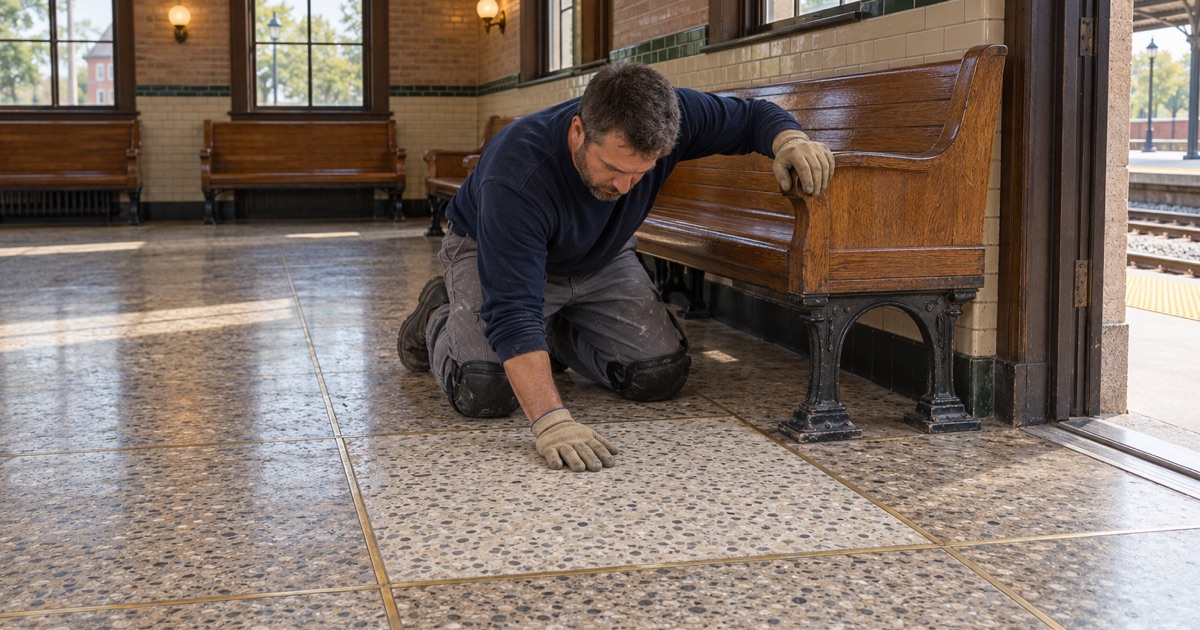
A public bid in the village shows what a terrazzo repair involves before the first grinder arrives. We read the listing the way a floor contractor would, for what it says about the floor and for what it leaves unsaid.
What the Metra Bid Lists
Metra put a renovation of the LaGrange Road Station depot building, at 25 W Burlington Ave, out to bid through its procurement portal. The construction listing names “terrazzo flooring repairs and new work” alongside new vinyl flooring and wood ceiling and flooring repairs, with a start date of October 23, 2026 and an estimated value of about $1.5 million.
The same scope covers roofing, masonry repointing, plaster, door repairs, paving and ADA ramps, so the floor is one trade among many. Epoxy flooring is not named anywhere in the listing, and the full bid documents sit behind a paywall, so we have not seen the specification for the terrazzo itself.
We Have No Part in This Project
To be plain about it: Bartlett Epoxy Flooring is not bidding, building or consulting on the depot. We do not know which terrazzo system the depot floor uses, what repair method the specification calls for, or who holds the contract. We use the listing because it puts a real terrazzo repair in front of anyone walking to the platform.
A public job like this is useful for one reason. The phrase “repairs and new work” describes the exact situation a building owner faces when an older terrazzo floor gets a patch or an extension, and the questions a bid team has to answer are the same ones a private owner should ask before anyone mixes material.
Why New Work Beside Existing Terrazzo Is the Hard Part
Fresh terrazzo placed next to an existing floor has to match more than chip color. It has to bond to the edge it meets, cure at a compatible rate and take the same cleaning routine for years afterward. A patch that looks right on day one can still drift in tone and wear once the floor is back in service.
That is why the binder question comes before the color question. Matching aggregate is a visual problem, while matching the matrix is a performance problem, and only the second one decides whether the repair holds up under the same mop, the same cleaner and the same foot traffic as the floor around it.
Looking for epoxy-flooring closer to River Forest? See Epoxy-Flooring Services in River Forest.
Cement Matrix or Epoxy Matrix: Settle It First
A terrazzo repair rests on one fact about the existing floor, and it is not the chip color. It is the binder holding those chips in place, and nothing else in the scope should be settled until that answer is on paper.
Three Binders Hold the Chips
The National Terrazzo & Mosaic Association’s guide, The Care of Terrazzo, names three binders that anchor the chips. The original, still in use, is a Portland cement product; the next is a polyacrylate modified cement; and the most common matrix today is epoxy resin. Each one behaves differently once it is cut, patched or cleaned.
The guide puts its advice in capital letters: take the necessary time to learn which terrazzo system you are maintaining. We treat that as the opening line of any terrazzo scope, because every later choice about patch material, sealer and cleaner follows from the answer and cannot be corrected cheaply after the fact.
Records or a Sample, Not Looks
A polished cement terrazzo and a polished epoxy terrazzo can look alike from standing height. The reliable answers come from the building’s original drawings and specifications, from maintenance records that name a product, or from a sample examined by someone who knows the systems. Appearance alone is how mismatched patches get mixed.
On an older building the paperwork is often missing, and that is not a reason to guess. We would rather report that the matrix is unconfirmed and recommend a sample than price a repair on an assumption. A short delay at this stage costs far less than grinding out a mismatched patch later.
Matching the Patch to the Binder
A cement-matrix floor is repaired with a cement-based patch, and an epoxy-matrix floor with an epoxy patch, each with aggregate chosen to blend with the field. Putting one matrix into the other tends to read as a visible island, because the two binders take polish, color and wear in their own ways.
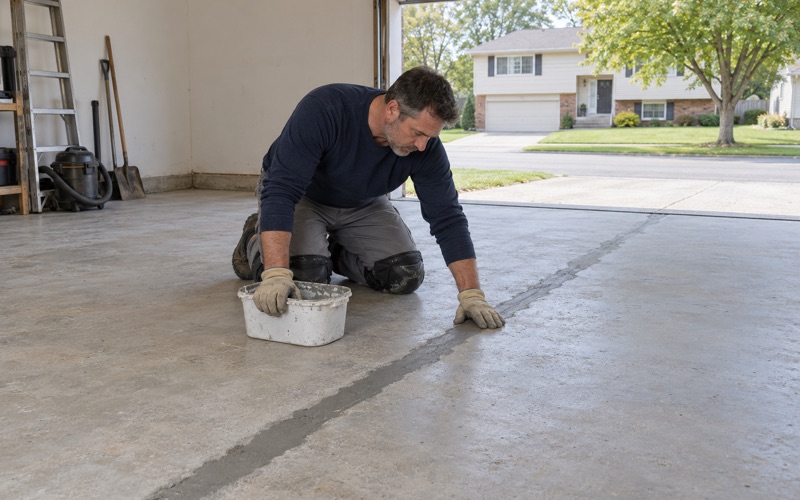
Before any patch goes in, we map the cracks, spalls and loose areas so the owner sees the full extent of the damage. Where a section has failed down to the slab, we say so and describe the slab repair first, because a new patch over moving or cracked concrete will crack again along the same line.
Sealers, Cleaners and Neutral pH
Once the matrix is known, the maintenance plan mostly writes itself. The two main binders want different protection but share one rule about chemistry, and both come from the terrazzo trade’s own care guidance rather than from any coating maker.
A Porous Binder Depends on a Sealer
For Portland cement systems, the NTMA guide says the part of the floor that most benefits from primary protection is the cement binder itself. Cement is porous, so liquids and dirt can work into it, and the association’s specifications recommend a sealer right after final polishing to slow that down.
A sealer is a maintenance layer, not a permanent one. The guide notes that even standing water can eventually dissolve some sealers, so a cement terrazzo floor in a wet entry or near a sink needs its sealer checked and renewed on a schedule rather than assumed to last indefinitely.
An Epoxy Binder Starts Closed
The NTMA describes the binder in epoxy resin terrazzo as fundamentally non-porous. That changes the maintenance picture, because the matrix itself does not soak up spills the way cement does. An epoxy terrazzo floor can still dull, scratch or stain at the surface, but its protection does not rest on a penetrating sealer.
That difference matters on a repair. Sealing an epoxy patch the way you would seal cement terrazzo adds a coat the floor may not need, while leaving a cement patch unsealed beside an epoxy field leaves the porous spot unprotected. The binder decides which mistake is even possible.
Neutral-pH Cleaning Applies to Both
On cleaning, the guide is direct: harsh cleaners and sealers can damage terrazzo, and only materials that are neutral pH should be used when scrubbing or mopping floors. That holds for cement and epoxy systems alike, and acids are well known to etch marble chips whichever matrix holds them.
The recommended routine is simple. Daily dust mopping removes the grit carried in from outside, which the guide notes acts as an abrasive, and scrubbing uses a neutral cleaner left on for several minutes, then rinsed off before it dries. We pass that routine along in writing whenever we work on a terrazzo floor.
Epoxy Terrazzo and Poured Resin Floors in La Grange Buildings
Most of the floors we coat in the village are not terrazzo, but the same logic carries over. A resin floor is only as good as the slab under it and the care routine that follows it.
The Same Resin Family
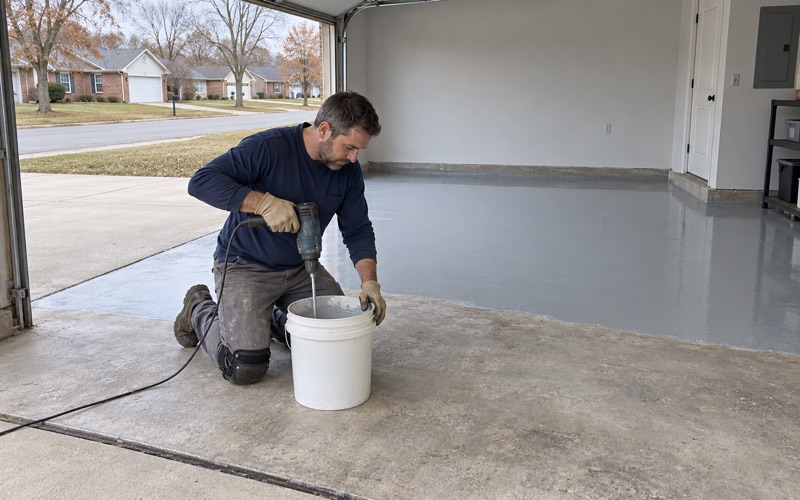
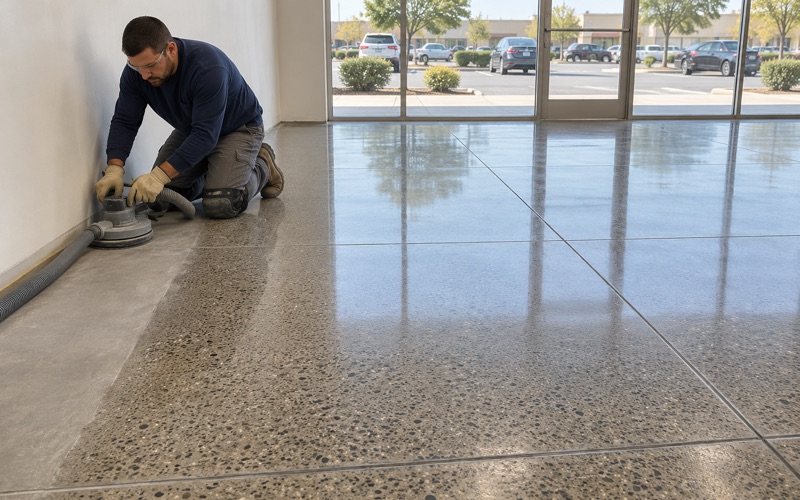
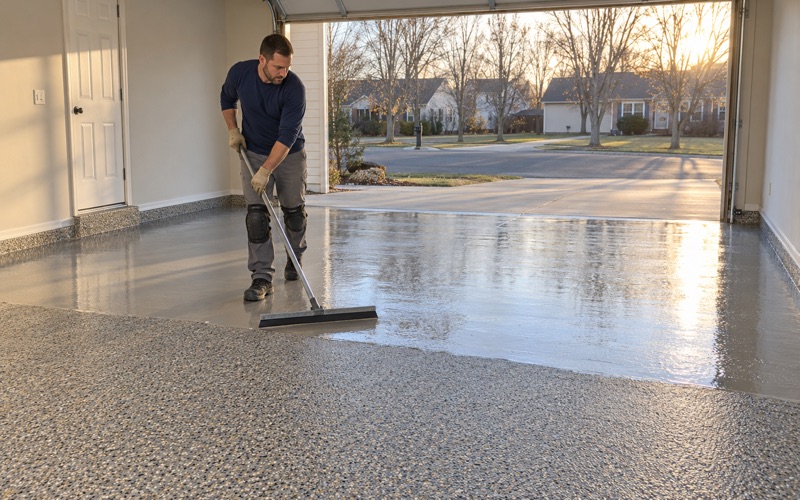
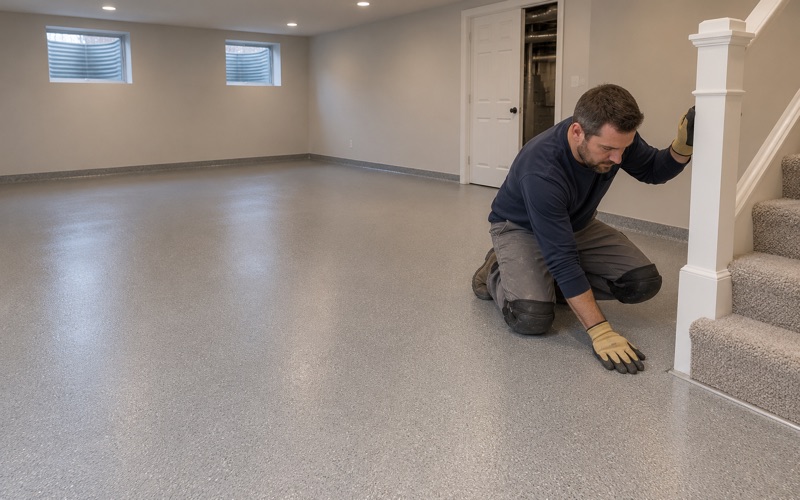
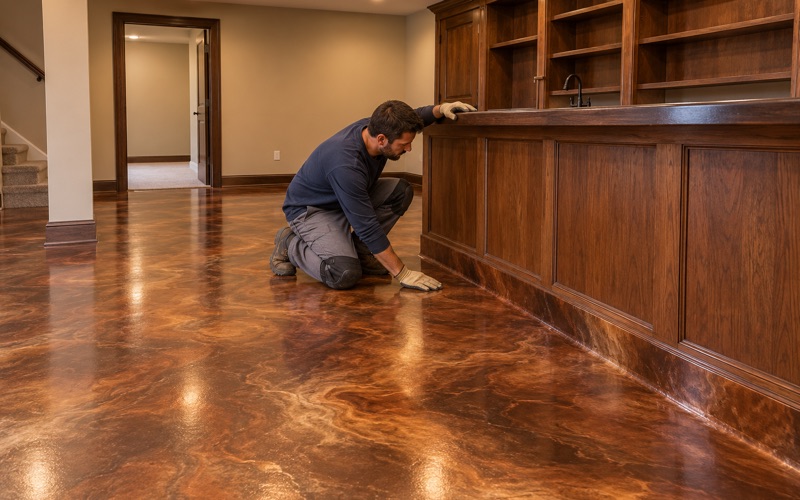
Epoxy terrazzo is a resin floor, part of the same family as the poured epoxy systems we install in garages, basements and commercial rooms. Both depend on a properly prepared substrate, a binder that cures fully and a finish chosen for the cleaning it will see. The difference is that terrazzo carries decorative aggregate and is ground and polished after cure.
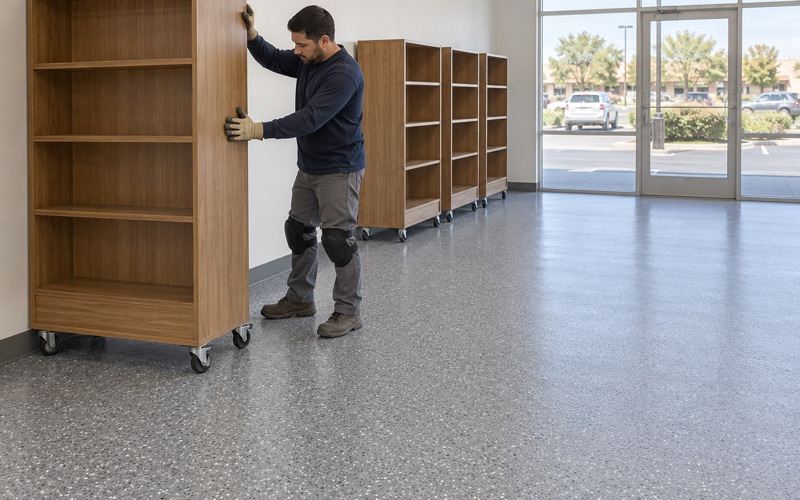
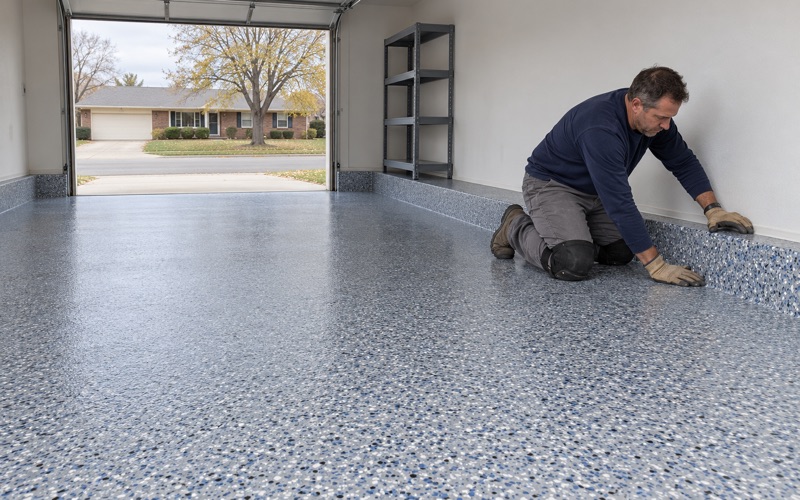
For an owner who wants a seamless, hard-wearing floor without the cost of true terrazzo, a 100% solids epoxy with a quartz aggregate broadcast or vinyl flake broadcast covers similar ground. It is not terrazzo and we do not sell it as terrazzo, but it shares the non-porous surface and the neutral-pH cleaning habit.
Older Slabs Call for a Moisture Test
La Grange’s housing runs old: 36.1 percent of units were built in 1939 or earlier, and nearly two-thirds predate 1960. Those slabs went in long before ASTM E1745 defined a modern under-slab vapor retarder, so we never assume a basement or garage slab here is dry. Moisture testing is written into the scope before the price is final.
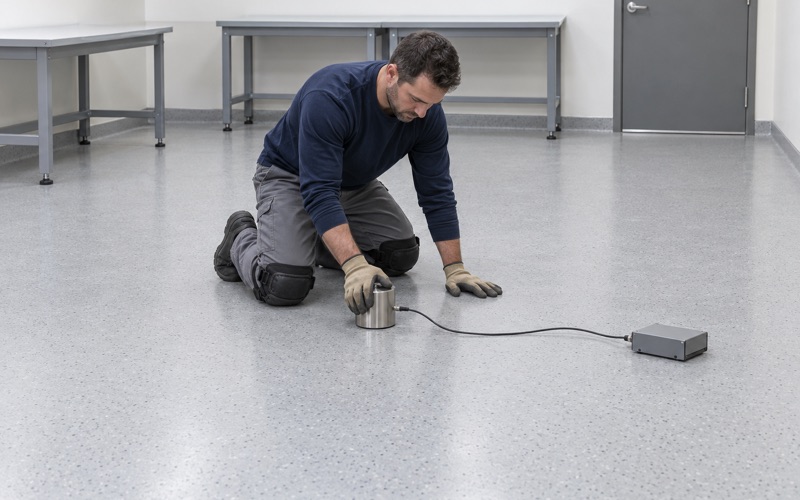
Depending on the slab, that means ASTM F2170 in-situ relative humidity probes, an ASTM F1869 calcium chloride test or at least an ASTM D4263 plastic sheet check. Where readings run high, we specify a moisture-mitigation primer or say the slab is not ready, and we explain that moisture is the first exclusion in a coating warranty.
Preparation, Dust and Paperwork
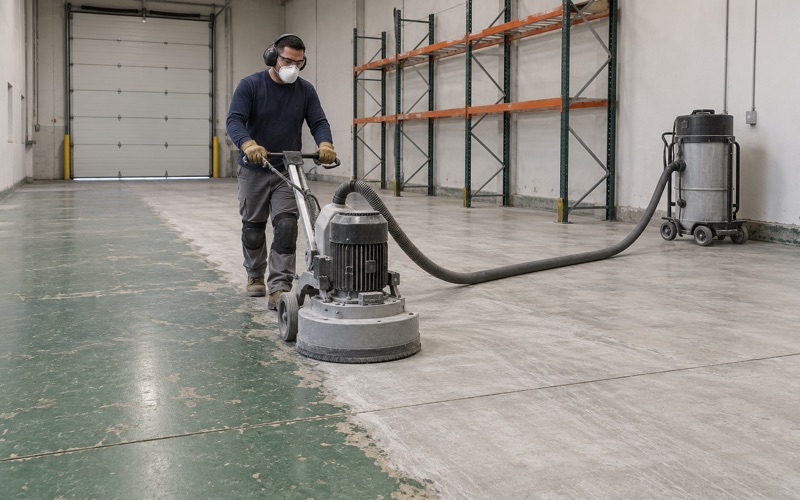
We open each slab with a diamond grinder or a shot blaster to a measured ICRI concrete surface profile, never an acid etch, and the grinding dust is captured at the machine by a vacuum rather than washed toward a drain. On a commercial floor that cannot close, we phase the work around operating hours with overnight or weekend windows.
The Village of La Grange permit page says no permit is needed to replace existing flooring, and it does not mention floor coatings at all, so we confirm the path with the village before scheduling. Home jobs over the state threshold get a written contract and the Illinois consumer-rights pamphlet before any grinding starts.
- 20+ Years on Concrete
- Moisture Tested First
- Written Scope and Pricing