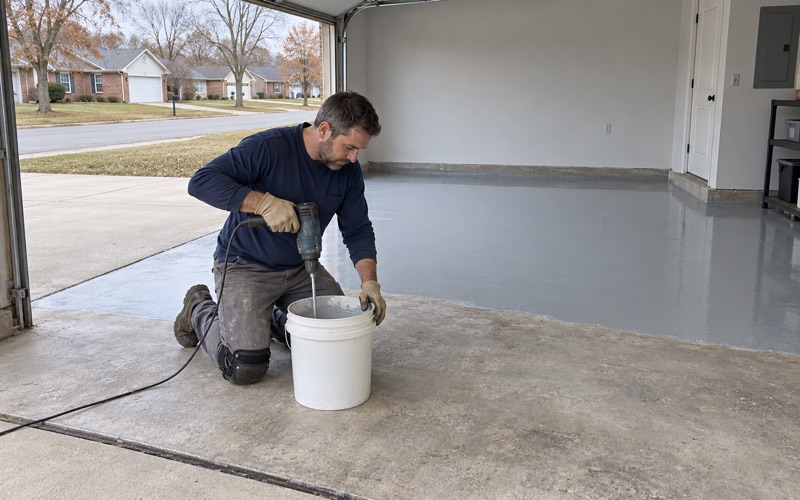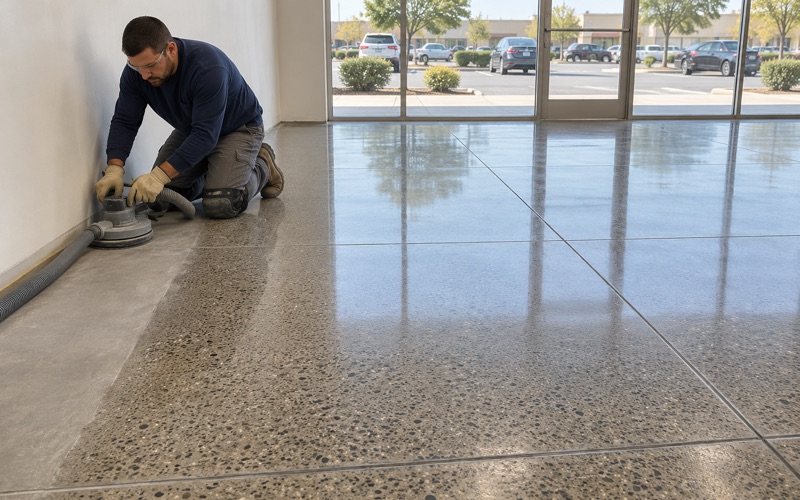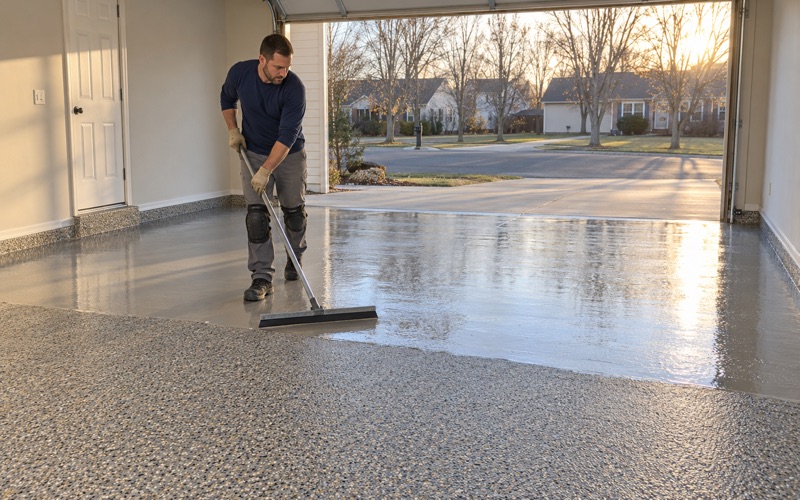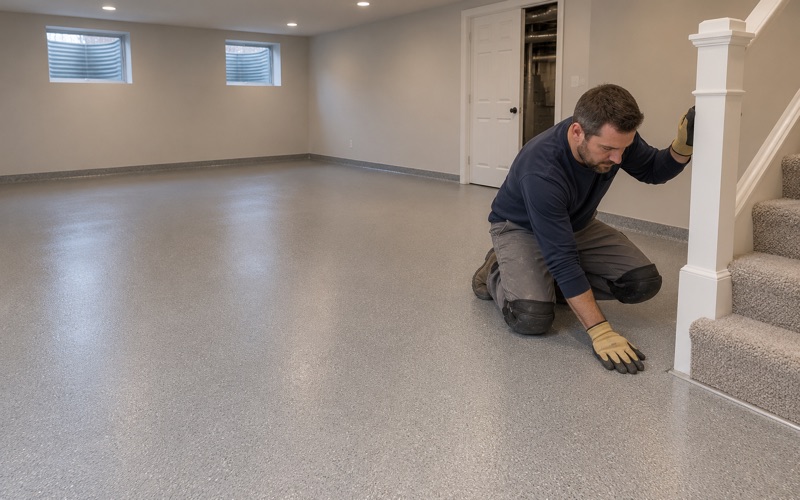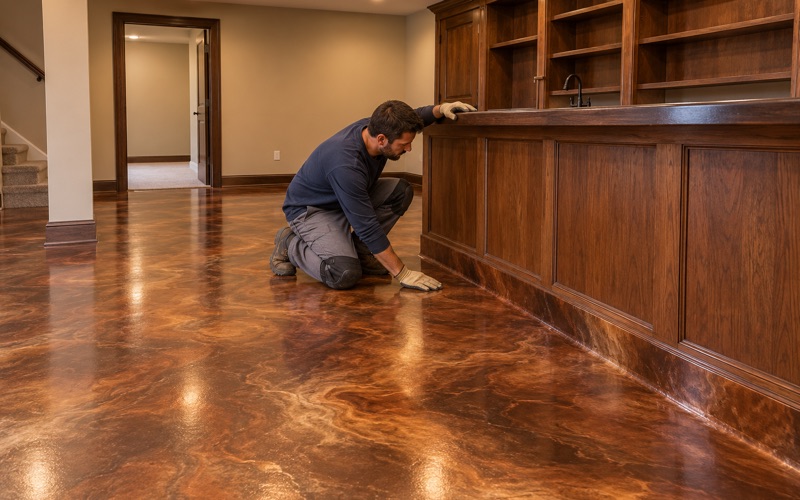
Bartlett Epoxy Flooring has spent more than 20 years installing epoxy flooring in Forest Park and beyond, and the question we ask first on any production floor is simple: what lands on it, and how does the crew get it back off? A floor that gets mopped wants one finish. A floor that gets scraped wants another, and choosing wrong costs a plant years of fighting its own surface.
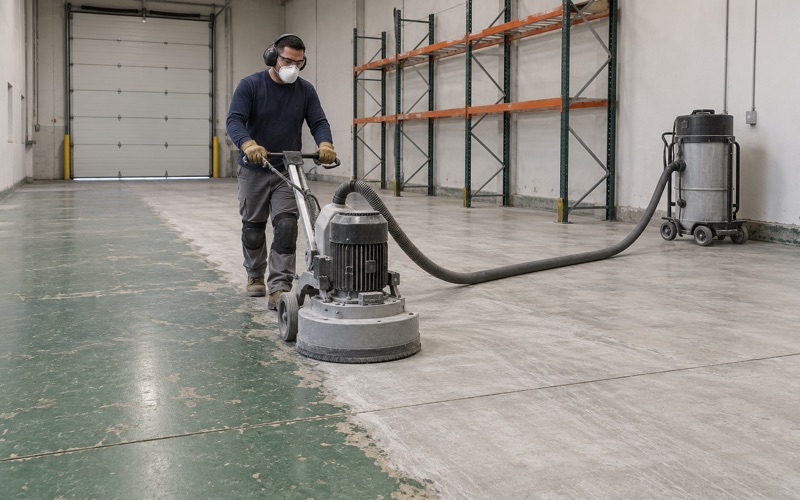
Our work starts at the slab, not the color chart. We open the concrete with a diamond grinder or a shot blaster rather than an acid etch, so the resin has a real profile to bond to, and we map cracks, spalls and old coatings before anything is priced. When a slab needs repair or replacement first, we say so in writing.
The proposal names the product line, the coat count and the finished thickness, so a plant manager can hold the installed floor up against the quote. Below, we walk through one kind of floor this village makes a strong case for: the scraping surface an adhesive line needs.
A 24-Hour Adhesive Plant on Industrial Drive
Forest Park is a Cook County village of 14,339 people at the 2020 census, best known to commuters as the western end of the CTA Blue Line. Its industrial strip along Industrial Drive is less famous, and it is where this page’s floor problem lives.
What Duraco says it runs
Duraco, at 7400 W. Industrial Drive, describes its Forest Park headquarters in its own brochure as a plant built around solvent, hot-melt and aqueous coating technologies. Foams, films and other carriers are combined with its adhesive systems on high-speed laminating equipment. The brochure is plain about the schedule: “In our Forest Park facility we run a 24 hour operation.”
Downstream of the coaters, the brochure lists skiving, slitting, spooling and multiple types of die-cutting, along with kiss cuts, overhang liners and scrap removal. We have not been inside the building and have not read its floors or its housekeeping. What the brochure does establish is the kind of work a floor in a tape converting plant has to live with.
Hot melt sets where it lands
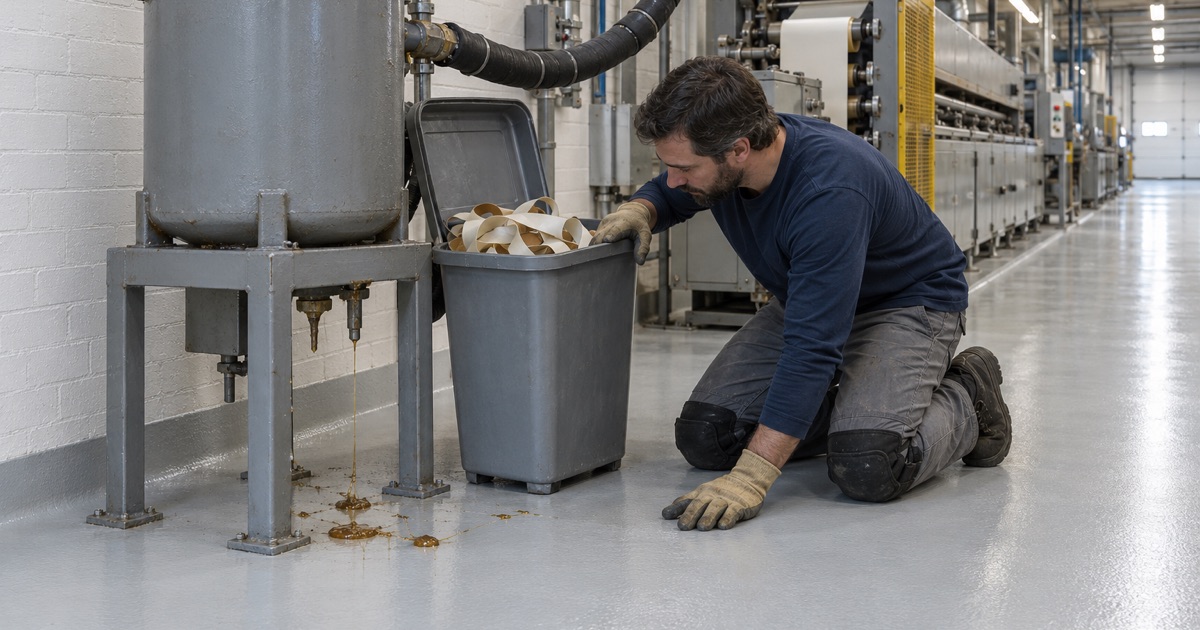
Hot-melt adhesive is applied molten and becomes solid as it cools. On a coating line, drips and strings fall from melt tanks, hoses and nozzles, and whatever reaches the floor hardens right where it lands. Around the clock, that adds up to a steady trickle of small, hard spots rather than one big spill.
Adhesive makers say how to deal with it. One maker’s safety data sheet, Henkel’s for its Technomelt PS 774 hot melt, reads: “Spilled material will solidify. Scrape up spilled material and place in a closed container for disposal.” That is a general trade reference, not Duraco’s own sheet, but the rule it states is the one a floor has to serve.
Scrape it up once it sets
The practical rule for the floor is to leave a hot drip alone, let it cool, then scrape it up once it sets. Molten material burns skin, and that same SDS warns to be careful around it, so nobody should be chasing a fresh drip with a rag. Cleanup is mechanical, and it happens after the adhesive is solid.
We want to be precise about what a coating does here. No resin floor we install is sold as resistant to molten adhesive or to heat; the coating is the surface a solidified drip is lifted from. Its job is to let a scraper finish the cleanup quickly and leave nothing behind for the next shift to walk on.
Looking for epoxy-flooring closer to Burr Ridge? See Epoxy-Flooring Services in Burr Ridge.
A Floor Built to Take a Scraper
A scraping surface has three requirements: it is hard, it is smooth, and its texture is fine. Each one changes how we build the system, from the grind to the topcoat.
Hard enough to take the blade
A plastic or steel floor scraper pushed across a coating under a hard adhesive spot puts a concentrated edge load on a small area. A thin, soft or poorly bonded film gouges or lifts under that, and once an edge lifts, the next scrape catches it. A 100% solids epoxy body coat over a properly profiled slab gives the blade something firm to ride on.
That is why the grind matters as much as the resin. Diamond grinding or shot blasting opens the surface to a measured concrete surface profile on the ICRI CSP scale, and a coating that has keyed into that profile resists being peeled up from an edge. An acid-etched slab gives a scraper an easier starting point, which is one reason we do not etch.
Smooth, with a fine texture instead of a coarse broadcast
Many garage and shop floors get a heavy broadcast of vinyl flake or quartz aggregate for traction. On a hot-melt floor, a coarse broadcast works against the crew: a drip that lands warm flows into the peaks and valleys and keys itself in, and a scraper rides over the high points without reaching what sits between them.
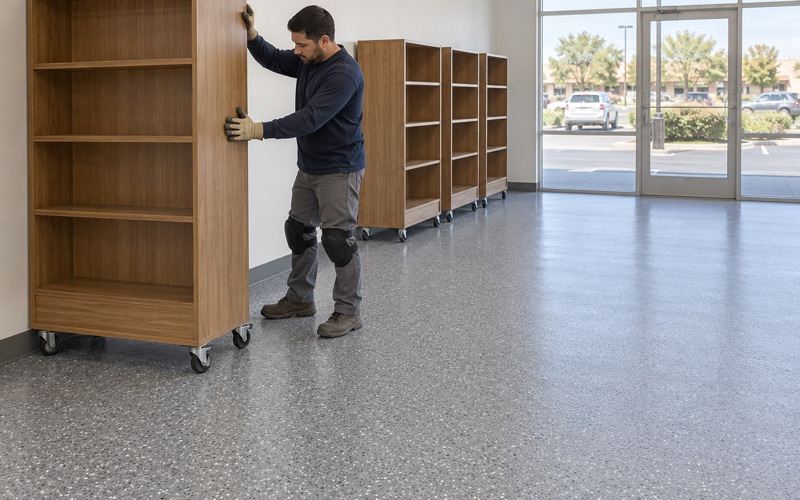
So we would specify a fine texture rather than a coarse one, typically a light aggregate worked into the topcoat instead of a full broadcast. That keeps some grip for boots while leaving a surface a blade can travel across in one pass. Slip resistance gets specified by the aggregate and topcoat named in the proposal, not promised as a slogan.
What the slab underneath has to be
A scraping floor is only as good as its bond, and the bond is only as good as the slab. We test moisture as part of the written scope before the price is final, using ASTM F2170 in-situ relative humidity probes or an ASTM F1869 calcium chloride test, because vapor pushing up from below is what lifts a coating that otherwise looked fine.
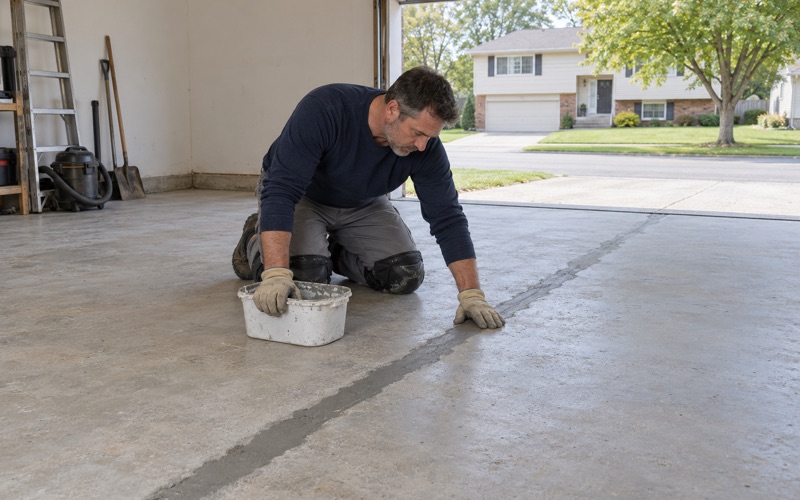
Cracks and joints get mapped and filled before the body coat, since an open joint is exactly where a scraper blade catches. Moisture is also the first exclusion we name when we explain what the coating warranty does and does not cover, so a plant knows before it signs.
Color That Shows the Adhesive
On a floor that is cleaned by eye and by blade, color is a working decision. The crew can only scrape up what it can see.
A light, solid topcoat
Dark adhesive on a dark gray floor nearly disappears, and a drip nobody sees is a drip somebody steps in. A light, solid topcoat color turns each hardened spot into something the next walk-through will notice. Decorative flake blends work the other way, because they are designed to hide what lands on them.
A light floor also tells a supervisor something. Where the spots cluster shows which tank, hose or nozzle is dripping, and a floor that stays clean around one coater and not another is a maintenance signal. We would suggest a solid color across the production area and keep any safety striping or aisle marking in a contrasting tone.
Why solvent cleanup is not the routine
A plant that lists solvent coating among its technologies invites the assumption that its floor should be chosen for solvent resistance first. For hot-melt drips, though, the cleanup the adhesive maker describes is dry: let it solidify, then scrape it. Solvent is not the routine on that floor, so we do not lead the choice with one maker’s chemical-resistance chart.
Where a specific spill area does see solvent, we treat it as its own zone and ask the plant what is used there before naming a topcoat. Polyaspartic and polyurea topcoats, urethane cement and epoxy each behave differently, and the right answer depends on the actual chemical and how long it sits, not on a general label.
Coatings and the air the plant already manages
EPA’s ECHO database lists Duraco Specialty Tapes under the Clean Air Act, RCRA and the Toxics Release Inventory programs, so air and waste are already regulated subjects at that address. Any coating we bring into a plant like that is chosen inside the Illinois VOC limits for floor and industrial coatings, which bind the person applying them as well as the maker.
Grinding dust is captured at the machine with a vacuum rather than rinsed toward a floor drain, a sump or a storm inlet. On a site with its own environmental reporting, that habit keeps the floor job from becoming a new item on someone else’s checklist.
Scrap, Liner and the Glue Gun at Home
Hot melt is not the only thing a converting floor collects. Die-cutting and scrap removal leave their own trail, and the same thinking reaches a home workshop.
Tacky trim and slick liner
Pressure-sensitive die-cut scrap stays tacky, so a piece of trim on the floor sticks to a sole and travels. Release liner is coated to let adhesive go, which makes a loose sheet slick underfoot. Neither is a coating problem; both are housekeeping, and the floor works best when scrap and liner go into bins at the press instead of drifting into the aisle.
What the floor can do is make strays easy to spot and easy to lift. Tacky trim comes off a smooth, sealed topcoat more cleanly than off open, dusty concrete, and a light color shows a dropped liner sheet before someone steps on it. We would plan aisle striping so bin locations stay obvious on every shift.
Working around a plant that never closes
A 24-hour plant cannot hand a floor crew the building for a week. We phase shop and production floors around operating hours, coating one bay or aisle at a time behind a barrier while the rest of the line keeps running, and we use weekend windows where a section can stand down.
Cure follows slab temperature and the dew point spread at the surface, not the calendar, so return-to-service times are set from readings taken that day. Before we schedule, we check permit and contractor-license questions with the village’s Building Department, including whether the slab is being coated or replaced.
The glue gun in a home shop
The same rule scales down. A Forest Park homeowner with a glue gun on a garage or basement workbench is dealing with a small version of the adhesive plant’s drip, and the answer is identical: let it cool, then lift it. A smooth, solid-color epoxy floor lets a putty knife pop a cooled glue blob off cleanly.
In a village where many garages and basements sit under two-flats and condominium buildings, the floor decision often belongs to a co-owner, a landlord or an association rather than one person. Home jobs over the state threshold get a written contract and the Home Repair: Know Your Consumer Rights pamphlet before any grinding begins.
- 20+ Years on Concrete
- Moisture Tested First
- Written Scope and Pricing