Bartlett Epoxy Flooring installs flake epoxy floor systems in Bartlett, IL, serving surrounding cities including Winfield, Warrenville, Wood Dale, Bensenville and Campton Hills. A flake floor is a resin coating with colored vinyl chips broadcast into it and sealed under a clear topcoat, and it is the system we install most often in garages, basements, laundry rooms and light commercial spaces.
Flake earns that popularity honestly. It hides dust, small slab defects and tire marks, adds texture underfoot and costs less than metallic or decorative quartz work. What it does not do is hide poor preparation, and in more than 20 years on concrete we have repaired plenty of flake floors that were laid over unground slabs.
This page covers how flake systems are built, how to choose a blend, and where flake fits best.
How a Flake Floor Is Built
Prepared Concrete Underneath
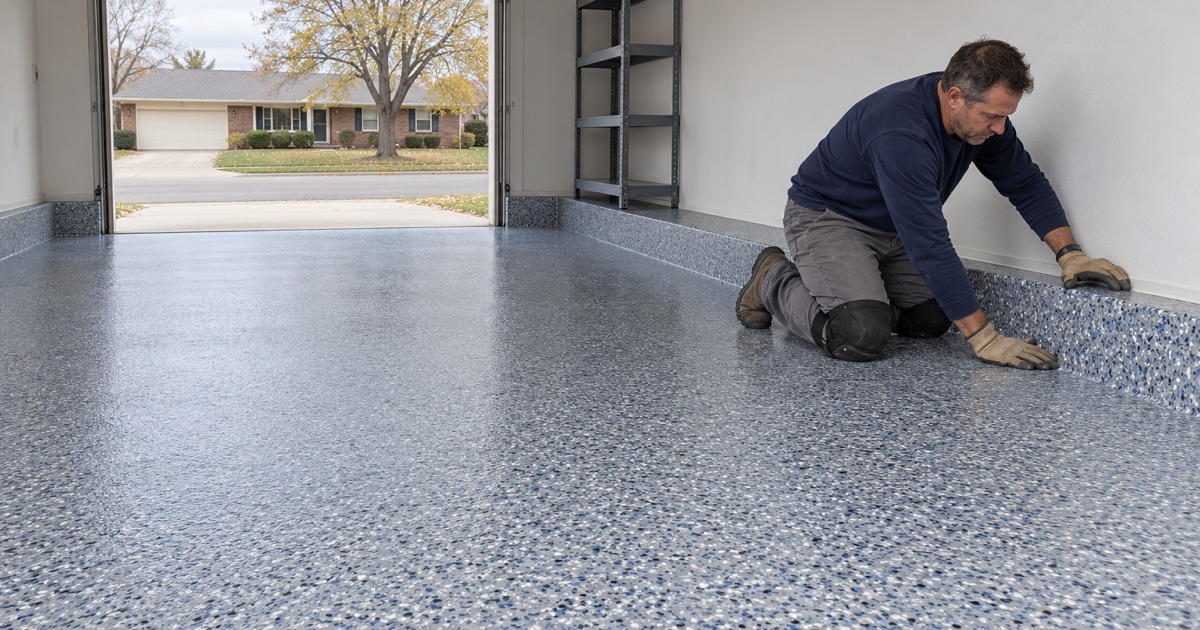
A flake floor starts with diamond grinding to a concrete surface profile, crack and spall repair and a moisture test. The chips hide minor cosmetic flaws, but they do nothing for how well the base coat bonds. A floor that is going to peel will peel just as fast with flake in it.
Grinding dust is captured at the machine, and the slab is vacuumed clean before the first coat, since any loose dust left behind becomes a weak layer under the base.
Base Coat and Broadcast
The base coat is usually a pigmented epoxy or polyaspartic rolled to a set thickness. While it is wet, vinyl flake is thrown by hand across the floor so it lands evenly, either as a partial scatter or a full broadcast to refusal, where no base color shows. The coverage level is written into the proposal.
A full broadcast gives the most texture and hides the most. A partial broadcast lets the base color read through and leaves a smoother floor that is easier to mop.
Scraping and the Clear Topcoat
Once the base cures, the floor is scraped with a flat blade to knock off chip edges that stand proud, then vacuumed. The clear topcoat goes on next, filling around the chips and setting the final texture and gloss. One topcoat over a full broadcast leaves more texture, while two coats give a smoother surface.
Polyaspartic and urethane topcoats are our usual choice, because they resist ultraviolet ambering, chemicals and scratching better than an epoxy topcoat.
Choosing a Flake Blend
Chip Size
Vinyl flake comes in several sizes, from fine chips around an eighth of an inch to quarter-inch pieces and larger. Large chips give a bold, terrazzo-like look, while small chips read finer and more uniform. Chip size also changes the texture and how much topcoat is needed to fill around the chips.
Color Blends
Flake blends mix several colors in set proportions, from grays and blacks to tans, blues and custom mixes. Darker blends hide tire marks and dirt, and lighter blends brighten a basement or a dim garage. We bring physical samples, since lighting changes how a blend reads.
The base coat is usually matched to the main chip color, so any thin spot in a broadcast blends in instead of standing out.
Sheen and Texture
Flake floors can be finished in gloss or satin. Gloss looks clean and bright but shows scratches, while satin hides them better. Texture is set by the broadcast density and the number of topcoats, and it can vary by area, with more grip at entries and less in living spaces.
Where Flake Floors Fit
Garages
Garages are the classic home for a flake floor, because the chips hide salt residue, tire marks and the small imperfections of a working slab. A polyaspartic topcoat over the flake handles the road salt, hot tires and fluids that come with cars.
We often run the flake coating a few inches up the walls as a cove, which keeps winter meltwater off the drywall and makes the floor easy to hose out.
Basements and Laundry Rooms
In basements and laundry rooms, flake adds texture underfoot and hides the slight unevenness common in older slabs. Lighter blends keep the space from feeling dark, and a coved edge at the walls keeps water from a washer leak on the surface.
As with any basement coating, moisture testing comes first, because flake does not change what vapor from below does to the bond.
Commercial and Light Industrial Spaces
Flake floors suit locker rooms, restrooms, break rooms, showrooms and light industrial spaces where a durable, easy-to-clean floor with some decoration is wanted. For wet areas, a full broadcast with a textured topcoat gives better grip.
For heavy forklift traffic or hot washdown, we recommend a thicker industrial system or urethane cement instead of a standard flake build.
Cost and Timeline for a Flake Floor
What Moves the Price
The price of a flake floor depends on the square footage, the condition of the slab, how much crack and spall repair it needs and whether an old coating must be ground off first. Broadcast density matters too, because a full broadcast uses far more flake than a light scatter. The topcoat chosen and the number of coats round out the figure.
We quote after a walkthrough, with the product line, coat count, broadcast level and finished thickness listed, so one quote can be compared fairly against another.
How Long the Job Takes
A typical garage or basement flake floor takes one to two days, from grinding through the topcoat. Larger floors, extensive repairs or a moisture-mitigation primer add time. After the last coat, the floor needs its cure time before foot traffic, furniture or vehicles return.
Those times depend on the products and the slab temperature, so you get them in writing for your specific system rather than a general promise.
Caring for a Flake Floor
Everyday Cleaning
Sweep or dust mop regularly and clean with a pH-neutral cleaner. In winter, a squeegee pushes salt water out of a garage before it dries into a film. Harsh acids and abrasive pads dull the topcoat and are best avoided.
Recoating Over Time
The clear topcoat takes the wear. When traffic lanes start to dull, the topcoat can be abraded and recoated without disturbing the flake layer beneath, which extends the life of the floor considerably.
- 20+ Years on Concrete
- Moisture Tested First
- Written Scope and Pricing