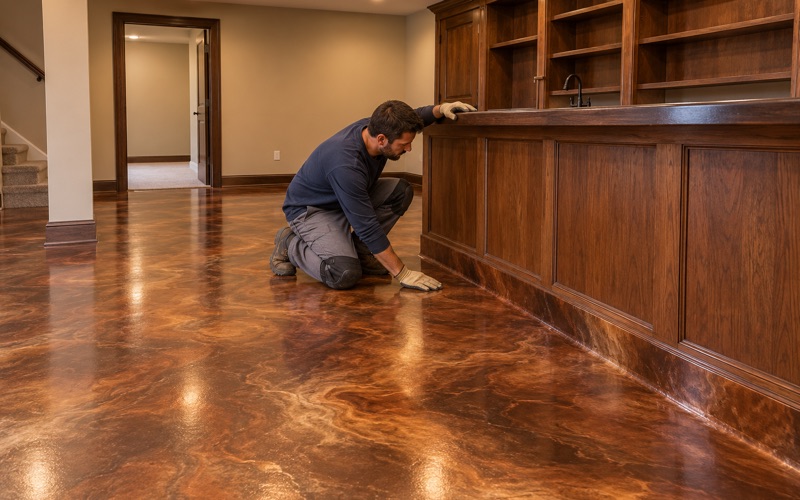
Bartlett Epoxy Flooring brings more than 20 years of epoxy-flooring work to Deerfield, and on this page we focus on one question a lot of floor buyers skip: how hard is the finished surface to roll across? Texture gets chosen for looks or grip, yet for anyone pushing a wheelchair or a walker it decides how much effort each hallway takes.
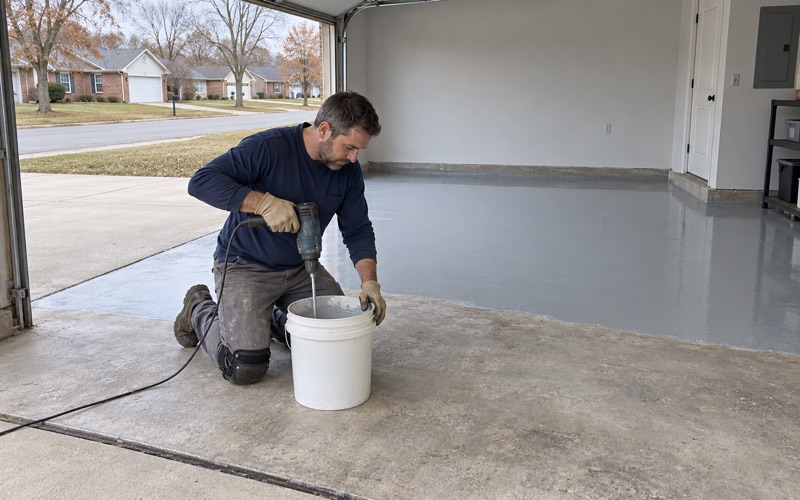
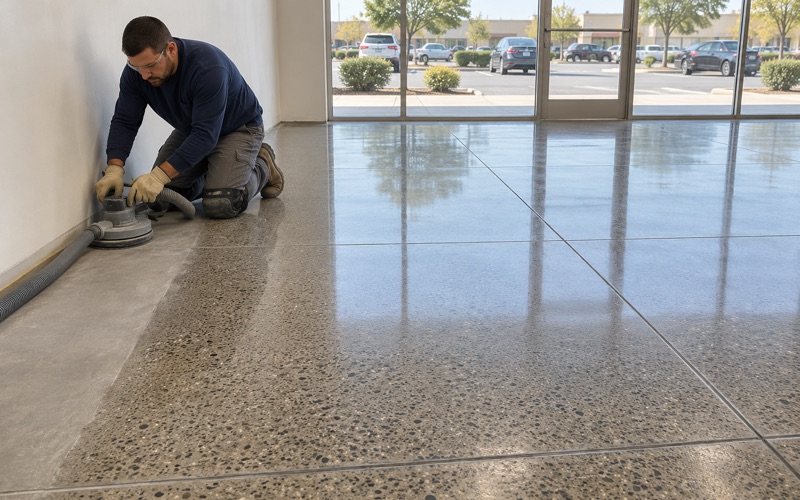
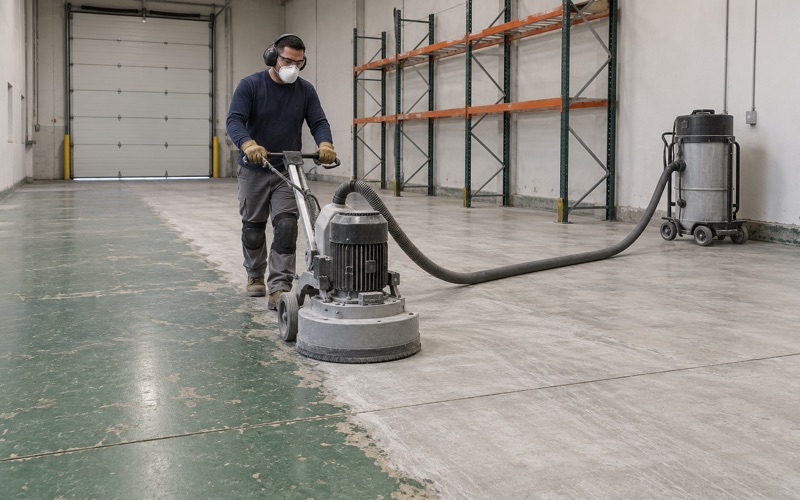
We open each slab with a diamond grinder or a shot blaster rather than an acid etch, so the coating bonds to a real profile. Then the broadcast and topcoat are written into the proposal by name, because those two choices set the texture underfoot and under wheels. Slip resistance and rolling ease pull in opposite directions, and we specify the balance instead of promising it.
That balance looks different in a senior living corridor than in a garage that takes salt brine all winter. The sections below walk through the research behind it, the texture options we use, and how we zone a floor so the heavy grit lands only where it earns its keep.
Assisted Living on Lake Cook Road and a Four-Surface Study
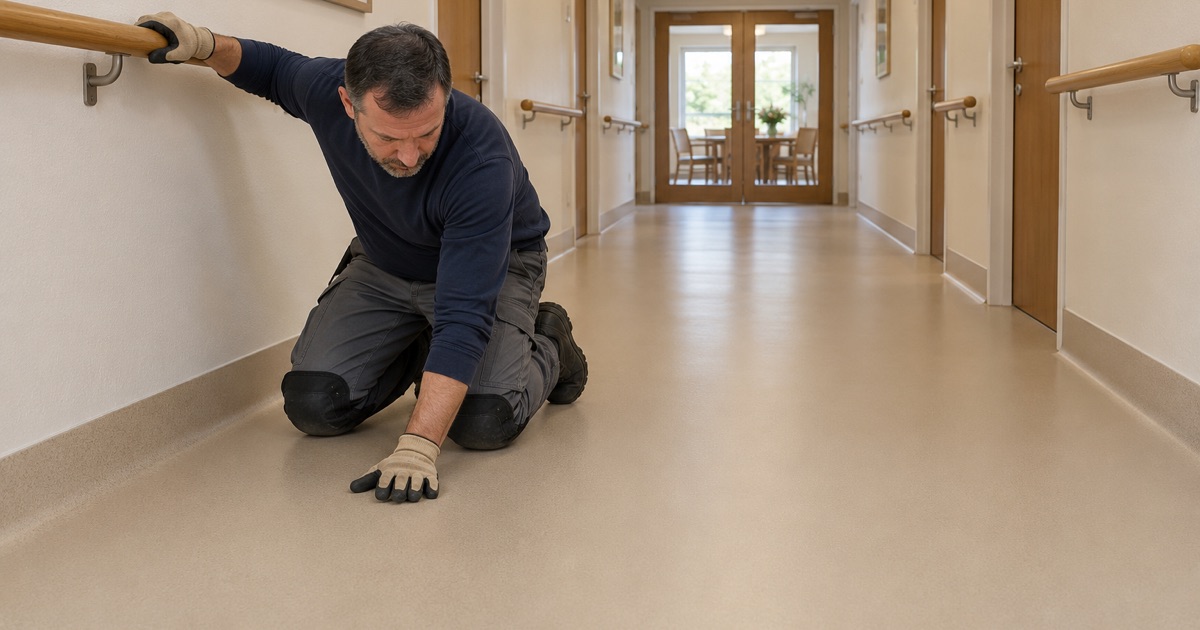
Weinberg Community on the Cook County Side
Weinberg Community for Senior Living sits at 1551 Lake Cook Road, which the Census geocoder places inside Deerfield village on the Cook County side of the line. CJE SeniorLife describes it as providing assisted living and memory care for older adults who want to keep their independence but need a little extra support with daily tasks.
We have not worked there and have not seen its floors, so we use it as a reference point rather than a project. A building of that type is the clearest Deerfield example of a floor where texture is a mobility decision first. In buildings of that kind, corridors, dining rooms and activity rooms are where residents using walkers or wheelchairs tend to spend the day.
What 14 Wheelchair Users Pushed Across
A 2008 study by Hurd and colleagues in the American Journal of Physical Medicine and Rehabilitation had 14 experienced manual wheelchair users push across four level surfaces: smooth concrete, aggregate concrete, low-pile carpet and tile. The researchers recorded propulsion forces and moments on each one and compared them surface by surface.
Forces and moments were greatest on the aggregate concrete. Both concrete conditions and the carpet took significantly more than tile, and riders pushed more often on the two concrete surfaces. Tile took the least force of the four, and the authors concluded that the rolling resistance of level terrain significantly affects how a wheelchair is propelled.
What the Study Does Not Tell Us
The riders were experienced users, 13 of them with spinal cord injury, not older adults in assisted living. We give no percentage of effort saved for a senior resident, because the study never measured one. The authors also did not measure rolling resistance directly.
What it does give us is a ranking that matches common sense: rougher and softer surfaces asked more of the person pushing than tile did. We use that ranking to steer a texture choice, not to promise an outcome for any particular resident. Clinical questions about a specific resident belong with their care team, not with a flooring crew.
Looking for epoxy-flooring closer to Wauconda? See Epoxy-Flooring Services in Wauconda.
Rolling Resistance: Fine Texture Versus Heavy Broadcast
Why a Resin Floor Can Roll Like Tile
A 100% solids epoxy or a polyaspartic topcoat laid over a ground slab cures to a continuous, smooth film. Left without heavy grit, that surface should behave closer to the tile end of the study than to the rough concrete end. There are no grout lines to bump across, and no pile to sink into.
That is why we treat the broadcast as the real decision on a corridor floor. The base coat sets the color and the build, but the grit scattered into it and locked under the topcoat is what a wheel actually rolls over. A fine texture keeps the surface from turning glassy while staying near the smooth end.
Heavy Quartz and Flake Behave Like Rough Concrete
A full quartz aggregate broadcast, or a heavy vinyl flake coat back-rolled with a gritty topcoat, gives a floor real bite. In texture it starts to resemble the aggregate concrete that took the most force in the 2008 study. That is a fair trade at a door where wet boots come in, and a poor one along a long hallway.
Grit size, how much is broadcast and how many topcoats go over it all change the finish. Two coats over fine quartz leave a softer texture than one coat over a coarse grade, which is why the grade belongs on paper next to the price. Small changes in either can move a floor noticeably along the scale between tile and rough concrete.
Sample Boards Before Anything Is Rolled Out
Texture is hard to judge from a brochure photo. Before a corridor or dining room is coated, it is worth asking for sample boards in each grade under consideration, so staff can roll a chair or walker across them and feel the difference. That check is informal, but it beats choosing from a color card.
The topcoat matters too. A polyaspartic or polyurea topcoat over a fine broadcast keeps a satin feel, while a thin topcoat over coarse grit leaves sharper peaks. We name the product line, the number of coats and the finished thickness in writing, so the sample and the finished floor can be checked against each other.
Zoning Texture: Corridors, Dining Rooms and Entries
Fine Texture in Corridors and Activity Rooms
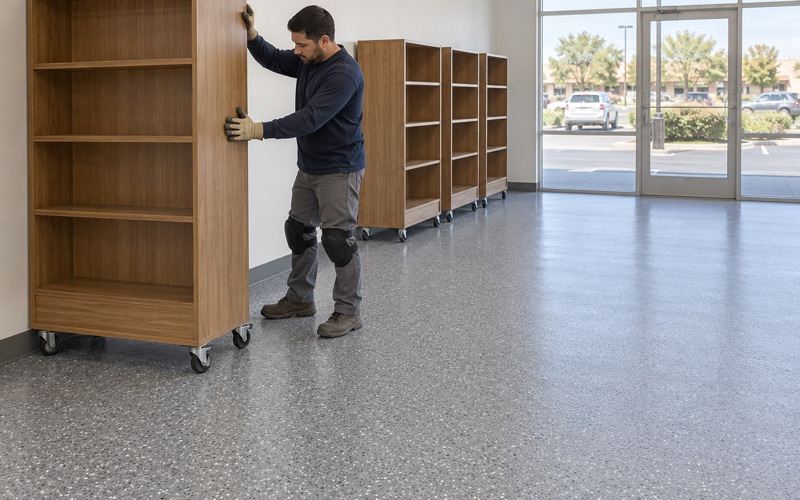
Corridors are where push effort adds up, because residents cover the most distance there. In an assisted living or memory care layout, we would specify a fine texture along those routes and in activity rooms, keeping the surface close to the smooth end of the scale. The same reasoning applies to a lobby that doubles as a gathering space.
A smooth resin floor also avoids the trade-offs of the alternatives in the study. Carpet adds drag, and tile brings grout joints that collect grime. A seamless coating can offer a tile-like roll with nothing for a small wheel or walker glide to catch on. Cleaning stays simple, which matters in a room that serves meals.
Dining Rooms and the Servery Line
Dining rooms are mostly a rolling floor, with chairs pulled in and out and residents arriving on wheels or behind walkers. We would keep those a fine texture too, then step up the grit only in the strip behind a servery or beverage station where spills are routine. The change in texture follows the work, not the room boundary.
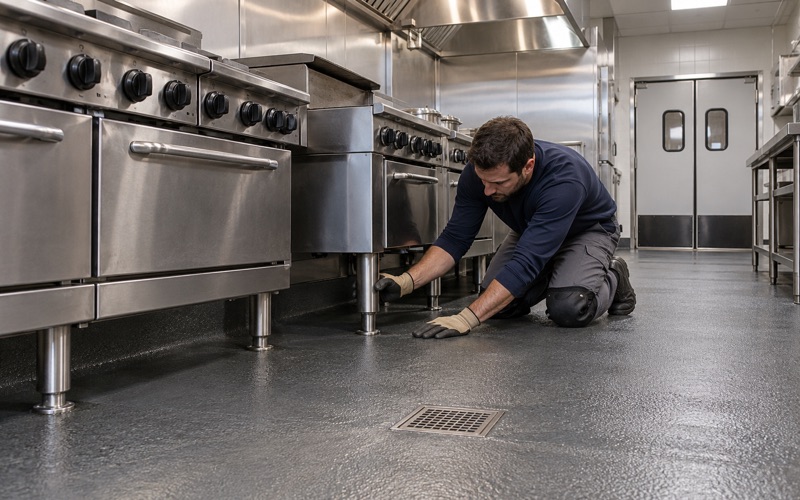
Food areas bring their own rules. The FDA Food Code makes an exception to its smooth-floor language for antislip floor applications used for safety, and calls for coved, closed floor-and-wall junctures. We check which provision governs before choosing the finish behind a counter, so the grit and the cove base are settled together.
Entries and Wet Zones Get the Heavier Grit
At exterior doors, the floor takes rain, snowmelt and deicer tracked in from parking lots through a long winter. That is where a heavier quartz broadcast earns its place, and where the rolling penalty is brief because a resident crosses it in a few strides or pushes. The transition back to fine texture should sit a little inside the door, past the wettest zone.
Grip is the trade-off here, not the whole argument. Each step up in grit buys traction and costs some rolling ease, so we place the heavier texture only where water is expected and keep it out of the long routes. Mapping those zones on a floor plan before the job is priced keeps the decision visible to the people who manage the building.
Walkers and Wheelchairs at Home: Garage and Basement Routes
The same thinking carries into Deerfield houses where someone plans to age in place. With 6,203 owner-occupied homes and most of the stock detached, the garage is often the everyday entrance, and the basement may hold laundry or a hobby room. A route from the car to the kitchen door deserves the same texture care as a corridor.
A Garage Floor That Takes Salt and a Wheelchair
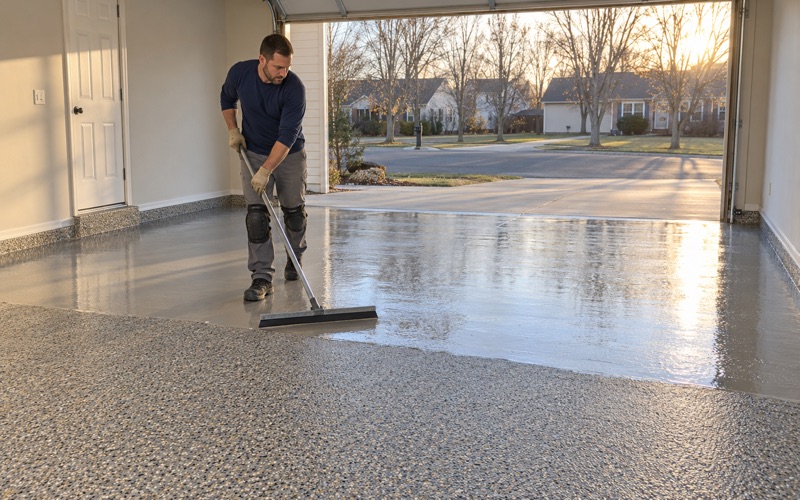
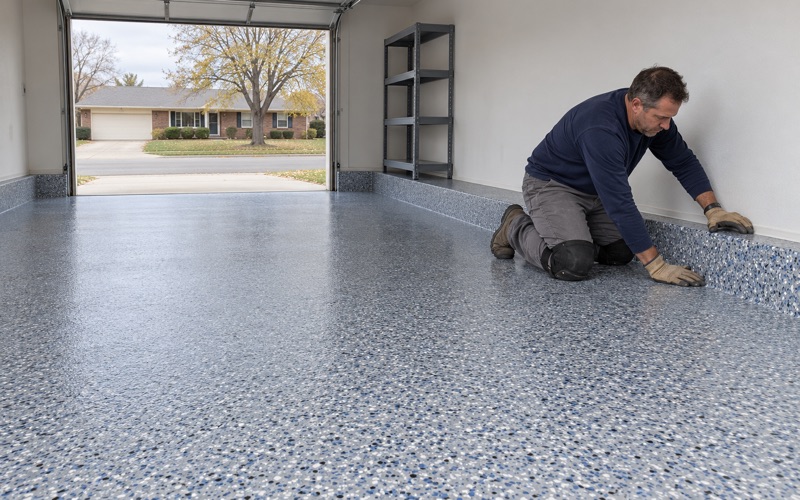
A garage has to handle brine and rock salt riding in on tires all winter, so we choose systems that stand up to it. For a household with a wheelchair user, we keep the heavier flake or quartz near the overhead door where slush lands, and lay a finer texture along the path to the house door.
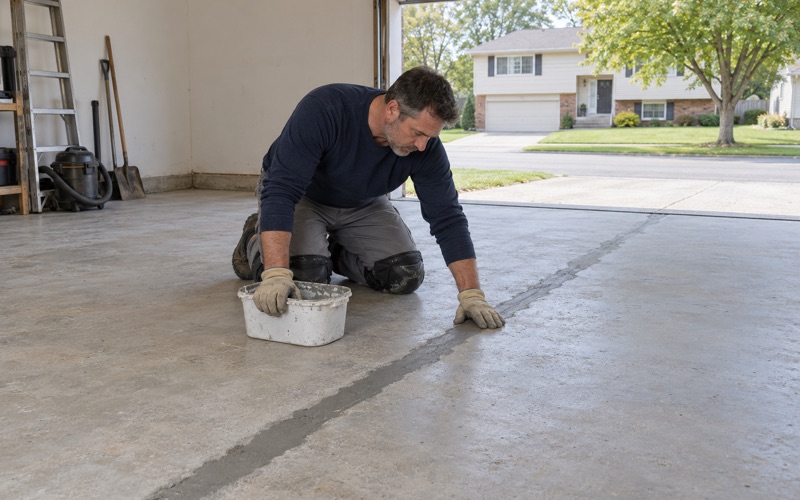
Many Deerfield houses date from the 1950s and 1960s, so their garage slabs have had decades of use. We map cracks, spalls and old coatings first and say plainly when a slab needs repair before it should be coated. A route that rolls smoothly starts with a slab that has been ground flat and patched, not just painted over.
Basement Routes and Water First
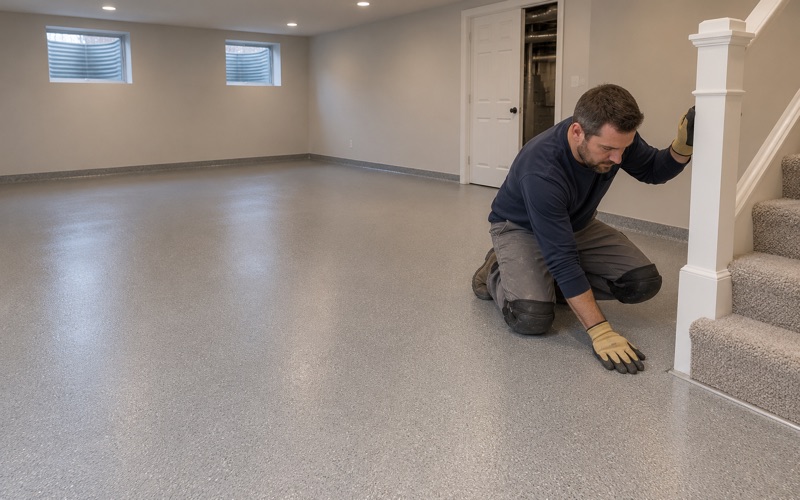
A finished basement used for laundry or exercise is a short route but a daily one, and a fine texture suits it. Before any coating, we read the slab for past water, because a coating does not stop seepage, a sewer backup or a sump that cannot keep up. Stains, efflorescence and a damp line along the wall are signs we look for.
A moisture test is written into the scope before the price is final, using ASTM F2170 in-situ relative humidity probes or ASTM F1869 calcium chloride testing as the slab calls for. Moisture is also the first exclusion we explain in any coating warranty, before the job is sold, so nobody learns about it after a floor lifts.
Paperwork and Timing on a Home Job
Home jobs above the state threshold get a written contract and the Illinois Home Repair: Know Your Consumer Rights pamphlet before any grinding starts. Grinding dust is captured at the machine by vacuum rather than washed toward a floor drain or sump, which matters in a basement with a pit in the corner.
Cure schedules follow slab temperature and dew point rather than the calendar, so an unheated garage in deep winter is told to wait. Permit questions go to the Village of Deerfield, which issues building permits, and we raise them with the village before the job is scheduled.
- 20+ Years on Concrete
- Moisture Tested First
- Written Scope and Pricing