
Bartlett Epoxy Flooring installs commercial epoxy flooring in Bartlett, IL, serving surrounding cities including Winfield, Warrenville, Wood Dale, Bensenville and Campton Hills. Over more than 20 years we have coated shop floors, warehouse bays, retail spaces, offices and clinics, and the common thread is that a business floor has to be specified for its use and installed around the business, not the other way around.
That means choosing a system for the traffic, chemicals, cleaning and temperatures the floor will actually see, then phasing the job so the doors stay open where they need to. It also means paying attention to the rules that apply to commercial space: health department review for food areas, Illinois VOC limits on the coatings themselves, and the village’s contractor and permit requirements.
Here is how we approach a commercial floor from the first walkthrough to the day it returns to service.
Choosing the System for the Space
Retail and Showroom Floors
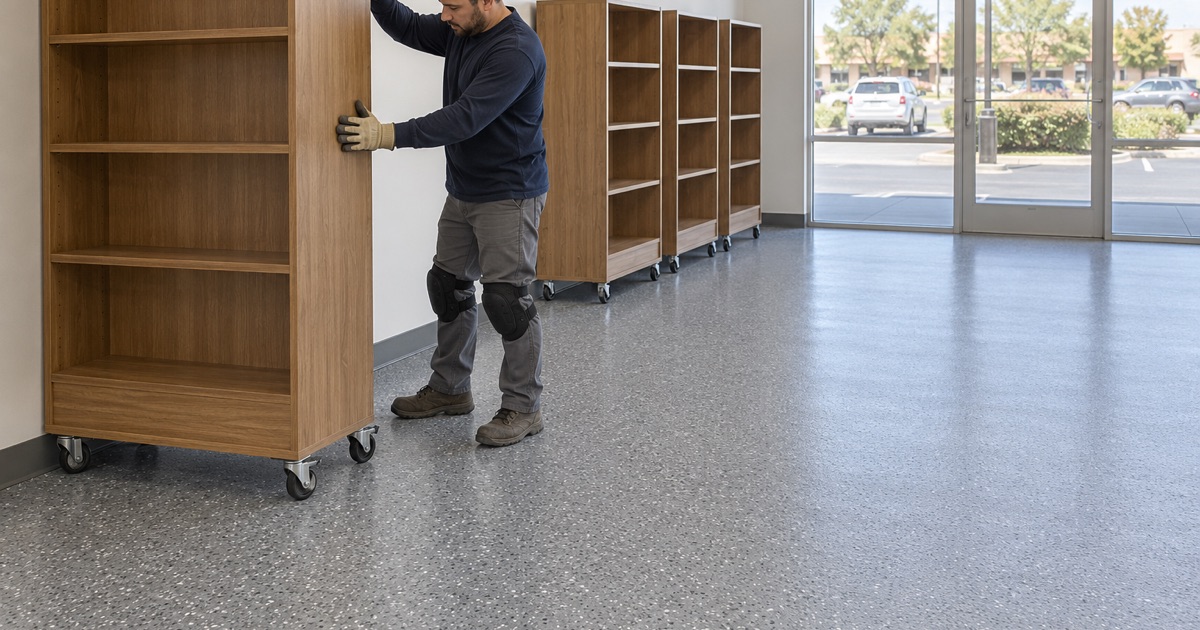
Retail stores and showrooms need a floor that looks clean on opening day and keeps looking that way under carts, foot traffic and displays that move every season. Solid color epoxy under a urethane topcoat, metallic epoxy and polished concrete are the usual choices. The decision turns on the look you want and how much scratching the topcoat will face.
We can match colors to branding and set logos or wayfinding lines into the floor. Entries get a textured finish, since that is where water and grit arrive.
Offices, Lobbies and Corridors
Office floors see rolling chairs, steady foot traffic and nightly cleaning crews. A seamless coating with a satin topcoat hides scuffs better than high gloss and cleans up with an auto scrubber or a damp mop. In a lobby, a decorative flake or quartz system adds texture and character without any grout lines.
Medical Offices and Clinics
Clinics need floors that are seamless, easy to disinfect and continuous around exam rooms, restrooms and soiled utility rooms. Coving the coating up the wall closes the joint where dirt and fluids would otherwise collect. We confirm which disinfectants will be used so the topcoat is chosen to tolerate them.
Work is phased room by room, usually after hours, so patients keep moving and no corridor is closed while a coating cures.
Light Manufacturing and Assembly
Assembly and light manufacturing floors take rolling carts, dropped parts, oils and solvents. A thicker 100% solids epoxy body coat with a chemical-resistant topcoat handles that work, and safety lines and aisle markings can be built into the floor. Areas with heavier forklift traffic or hot processes get their own specification.
Where one building houses both offices and production, we often specify different systems for each area under a single schedule.
Performance Requirements
Traffic and Load
Foot traffic, pallet jacks and forklifts put very different demands on a floor. Thickness, the base coat, joint treatment and the topcoat are chosen for the heaviest load the floor will see, not the average one. Edges at doorways and docks get extra attention, because that is where coatings tend to chip first.
Chemical and Cleaning Resistance
A commercial floor’s chemistry has to match what lands on it and what is used to clean it. Oils, solvents, acids, alkaline degreasers and hot water each attack some coatings and leave others alone. We ask for the cleaning products and any process chemicals before choosing the system, and steer washdown and high-heat areas toward urethane cement.
That conversation becomes part of the written scope, so the product line on the proposal can be checked against how the floor is really used.
Slip Resistance and Safety Markings
Slip resistance comes from what is broadcast into the coating and how thick the topcoat over it is. Quartz aggregate, fine grit additives and flake each give a different level of texture, and we specify the texture by area rather than across the whole floor. Aisle lines, hatched zones and walkways can be coated in safety colors during the same job.
Static-Sensitive Areas
Electronics assembly, labs and server rooms may need static-dissipative or conductive ESD flooring rather than a standard coating. Those systems are built to fall within a specified electrical resistance range and are tested after installation. They can be folded into a mixed-use floor plan alongside ordinary coated areas.
Scheduling Around the Business
Phasing by Area
Most businesses cannot clear the whole floor at once. We divide the space into zones, move stock or furniture in stages and keep a route open for staff and customers. The phasing plan is written down before the first grinder starts, so everyone knows what will be closed and when.
On larger floors, the seams between phases are placed where they will be hidden or fall along a natural break in the room.
Overnight and Weekend Windows
When a space cannot close during the day, the work moves to nights and weekends. Fast-curing polyaspartic and urethane systems let a section be prepared, coated and returned to service before the next opening. We confirm cure times against the slab temperature, so the floor is ready when the doors open.
Odor and Dust in an Occupied Building
Every grinder runs into a vacuum at the machine, and dust is never washed toward a floor drain or storm inlet. Low-odor products are chosen for occupied buildings, and work areas are sealed off with plastic and negative air where needed.
Codes and Compliance
Health Department Review for Food Areas
Food service and food processing floors go through county plan review, and the FDA Food Code expects smooth, durable, cleanable floors with coved junctures where floors are washed. Bartlett spans DuPage, Cook and Kane counties, so the reviewing health department depends on the address. Brewster Creek Business Park, for example, sits in the DuPage County part of the village.
We confirm which department applies before the floor is specified, so the system matches what the plan reviewer expects to see.
VOC Limits and Product Choice
Illinois limits volatile organic compounds in floor and industrial maintenance coatings under 35 Ill. Adm. Code Part 223, and those limits bind the contractor applying the coating. The Chicago area is also an ozone nonattainment region. We choose compliant products, which helps with odor in occupied buildings as well.
Village Contractor Licensing in Bartlett
Bartlett requires contractors to hold a village contractor’s license backed by a permit bond and liability insurance naming the village. Permit questions are checked with the village before scheduling, including whether a job is a coating or a slab replacement.
- 20+ Years on Concrete
- Moisture Tested First
- Written Scope and Pricing