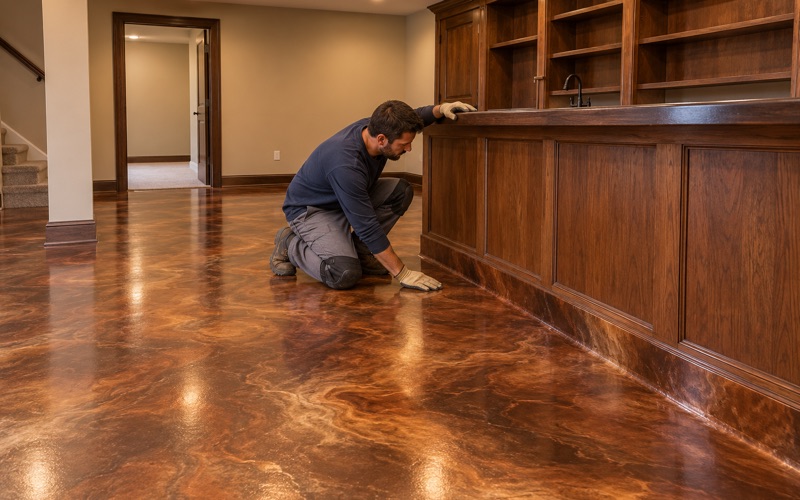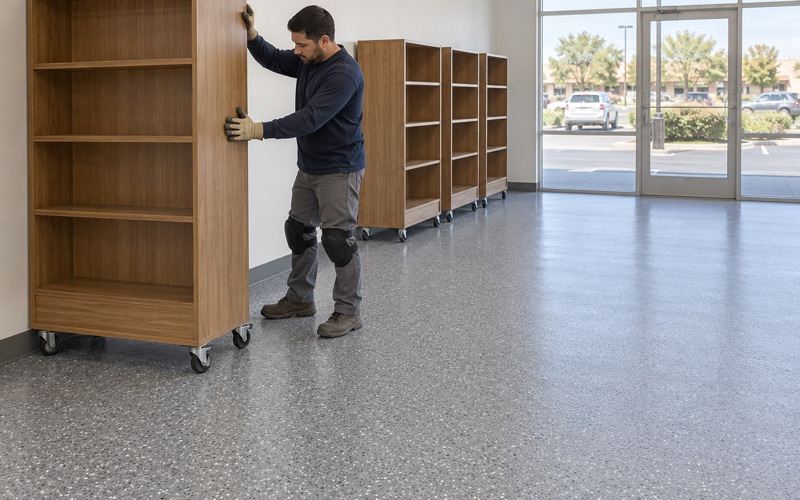
Bartlett Epoxy Flooring has spent more than 20 years on epoxy flooring in Barrington and across the northwest suburbs, and the floors that teach us the most are the ones washed every day. A room that animals soil and staff clean on a schedule asks more of a coating than any showroom does. It has to shed water, give grime nowhere to hide, and survive the cleaning itself.
This page covers one kind of floor: rooms where animals stay for a day or a week, and how their cleaning method should shape the surface underneath. Whether the space is a kennel run, a grooming room or the garage where a family dog recovers, the question is the same. Can the floor be cleaned properly without anyone reaching for a pressure washer?
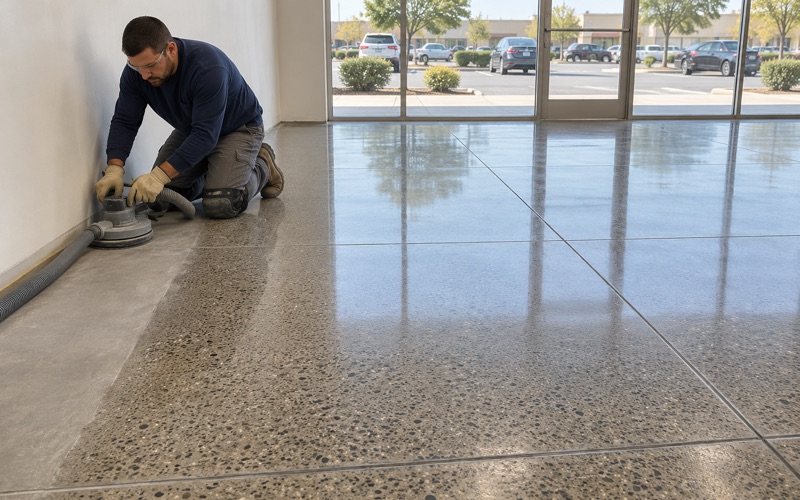
We open every slab with a diamond grinder or a shot blaster, never an acid etch, and the moisture test is written into the scope before the price is final. The sections below explain why those two habits count for more in an animal room than almost anywhere else.
An Animal Hospital on Northwest Highway Since 1934
From a Home Practice to Northwest Highway
Barrington’s animal hospital has a long paper trail. According to a 2014 Northwest Herald profile, Dr. Albert Gieske founded the practice in 1906 in his home at 312 Grove Ave and built the hospital on Northwest Highway in 1934. The practice changed owners in 1945, 1957 and 1991, and the building was remodeled in 2004.
That profile already listed small-dog boarding beside surgery, dental work and lab tests. Today the old hospital’s web address redirects to Animal Care Center, which lists a Barrington location at 353 W. Northwest Highway under the hospital’s long-standing phone number. Whether the practice moved there or both listings describe one site is not settled, so we make no claim about the current building’s age.
Boarding and Daycare Rooms Washed Every Day
Animal Care Center’s Barrington listing names Laboratory, Surgery, Grooming, Emergency Services, Boarding and Daycare for cats and dogs. Boarding and daycare change what a floor does. An exam room sees a few patients an hour; a boarding room holds animals around the clock, and the floor beneath them is soiled and washed every day.
We have not seen that practice’s floors, runs or cleaning protocol, and it is not one of our customers. We use it because it is the clearest local example of a room type found all over the Chicago area: the kennel, daycare floor or grooming room where daily washing is the job itself, not an occasional chore.
The Cleaning Method Decides the Floor
Most people choose a floor by how it looks on day one. In an animal room, the better test is what the staff will do to it on day three hundred: which detergent, how much water, what tool, and how long the surface stays wet. A floor that invites the wrong tool will get the wrong tool, every single day.
That is why we ask about the cleaning routine before we talk about color or flake. The answer tells us whether the room needs a fully sealed, seamless surface with the wall joint closed, which topcoat will stand up to the detergent in daily use, and how long the cure has to run before the first wash.
Looking for epoxy-flooring closer to North Aurora? See Epoxy-Flooring in North Aurora.
Why Porous Concrete Pushes Staff Toward the Pressure Washer
Raw Concrete Holds What It Is Given
Iowa State University’s Center for Food Security and Public Health put the problem plainly in its cleaning and disinfection training, written in 2011 and revised in 2014: raw concrete surfaces are porous and therefore difficult to clean. Urine, feces and wash water work into the pores instead of sitting on top. A mop moves what sits on the surface; what has soaked in stays.
That training was written for animal production premises in animal health emergency response, not for veterinary clinics. We cite it because it names the bind clearly, not because it is a clinic rule or a legal requirement. A porous surface behaves the same way in a barn and in a boarding room.
What High Pressure Does Well, and What It Costs
The same guidance credits high-pressure sprayers with being very effective for removing heavy accumulations of urine and feces and for cleaning porous surfaces. On bare concrete, that is often the only tool that reaches into the pores. It also warns that high-pressure washing may damage some concrete surfaces.
So staff in a raw-concrete room are stuck. Gentle cleaning leaves soil in the pores, while aggressive cleaning can wear away the paste at the surface and open more pores for the next day’s mess. Over years of daily washing, the floor can get harder to clean, not easier.
Taking the Pores Out of the Equation
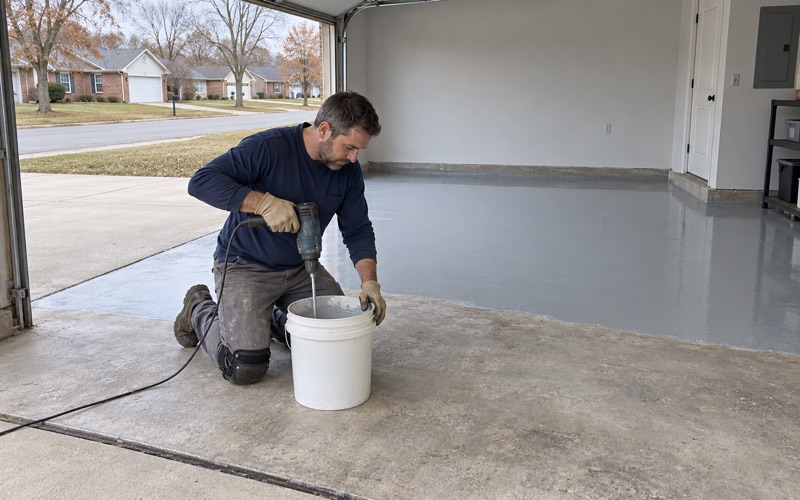
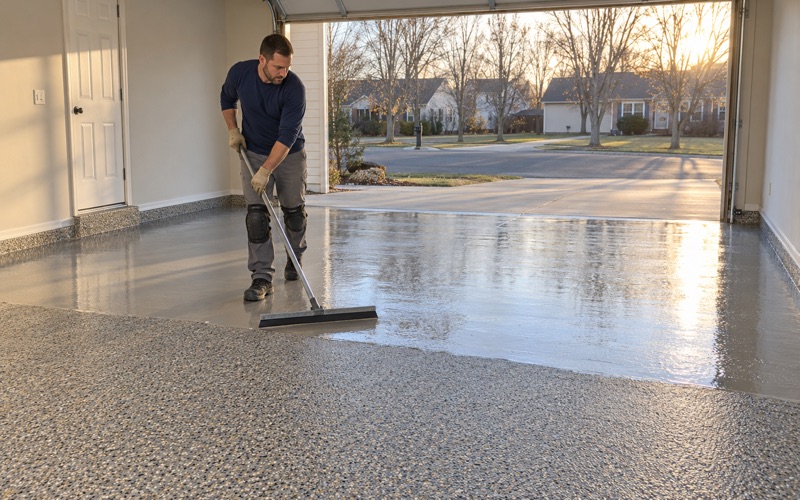
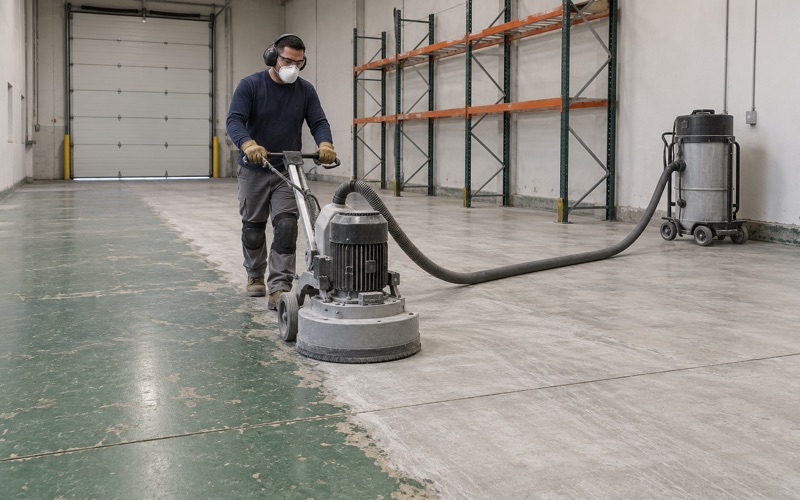
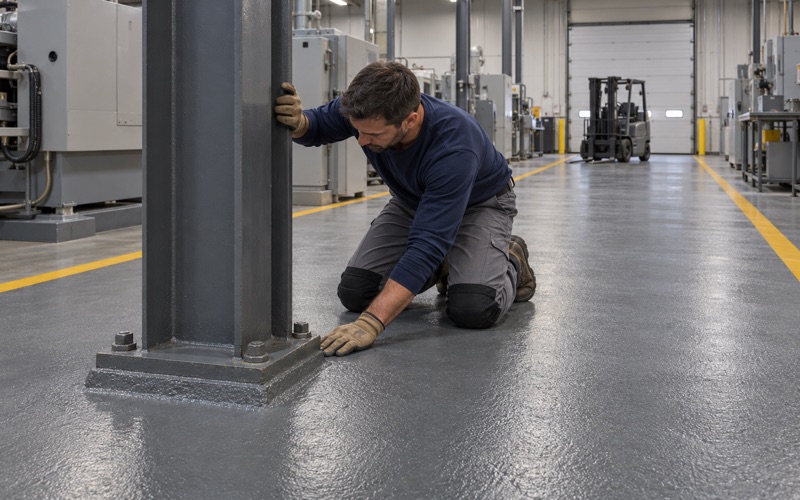
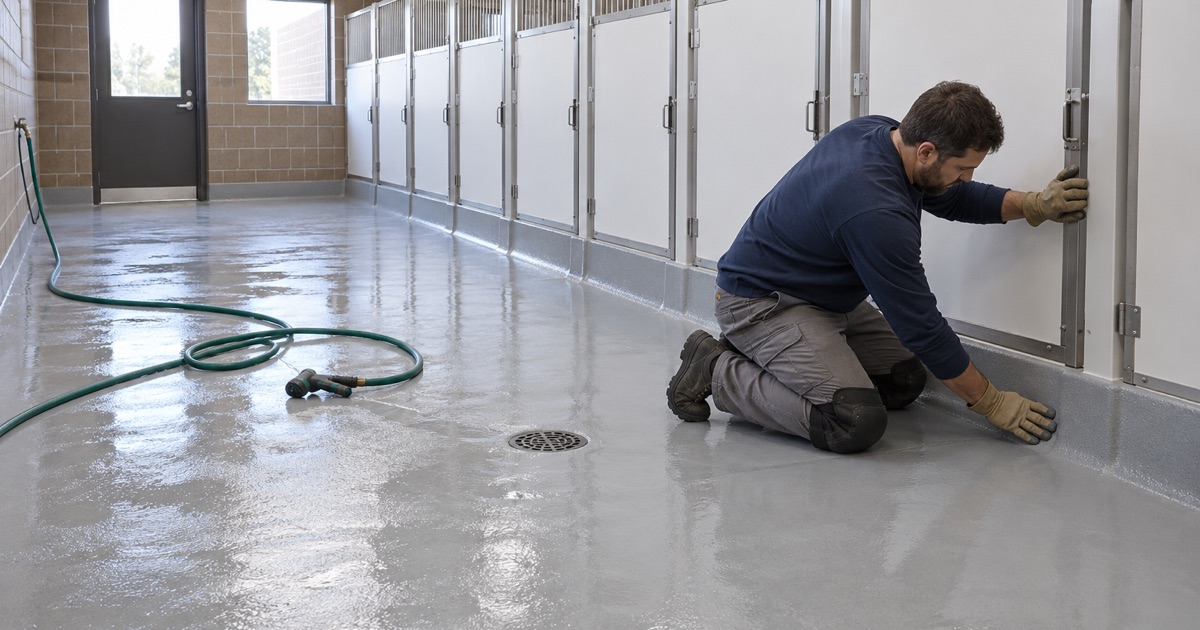
A sealed floor changes the starting point. We grind the slab to a measured ICRI concrete surface profile, repair the cracks and spalls we mapped first, and lay down a 100% solids epoxy system that leaves no open pores at the surface. Where the floor meets the wall, the joint is closed so wash water has no seam to run into.
The topcoat matters as much as the base. A polyaspartic or urethane topcoat over the epoxy is chosen for chemical and wear resistance, and our proposal names the product line, the number of coats and the finished thickness, so the result can be checked against the quote.
Cure schedules follow slab temperature and the dew point spread at the surface, not the calendar. A room meant for daily washing should not see its first wash until the coating has cured to the maker’s schedule, so the shutdown window is planned around that number rather than a guess.
Zoonotic Cases: Wash, Rinse Low, Dry, Then Disinfect
Why High-Pressure Spray Is the Wrong Tool Here
The Iowa State guidance draws one hard line: high-pressure sprayers should be avoided in cases of highly infectious or zoonotic pathogens to avoid further spread. Zoonotic means a disease that can pass between animals and people. A high-pressure wand breaks soiled water into spray and mist, and in a closed room that spray settles on walls, equipment and the person holding the wand.
In a hospital that also boards animals, the rooms holding sick patients are exactly where that matters most. On raw concrete, staff are left without a good option. On a sealed floor, the reason to reach for the pressure washer is gone, because nothing is lodged in the pores to blast out.
Detergent and a Low-Pressure Rinse
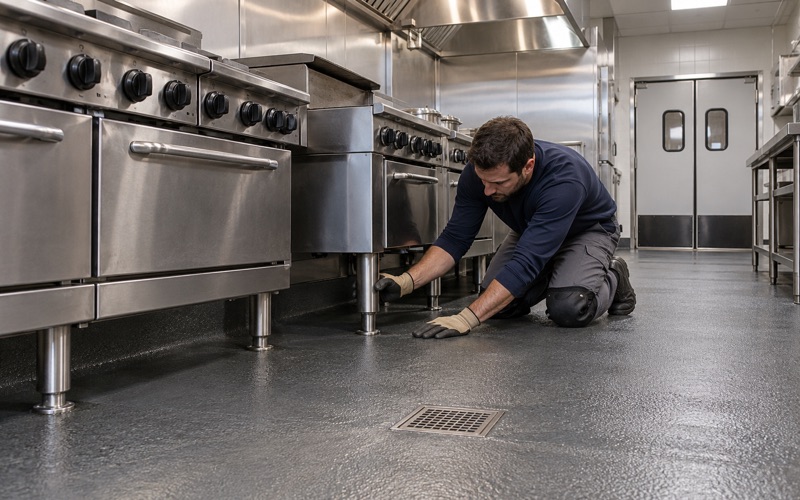
The guidance sets an order: wash with detergent and warm water, working from the ceiling to the walls to the floor. On a seamless resin surface, a scrub brush or auto-scrubber with detergent lifts the soil, and a low-pressure rinse carries it off without throwing it into the air. A squeegee or wet vacuum picks up what is left.
We give no veterinary or infection-control advice, and a facility’s protocol belongs to its own staff. What we control is whether the floor lets that protocol be followed: a surface that rinses clean at low pressure, with no grout lines or open joints to hold water. Commercial rooms like these are phased around operating hours, with overnight and weekend windows when a boarding room cannot close.
Dry First, Then Give the Disinfectant Its Contact Time
The training’s next step is the one easiest to rush: when possible, allow surfaces to dry completely, overnight if possible, before applying disinfectant. Water left on the floor dilutes the product. On porous concrete, a floor can look dry on top and still be damp below, which is one more place a sealed surface helps.
Then an EPA-registered disinfectant goes on with a low-pressure sprayer or by wiping, and it has to stay wet for its contact time, the period the label says it must remain on the surface to work. A sealed floor holds that product as a film on top instead of drawing it into the slab. The coating disinfects nothing; it simply lets the disinfectant do its job.
Dogs at Home: Garages and Mudrooms After a Sick Pet
The Same Bind at House Scale
Not every dog sees a boarding run. Many come in through the garage or a mudroom, and when one is sick, that is where the mess lands. A family scrubbing an old garage slab faces the same bind on a smaller scale: bare concrete holds what spills on it, and the pressure washer is waiting in the shed.
Census counts put 3,008 of the village’s 4,424 housing units in single-unit detached buildings, a rough proxy for how many homes have a garage slab worth asking about. Nearly half the housing, 44.3 percent, was built between 1960 and 1979, so many of those slabs are now four to six decades old.
Reading an Older Slab Before Quoting
Barrington’s housing reaches back much further than that. The 92-acre Barrington Historic District holds mostly wood-frame houses built from 1860 to 1930, and 575 housing units in the village predate 1940. At those addresses, a garage or basement slab may be a later pour, a replacement or a patched original, and nothing about its age can be read from the house.
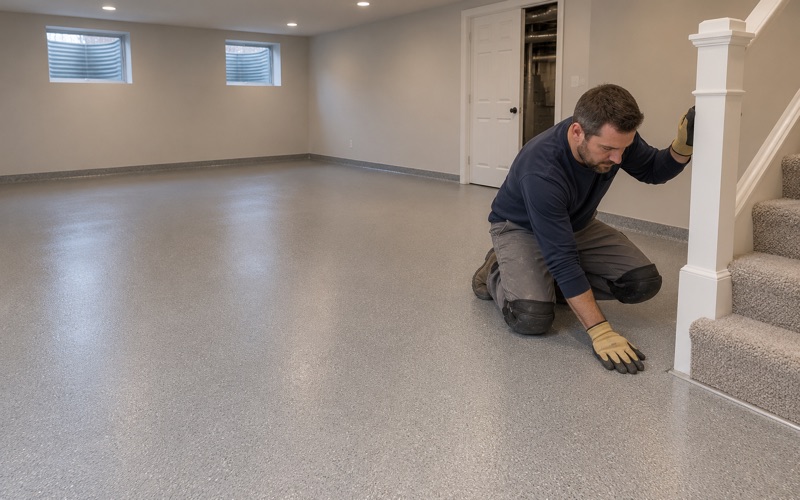
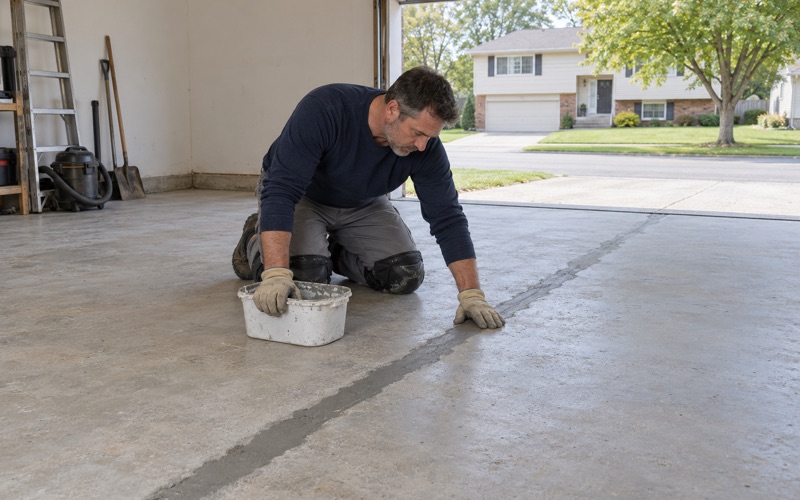
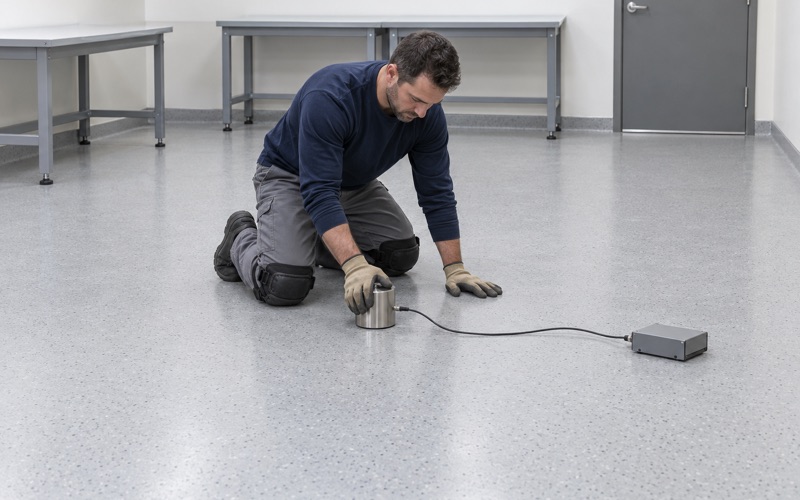
So the moisture test comes before the price on every garage and basement we quote, using an ASTM F2170 in-situ relative humidity probe or an ASTM F1869 calcium chloride test as the slab calls for. Cracks, spalls and old coatings get mapped, and if a slab needs repair or replacement first, we say so.
Inside the Historic Preservation Overlay District, exterior changes go through village review. An interior floor coating should not, but anything that changes an outbuilding’s doors, slab footprint or apron is a question for Village of Barrington Development Services before we schedule it.
What a Coated Garage Will and Will Not Do
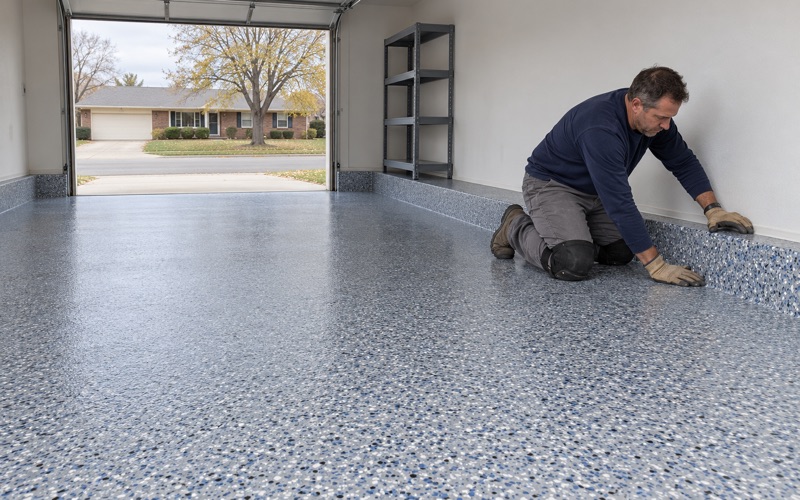
A coated garage floor with a closed edge can be washed with detergent and a garden hose, dried, and wiped with a household disinfectant left on for its label contact time. For a sick dog, what to use and when is a question for your veterinarian, not for us.
Our garage systems are also chosen for the brine and rock salt that ride in on tires every Illinois winter, which test a floor in their own way. And the warranty talk happens before the sale: moisture vapor and hydrostatic pressure from below are the first exclusions we name, because no topcoat fixes a slab that is wet underneath.
- 20+ Years on Concrete
- Moisture Tested First
- Written Scope and Pricing